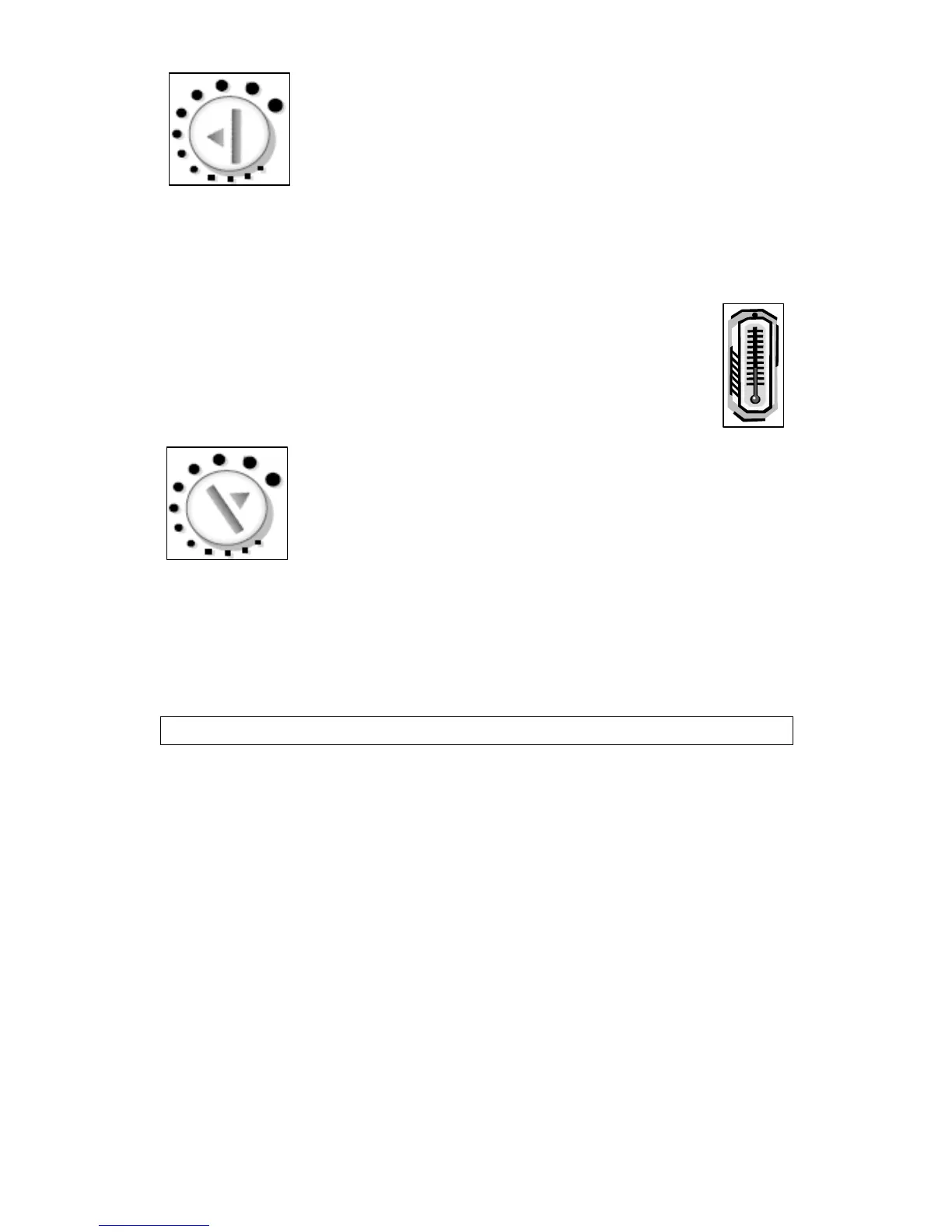
o Ideally the arrow should be set to the midway
position (as shown in the diagram opposite).
o Your refrigerator can maintain a temperature of between 4 – 6
degrees centigrade.
o The freezer section can cool down to -18 degrees centigrade and
lower.
o IMPORTANT: The ambient temperature of the room,
the temperature of food and the amount of food that
has been placed in the appliance and how often the door
is opened, will all affect the temperature being
maintained by the appliance.
o On the maximum setting (shown opposite) your
fridge freezer will work harder to maintain a lower
temperature and will increase the energy usage.
There is no need to run your appliance at this
setting for prolonged periods. Unless you are
freezing fresh food, you should have the dial set in
the position shown above.
o IMPORTANT: If you run the appliance with the thermostat dial
on a higher setting for prolonged periods, the defrost drain hole
will freeze. It may also cause the appliance to overwork and the
fridge and freezer sections to freeze over.
Arranging and storing food in the fridge section
o Warm food or evaporating liquids should not be stored in your
refrigerator, as this will increase the humidity inside of the
appliance.
o All foods should be wrapped or covered, this is particularly
important if the food has a strong flavour. You should use
polythene bags or sheets, aluminium foil, wax paper. Liquids
should be stored in covered containers or bottles.
o To maximise the space inside of the fridge section, any excessive
packaging on the food should be removed.
o Quickly perishable food should be stored at the back of the
refrigerator, which is the coldest part of the appliance.


 To Next Page