The DUPLOSPRAY MIS Regulator is a reusable, non-sterile device designed to regulate the flow of medical-grade vaporous carbon dioxide to assist in the application of Baxter surgical sealants. It is primarily composed of a gas pressure regulator, a flow control valve, a flow meter, and a foot switch. The internal pressure regulator is a fixed-output device that reduces incoming supply gas pressure (100 psi ± 5 / 6.89 bar ± 0.35) to a preset output pressure of 19 psi ± 2 (1.31 bar ± 0.13). A safety relief valve within the regulator ensures that the maximum output pressure of 22 psi (1.5 bar) is not exceeded. This safety relief valve safely vents excess pressure within the housing at pressures above 22 psi (1.5 bar), accompanied by an audible signal, and automatically resets once the overpressure condition is removed.
Technical Specifications:
- Outer Dimensions: Length 187 mm x Width 184 mm x Height 142 mm
- Weight: 3 kg
- Set Pressure: 100 psi ± 5 (6.89 bar ± 0.35)
- Operating Conditions: 13°C to 27°C, 0% to 60% relative humidity (for setup); 13°C to 35°C, 0% to 95% relative humidity (for storage).
- Flow Rate: 1.0 - 2.0 Liters per minute (L/min) (recommended for application)
- Distance for Application: 2 cm, 3 cm, 5 cm (recommended)
Usage Features:
The DUPLOSPRAY MIS Regulator is intended for use by qualified personnel only and must be used exclusively with DUPLOSPRAY MIS Applicators. The device comes with a pre-mounted Pole Clamp (7) for mounting onto a stable pole.
- Setup:
- Attach the Gas (DISS Female CO₂) Connection (1) to a CO₂ gas source and set the gas supply pressure to 100 psi ± 5 (6.89 bar ± 0.35).
- Place the Foot Switch (2) flat in a convenient location.
- Flow Control:
- While depressing the Foot Switch (2), the Flow Control Knob (6) can be turned clockwise and then back to adjust the flow from 0 to 10 L/min, as indicated by the Flow Meter (4).
- For application, the flow should be adjusted to 1.5 L/min while depressing the Foot Switch (2).
- The flow control ball (4) should not stick at the top of the Flow Meter when the Foot Switch (2) is released.
- Safety Precautions during Application:
- When applying product using pressurized gas, caution must be exercised.
- To avoid gas embolism, do not spray directly into circulatory pathways.
- When using pressurized spray devices, changes in blood pressure, pulse, oxygen saturations, and end tidal CO₂ should be monitored.
- The device must be connected only to a regulated CO₂ gas source.
- Do not expose the device to temperatures below -4°F (-20°C), above 122°F (50°C), or relative humidity (RH) above 95%.
Maintenance Features:
- Functional Check: A functional check must be performed upon first-time use, after storage, and minimally on a semi-annual basis (every six months) to ensure proper operation.
- Maintenance Check: An annual maintenance check should be performed on the DUPLOSPRAY MIS Regulator.
- Cleaning: The housing, Foot Switch, and hoses can be cleaned with many hospital-approved (pH 7 neutral) disinfectants. The regulator must be cleaned after each use and kept free of dirt and other debris to ensure safe and intended operation.
- Special Cleaning Instructions:
- Do not use high pH (acid) or low pH (caustic) cleansers.
- Prevent cleaning solution from entering the Patient Vent (3) or Gas Outlet (5) fittings on the front panel, or the Gas (DISS Female CO₂) Connection (1). Use Luer caps or cover fittings with a lint-free cloth.
- Do not allow disinfectants to pool anywhere on the device, especially on the Flow Meter (4).
- Do not immerse or soak any part of the device.
- Do not use abrasive pads or cleansers.
- Do not process in an automatic washer or steam sterilizer.
- Internal Components: The internal components of the DUPLOSPRAY MIS Regulator are not user-serviceable.
- Troubleshooting (if flow is not verified):
- Immediately remove the DUPLOSPRAY MIS Regulator from service.
- Contact Baxter Customer Service or your local Baxter representative.
- Disposal: The DUPLOSPRAY MIS Regulator contains no electrical components or hazardous materials. It should be cleaned to remove any potential biohazard contamination before disposal. Do not dispose of it as unsorted municipal waste; collect it separately as Used Medical Waste. Utilize available collection and return systems.

 Need help?
 General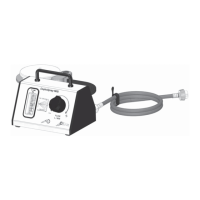

 To Next Page