EasyManua.ls Logo

Beko DL1043W - User Manual

Beko DL1043W
28 pages
Print Icon
To Next Page IconTo Next Page
Loading...
User’s Manual
Dishwasher
DL1043W

Questions and Answers

Summary

Welcome

Preparation Before Use

Recommends running the dishwasher on the Eco programme with prewash before the first load.

Know Your Dishwasher; Specification

Specification

Details technical specifications like load capacity, dimensions, weight, voltage, power, and plate sizes.

Note for Testing Institutes

Provides contact information for obtaining necessary data for performance testing.

Warning and Safety Information

Electrical Safety

Outlines essential electrical safety precautions for operating the dishwasher.

Childrens Safety

Warns about the dangers of children playing with or near the dishwasher and its detergents.

General Safety Precautions

Covers general usage safety, chemical solvents, salt, rinse aid, and disposal of old appliances.

Recycling

Explains how to dispose of packaging and old appliances responsibly.

What Should Not Be Washed

Lists items that should not be put in the dishwasher to prevent damage or stains.

Before First Use

Electrical Requirements

Details checks for voltage, frequency, and plug suitability before initial use.

Installation

Warning: Appliance Must Be Earthed

Emphasizes the necessity of earthing the appliance for safety.

Fitting a Different Plug

Provides instructions for changing the power plug if it doesn't match the socket.

Water Inlet Hose Connection

Guides on connecting the water supply hose, pressure requirements, and potential Y-adaptor use.

Drain Hose Connection

Explains how to connect the drainage hose to avoid blockages and ensure proper emptying.

Installation of Dishwasher

Covers positioning, clearances, leveling, and avoiding damage during installation.

How to Use

Water Hardness & Regeneration Settings

Explains how to set the water softener based on local water hardness for optimal washing.

Adding Dishwasher Salt

Details how to correctly fill the salt container with special dishwasher salt.

Detergent Use

Provides guidance on selecting, storing, and using different types of dishwasher detergents.

Two-in-one and Three-in-one Detergents

Discusses the use and implications of combined detergent products.

Filling Detergent Dispenser

Instructs on how to fill the main and small detergent containers based on load size and soiling.

Detergent Residues

Advises on preventing and cleaning detergent residue buildup.

Rinse Aid

Explains the purpose of rinse aid and how to adjust its dosage.

Filling the Rinse Aid Dispenser

Guides on how to refill the rinse aid dispenser.

Operating the Dishwasher

Hot Air Drying

Explains the function of hot air drying for efficient dish drying.

Unloading Dishwasher

Provides instructions on how to unload the dishwasher to prevent water drips and improve drying.

How to Clean Your Machine

Cleaning Filters and Spray Arms

Details the process for cleaning the main, coarse, and micro filters and spray arms.

Upper Spray Arm

Instructions for removing and cleaning the upper spray arm.

Lower Spray Arm

Instructions for removing and cleaning the lower spray arm.

Before Calling Service; Trouble Shooting

Spotting; Filming; Poor Cleaning Results

Addresses common cleaning issues, their causes, and solutions.

Small Particles (Food or Detergent) Left on Items

Troubleshoots issues with food or detergent particles remaining on dishes.

Pitting of Stainless Steel Items

Explains causes and solutions for pitting on stainless steel items.

Dishes Not Dry

Provides troubleshooting steps for dishes not drying properly.

Scratches on Glassware

Discusses causes and prevention of scratches on glassware.

Detergent Cakes in Detergent Dispenser

Addresses issues with detergent not dispensing correctly.

Chipping and Breakage of Dishes;Glasses

Offers advice on preventing chipping and breakage of dishes.

Odour in Dishwasher

Explains how to resolve odors in the dishwasher.

Guarantee

What is Covered

Details what aspects of the product are covered under the warranty.

What is Not Covered

Lists items and conditions that are excluded from the product warranty.

Important Notes

Provides crucial notes regarding product usage, installation, and warranty validity.

Summary

Welcome

Preparation Before Use

Recommends running the dishwasher on the Eco programme with prewash before the first load.

Know Your Dishwasher; Specification

Specification

Details technical specifications like load capacity, dimensions, weight, voltage, power, and plate sizes.

Note for Testing Institutes

Provides contact information for obtaining necessary data for performance testing.

Warning and Safety Information

Electrical Safety

Outlines essential electrical safety precautions for operating the dishwasher.

Childrens Safety

Warns about the dangers of children playing with or near the dishwasher and its detergents.

General Safety Precautions

Covers general usage safety, chemical solvents, salt, rinse aid, and disposal of old appliances.

Recycling

Explains how to dispose of packaging and old appliances responsibly.

What Should Not Be Washed

Lists items that should not be put in the dishwasher to prevent damage or stains.

Before First Use

Electrical Requirements

Details checks for voltage, frequency, and plug suitability before initial use.

Installation

Warning: Appliance Must Be Earthed

Emphasizes the necessity of earthing the appliance for safety.

Fitting a Different Plug

Provides instructions for changing the power plug if it doesn't match the socket.

Water Inlet Hose Connection

Guides on connecting the water supply hose, pressure requirements, and potential Y-adaptor use.

Drain Hose Connection

Explains how to connect the drainage hose to avoid blockages and ensure proper emptying.

Installation of Dishwasher

Covers positioning, clearances, leveling, and avoiding damage during installation.

How to Use

Water Hardness & Regeneration Settings

Explains how to set the water softener based on local water hardness for optimal washing.

Adding Dishwasher Salt

Details how to correctly fill the salt container with special dishwasher salt.

Detergent Use

Provides guidance on selecting, storing, and using different types of dishwasher detergents.

Two-in-one and Three-in-one Detergents

Discusses the use and implications of combined detergent products.

Filling Detergent Dispenser

Instructs on how to fill the main and small detergent containers based on load size and soiling.

Detergent Residues

Advises on preventing and cleaning detergent residue buildup.

Rinse Aid

Explains the purpose of rinse aid and how to adjust its dosage.

Filling the Rinse Aid Dispenser

Guides on how to refill the rinse aid dispenser.

Operating the Dishwasher

Hot Air Drying

Explains the function of hot air drying for efficient dish drying.

Unloading Dishwasher

Provides instructions on how to unload the dishwasher to prevent water drips and improve drying.

How to Clean Your Machine

Cleaning Filters and Spray Arms

Details the process for cleaning the main, coarse, and micro filters and spray arms.

Upper Spray Arm

Instructions for removing and cleaning the upper spray arm.

Lower Spray Arm

Instructions for removing and cleaning the lower spray arm.

Before Calling Service; Trouble Shooting

Spotting; Filming; Poor Cleaning Results

Addresses common cleaning issues, their causes, and solutions.

Small Particles (Food or Detergent) Left on Items

Troubleshoots issues with food or detergent particles remaining on dishes.

Pitting of Stainless Steel Items

Explains causes and solutions for pitting on stainless steel items.

Dishes Not Dry

Provides troubleshooting steps for dishes not drying properly.

Scratches on Glassware

Discusses causes and prevention of scratches on glassware.

Detergent Cakes in Detergent Dispenser

Addresses issues with detergent not dispensing correctly.

Chipping and Breakage of Dishes;Glasses

Offers advice on preventing chipping and breakage of dishes.

Odour in Dishwasher

Explains how to resolve odors in the dishwasher.

Guarantee

What is Covered

Details what aspects of the product are covered under the warranty.

What is Not Covered

Lists items and conditions that are excluded from the product warranty.

Important Notes

Provides crucial notes regarding product usage, installation, and warranty validity.

Overview

This document is a user's manual for a Beko DL1043W dishwasher. It provides comprehensive information on the appliance's specifications, installation, operation, maintenance, and troubleshooting.

Function Description

The Beko DL1043W is a household dishwasher designed to clean dirty dishes. It features a water softening system to remove hardness from tap water, which improves washing effectiveness and prevents watermarks. The appliance supports various types of detergents, including powder, gel, and tablet detergents, as well as rinse aid and softening salt. It offers multiple wash programmes, including an Eco programme with prewash, and incorporates a Hot Air Drying feature for efficient drying. The dishwasher is equipped with upper and lower spray arms for thorough cleaning and a cutlery basket for organizing utensils.

Important Technical Specifications

  • Load Capacity: 10 Place settings
  • Dimensions:
    • Height: 850 mm
    • Width: 448 mm
    • Depth: 598 mm
    • Depth/Height (without worktop): 570 mm / 820 mm
  • Net Weight: 40 kg
  • Supply Voltage: 220-240 V ~ 50 Hz
  • Fuse Current: 10 A
  • Total Power: 1800-2100 W
  • Heater Power: 1800 W
  • Pump Powers: 90/30 W
  • Max Plate Diameter:
    • Upper basket: 25 cm
    • Lower basket: 31 cm
  • Water Pressure: Minimum 0.3 bar, maximum 10 bars
  • Drain Hose Placement: Between 50 cm and 110 cm from floor level

Usage Features

Installation: The dishwasher should be installed in a position that allows for easy loading and unloading. It requires an earthed electrical connection and a water supply with appropriate pressure. The water inlet hose must be connected using the new hose set provided, and the drain hose should be fitted to the drainage pipe without bending, ensuring it is secure and within the specified height range. Proper leveling of the appliance is crucial for correct door closure and sealing.

Before First Use: It is recommended to operate the dishwasher on the Eco programme with prewash before loading dishes for the first time. Before the very first wash, 1 liter of water should be added to the salt container.

Water Hardness Adjustment: The dishwasher's water softening system needs to be set according to the local water hardness level. This can be determined using a provided test strip or by contacting the local Water Board. The adjustment process involves a specific sequence of button presses to enter the setting mode and select the appropriate hardness level (Level 1 to Level 6). If water hardness is above 80 °dF or if well water is used, filters and water purification devices are recommended. For water hardness below 8°dF, salt is not necessary, and the "No Salt Warning Indicator" may illuminate continuously if set to Level 1.

Detergent Use: Only special pelletized dishwasher salt should be used to soften hard water. Salt should be added immediately before starting a complete washing programme, ensuring 1 liter of water has been added to the salt container. The detergent dispenser has a main container (A) for 25cm³ (for full, dirty loads) or 15cm³ (for less full, slightly soiled loads) and a small container (B) for 5cm³ (for dishes left unwashed for a long time). The lid of the detergent dispenser should be closed with a clicking sound.

Rinse Aid: Rinse aid is essential for preventing watermarks and scale, and for improving washing and drying efficiency. The rinse aid dispenser regulator (C) can be adjusted between levels 1 and 6 (factory pre-set to 4) to control the amount of rinse aid dispensed. The dispenser should be filled to the 'max' mark, and the lid (E) closed securely.

Loading the Dishwasher: Dishes should be scraped of large food scraps before loading. Large or heavily soiled items go in the lower basket, while small, light, or delicate articles go in the upper basket. Forks, small and medium knives, and spoons are placed in the cutlery basket, with handles down for spoons and forks, and handles up for knives to prevent injury. Tall, narrow items should be placed in the middle racks. Long-stemmed glasses should lean against the basket, racks, or supports, not against other dishes. The folding plate support rods in the lower basket can be adjusted to accommodate larger items like saucepans and bowls. The upper basket height can be adjusted by releasing latches and repositioning the wheels.

Operating the Dishwasher: To start a programme: turn on the water tap, open the door, check spray arm rotation, add detergent, close the door, press the on/off button, check salt and rinse aid levels, select the programme, and press the start/stop button. The dishwasher will automatically stop if the door is opened during operation, but care should be taken as steam and hot water may escape. After the programme finishes, dishes should be allowed to cool for 15-30 minutes, and leaving the door ajar can improve drying results. The lower basket should be unloaded first to prevent water drops from falling onto dishes in the upper basket.

Maintenance Features

Cleaning the Machine: Regular cleaning of the dishwasher ensures a longer product life and reduces problems. Spray arms and filters should be cleaned at least once a week. The appliance should be unplugged, and the water supply turned off before cleaning. The door seal and control panel should be cleaned with a neutral detergent and a damp cloth; abrasive detergents should not be used. If the appliance will not be used for a long time, it should be switched off, the water turned off, and the door left ajar.

Cleaning Filters and Spray Arms: The dishwasher has three filters: main, coarse, and micro. To clean them, the coarse and micro filter assembly is removed by turning it anti-clockwise and lifting it up. The coarse filter is then pulled out by pressing two tongues inwards, and the main filter is pulled off. All three filters should be cleaned under running tap water with a brush. They must be reinserted correctly, ensuring marks align and the coarse filter is turned clockwise until a clicking sound is heard. The dishwasher must not be used without filters.

The upper spray arm is removed by turning its nut anti-clockwise. Food particles should be flushed away, and the arm reinserted by screwing the nut clockwise until a clicking sound is heard. The lower spray arm is removed by releasing its catches and pulling it upwards. After flushing away food particles, it should be reinserted into its original position.

Troubleshooting: The manual includes a troubleshooting guide to address common issues such as spotting/filming/poor cleaning results (e.g., insufficient detergent, hard water, dirty spray arms, improper loading, insufficient water fill, dirty filters, oversudsing, overcrowded dishwasher), small particles left on items (e.g., insufficient water fill, old detergent, depleted rinse aid), dishes not dry (e.g., improper loading, depleted rinse aid), scratches on glassware (e.g., water/chemical reaction, poor rinsing, overloading, excessive temperature), detergent cakes in dispenser (e.g., damp powder detergent, gel detergent left too long, faulty cover, improper loading, old detergent), chipping and breakage of dishes/glasses (e.g., improper loading), and odor in dishwasher (e.g., dishes washed infrequently, dirty filter system). Solutions are provided for each issue, such as adjusting detergent/rinse aid amounts, cleaning components, checking water pressure, and proper loading techniques.

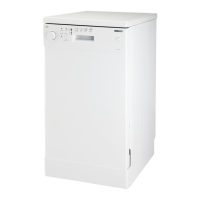
Beko DL1043W Specifications

General IconGeneral
BrandBeko
ModelDL1043W
CategoryDishwasher
LanguageEnglish

Related product manuals