BW8207 Bendix Global Scalable Brake Control (GSBC) System Operator’s Manual 20
BENDIX GSBC SYSTEM FEATURES CONT.
ROLL STABILITY CONTROL RSC
Roll Stability Control (RSC) is a feature of Bendix® Electronic Stability Program
(ESP®)-equipped vehicles that helps mitigate potential rollovers. RSC counteracts
the tendency of a vehicle, or vehicle combination, to tip over while changing
direction (typically, while turning). The lateral forces during a turn can push a vehicle
horizontally and, if the friction between the tires and the road is sucient, the vehicle
may begin to tip and potentially could roll over. To reduce the risk of rollover, RSC
may detect potential rollover conditions and may attempt to slow the vehicle both
by reducing engine throttle (and hence, engine torque) and by applying the tractor
and trailer service brakes as needed at the appropriate wheels.
During an RSC intervention, the vehicle may automatically decelerate. The
system may slow the vehicle with or without you applying the brake pedal,
and even when you are applying the throttle. It is always the responsibility of
the driver to operate the vehicle safely.
During a Roll Stability Control (RSC) intervention, you can use your service brake pedal
to increase the braking pressure. However, if you were to apply less braking pressure
than needed – or even if you release the brake pedal entirely during an intervention
– the system may continue to automatically apply the necessary amount of braking
pressure to the appropriate wheels to potentially help mitigate a potential rollover.
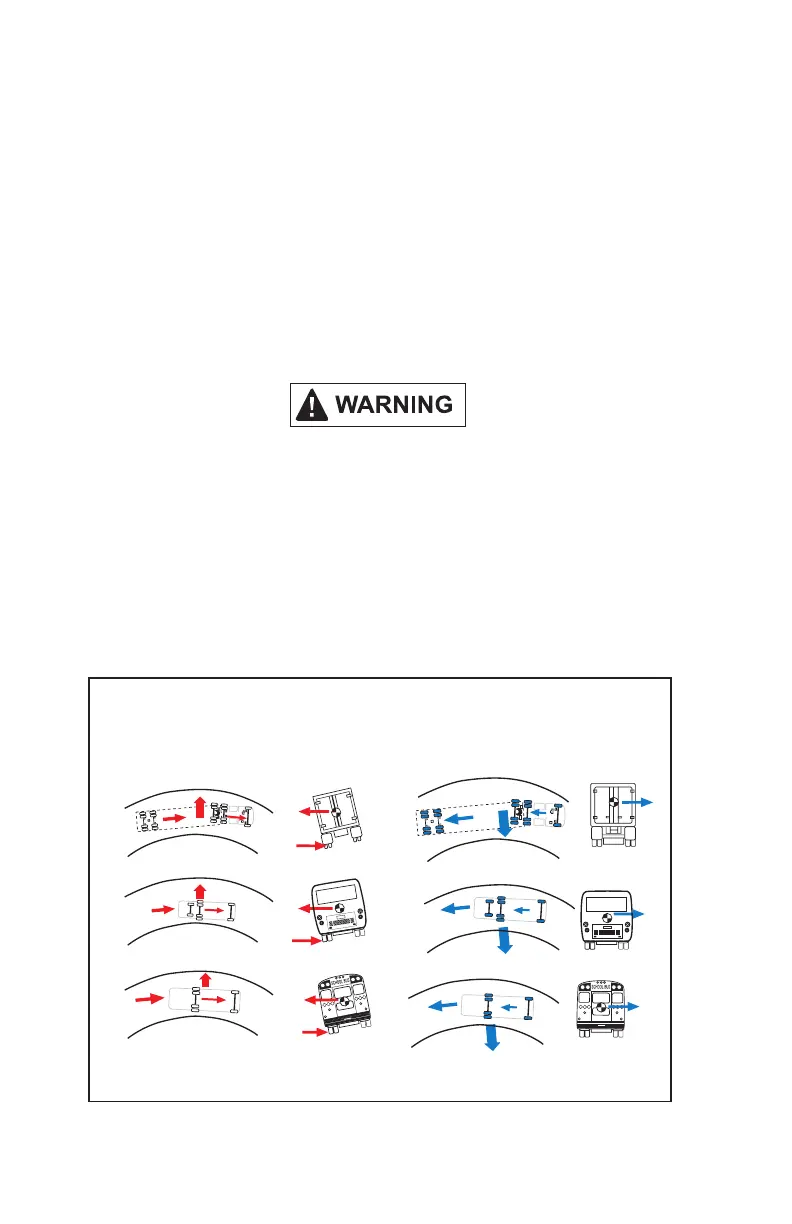
A: Tractor/Trailer B: Transit Bus C: School Bus
B
C
Driving Scenario: A vehicle enters a curve too
fast, on high-friction pavement, resulting in high
lateral (side) forces acting at the vehicles center of
gravity (CG). The high friction between the wheels
and the pavement create a “hinge” eect allowing
the forces at the CG to push the vehicle over.
RSC Intervention: The roll stability control
automatically reduces engine torque and applies
the service brakes (based on the projected rollover
risk) to reduce the vehicle speed, thereby reducing
the tendency to roll over.



 To Next Page