
 Need help?
Do you have a question about the Bernette sew&go and is the answer not in the manual?
Essential tips on needle replacement intervals, thread compatibility, and proper needle insertion.
Guide to using stitch pattern and length knobs for sew&go and b33 models.
Instructions for stitch selection on the b35 model using pattern, length, and width knobs.
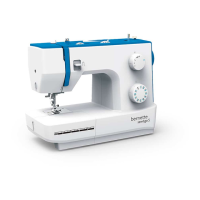
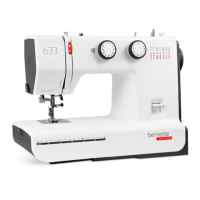
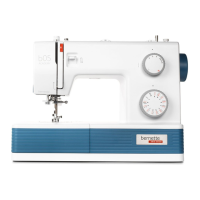
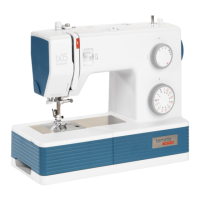
This document is a comprehensive workbook designed to familiarize users with the basic operation and creative possibilities of Bernette sewing machines, specifically models sew&go, b33, b35, and b05. It serves as a step-by-step guide, complete with stitching exercises, mini-quizzes ("Sew HOW" boxes), and recommendations for storing sewn samples and information pages in a 3-ring binder for future reference. The workbook emphasizes practical application and aims to build users' sewing skill sets through regular practice.
The Bernette sewing machines covered in this workbook are designed for a wide range of sewing tasks, from basic garment construction to decorative stitching and embellishment. They are equipped with various features that facilitate different sewing techniques, making them versatile tools for both beginners and more experienced sewers.
The core function of these machines is to create stitches that join fabric pieces, finish edges, or add decorative elements. Users can select from a variety of stitch patterns, including straight stitch, zigzag stitch, blind hem, buttonholes (both 4-step and 1-step), and decorative stitches. The machines allow for adjustments to stitch length and width, providing control over the appearance and strength of the stitches.
A key aspect of the machines' functionality is their compatibility with different presser feet, each designed for specific tasks. For instance, the Zigzag Foot is an all-purpose foot suitable for general sewing, while the Zipper Foot allows for stitching close to zipper coils. Specialized feet like the Satin Stitch Foot and Open-toe Embroidery Foot are designed for heavy decorative stitching, ensuring smooth fabric feeding and clear visibility of the stitching area. The Buttonhole Foot with Slide and Button-sew-on Foot simplify the process of creating buttonholes and attaching buttons, respectively. Other feet, such as the Hemmer Foot, Overlock Foot, Invisible Zipper Foot, Non-Stick Zigzag Foot, and Edgestitch Foot, further expand the machines' capabilities for various finishing and specialized techniques.
The machines also incorporate features like a thread cutter, which simplifies the process of finishing a seam by providing a convenient way to trim threads. The ability to lower the feed dog is crucial for techniques like darning and free-motion embroidery, where the user needs to move the fabric manually.
Operating a Bernette sewing machine involves several user-friendly features that make the sewing process intuitive. Stitch selection is a primary feature, allowing users to choose the desired stitch pattern using a selector knob. For models like sew&go and b33, this involves turning a stitch pattern selector knob and a stitch length knob. The b33 model also offers access to stretch stitches by setting the stitch length knob to "S." The b35 model includes an additional stitch width knob for further control. The b05 model categorizes stitch patterns by color (black, gray, red) and requires specific settings of the stitch length and pattern selector knobs to access them. A crucial safety note for the b05 is to always move the needle to the topmost position before changing the stitch pattern to prevent damage.
Securing stitches is made easy with the reverse sewing feature, which allows the machine to sew backward as long as the reverse sewing lever is depressed. This is essential for reinforcing the beginning and end of seams. Basting, a temporary stitching technique, can be achieved by selecting a straight stitch and adjusting the length to 4-5 mm, creating loose, long stitches that are easy to remove.
Turning corners is a fundamental skill, and the workbook guides users through the process of stopping with the needle down, raising the presser foot, pivoting the fabric, and then lowering the foot to continue sewing. This technique ensures sharp, clean corners in stitching.
When working with different fabrics and threads, the workbook emphasizes the importance of selecting the correct needle size and type. It provides a "Needle Secret Code" and a "Needle Size Conversion" chart to help users match the needle to the fabric weight and thread type. For instance, smaller needles are recommended for lightweight fabrics, while larger needles are for heavier materials. The flat side of the needle must always be inserted to the back, and needles should be changed regularly (every 4-6 hours of stitching) to maintain stitch quality and machine performance.
Thread selection is also covered, with guidelines on thread weights and fiber types (polyester, cotton, rayon, silk) and their suitability for different applications. Long staple threads are recommended for their strength and smoothness, which helps reduce lint and fuzz in the machine.
For specialized tasks like buttonholes, the machines offer either a 4-step or 1-step buttonhole function, depending on the model. The workbook provides detailed instructions on marking buttonhole positions, attaching the appropriate foot, and executing the steps to create functional and beautiful buttonholes. The 1-step buttonhole feature on models b35 and b05 includes a button holder on the foot, which automatically sizes the buttonhole based on the inserted button.
Attaching buttons is simplified with the Button Sew-On Foot, which allows users to machine-stitch 2- or 4-hole buttons. The process involves lowering the feed dog, positioning the button, and adjusting stitch width to align with the buttonholes.
Stitching zippers is another common task, and the Zipper Foot is essential for this. The workbook details how to baste the zipper, position the fabric, and stitch close to the zipper coil for a professional finish.
Decorative stitching and embellishment techniques are explored, with advice on preparing the fabric (using interfacing or stabilizers to prevent tunneling or puckering), selecting appropriate threads (cotton, rayon, or polyester embroidery threads), and choosing the correct presser foot (Satin Stitch Foot or Open Toe Foot for dense stitches, Zigzag Foot for more open stitches).
Double needle stitching allows for parallel lines of stitches, creating decorative effects or strong seams. The workbook explains how to insert a double needle, thread the machine with two spools, and adjust stitch width to avoid needle breakage.
While the workbook primarily focuses on usage, it implicitly covers aspects of maintenance through its recommendations. The most direct maintenance advice is the regular changing of sewing machine needles. Users are advised to change needles after every 4-6 hours of stitching, emphasizing that needles are the most inexpensive part of the machine but crucial for good results and machine longevity. This practice helps prevent common "mechanical" problems and fabric damage that can arise from bent, damaged, or incorrect needles.
The recommendation to use long staple threads also contributes to machine maintenance, as these threads produce less lint and fuzz, which can otherwise accumulate in the machine and lead to tension inconsistencies or damage over time.
Although not explicitly detailed as maintenance steps, the workbook's emphasis on proper thread and needle selection, correct stitch settings, and appropriate presser foot usage indirectly promotes good machine health by preventing issues that could lead to wear and tear or require servicing. For example, ensuring the needle is fully inserted with the flat side to the back prevents damage to the needle and the machine. Similarly, checking stitch width before double needle stitching prevents needle breakage, a common issue if not properly managed.
The workbook also mentions that instructional video tutorials and inspiring sewing projects are available on mybernette.com and the Bernette website, which can serve as additional resources for users to learn more about their machines, including best practices that contribute to their upkeep.
 General
| Maximum Stitch Width | 5 mm |
|---|---|
| Maximum Stitch Length | 4 mm |
| Free Arm | Yes |
| Voltage | 220-240 V |
| Power | 70 W |
| Dimensions | 384 x 160 x 308 mm |


 To Next Page