
 Need help?
Do you have a question about the Biasi RINNOVA ADAPTIVE and is the answer not in the manual?
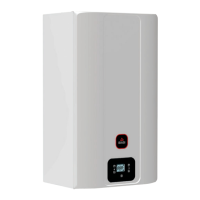
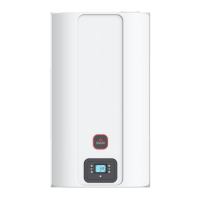
Illustrates the physical layout and key components of the boiler unit.
Details the essential shut-off valves and cocks for system isolation and maintenance.
Explains the functions and operation of the boiler's main control panel and display.
Defines various LCD signals, icons, and their meanings for boiler status.
Provides critical safety warnings and essential advice before operating the boiler.
Details the step-by-step process for safely igniting the boiler for heating and DHW.
Guides on adjusting the heating water temperature based on system needs and outdoor conditions.
Explains how to adjust and control the domestic hot water temperature for user comfort.
Describes the function and activation of the 3-star preheating for enhanced DHW efficiency.
Outlines the correct steps for safely shutting down the boiler for periods of inactivity.
Instructions on how to properly fill the heating circuit with water and check pressure.
Advice on efficient heating operation, including room thermostat use and radiator checks.
Explains the boiler's antifreeze system and precautions for cold weather operation.
Highlights the importance of annual servicing by an authorized technician for optimal performance.
Provides instructions for safely cleaning the exterior of the boiler unit.
Details common operating anomalies, lockout codes (E, E91), and reset procedures.
Guides on accessing and interpreting boiler status information via the INFO mode.
Explains how to interpret fault codes received from an optional remote control unit.
Describes the safety function of the flue gas probe and thermal fuse and lockout conditions.
Provides a detailed view of the boiler's internal assembly with numbered components.
Illustrates the hydraulic and gas circuit schematic with key component labels.
Details the electrical connections, terminal board layout, and wire color coding.
Presents hydraulic performance data (pressure vs. flow rate) for different boiler models.
Details the expansion vessel's capacity, pre-load pressure, and useful capacity.
Provides comprehensive technical data for the M300V.2025 SM model, including performance metrics.
Specifies flue gas discharge types, diameters, and boiler compatibility.
Provides comprehensive technical data for the M300V.3035 SM model, including performance metrics.
Crucial safety warnings and regulatory compliance requirements for boiler installation.
Covers essential installation precautions, system cleaning, and heating circuit filling.
Instructions for correctly installing the provided boiler mounting bracket.
Provides detailed dimensions, pipe sizes, and required fittings for boiler installation.
Guides on physically assembling the boiler and making necessary pipe and gas connections.
Details on correctly installing the flue gas exhaust duct, including slopes and terminal placement.
Specifies allowed lengths, elbows, and configurations for flue gas outlet systems.
Provides guidelines for smooth propylene or stainless steel exhaust-flue pipework installation.
Specifies correct positioning of draught terminals relative to building features and regulations.
Instructions for connecting the boiler to the electrical power supply and other electrical components.
Guides on wiring room thermostats and zone valves to the boiler's control system.
Details on installing an optional external temperature sensor and avoiding unsuitable locations.
Explains the electrical connection procedure between the boiler and the external sensor.
Procedure for setting the correct parameter for the installed external sensor type.
Instructions for electrically connecting an optional remote control unit to the boiler.
Guides on enabling external sensor operation and setting the K coefficient for temperature control.
Explains how to adjust the pump's post-circulation time after a heating cycle.
Details on adjusting the minimum time between ignition attempts for the boiler.
Illustrates various hydraulic system configurations, including those with hydraulic separators.
Essential safety warnings and checks before commencing service operations on the boiler.
Step-by-step guide for preparing the boiler for service, covering gas supply and circuit filling.
Critical safety warnings related to gas pressure measurements and electrical hazards.
Procedures for checking network gas pressure and performing basic gas operations.
Detailed steps for automatically calibrating the gas valve for CO2 measurement accuracy.
Important advisory that gas type adaptation must be performed by authorized personnel.
Procedure for setting the boiler to operate with LPG (G31) instead of natural gas (G20).
Safety warnings and prerequisites for performing maintenance, including isolation and protective gear.
Guides on setting the interval for scheduled annual maintenance reminders.
Step-by-step instructions for safely removing the front, side, and control panel covers.
Reverse procedure for correctly reassembling the boiler's body panels after maintenance.
Procedure for draining the domestic hot water (DHW) circuit before maintenance.
Procedure for draining the heating circuit to facilitate maintenance tasks.
Instructions for cleaning the primary condensate exchanger and burner unit.
Guidance on checking and correcting the pressure within the heating expansion tank.
Information regarding the descaling of the domestic hot water exchanger by a technician.
Recommends periodic checks of the flue gas exhaust duct and safety circuit by a technician.
Steps for checking boiler efficiency using a flue gas analyser and comparing data.
Guidance on checking the condensate discharge siphon for blockages or deposits.
Procedure for enabling and configuring the chimney sweep function for various operating modes.
Instructions for configuring the boiler settings after replacing the control board.
Advises on correct disposal of the boiler and accessories according to environmental regulations.




 To Next Page
 General