EasyManua.ls Logo

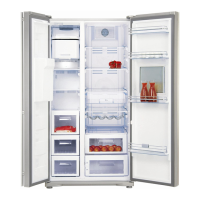
Blomberg FNT 9683 N - User Manual

Blomberg FNT 9683 N
135 pages
Print Icon
To Next Page IconTo Next Page
Loading...
FNT 9683 N - FNT 9683 XN - FNT 9685 N - FNT 9685 XN
Refrigerator
User Manual
Køleskab
Brugervejledning
Kylskåp
Bruksanvisning
Kjøleskap
Bruksanvisning
58 4612 0000/AC
1/2
EN / DA / SV / NO

Table of Contents

Questions and Answers

  • M
    mgoodwinAug 20, 2025
    What to do if the temperature in my Blomberg FNT 9683 N Refrigerator or freezer is very high?
    • D
      danielskristiAug 20, 2025
      If the temperature in your Blomberg Refrigerator or freezer is too high, it could be due to a high temperature setting. Adjust the fridge temperature, as it affects the freezer's temperature. Avoid frequently opening the doors or leaving them ajar. If you've recently plugged in the unit or loaded it with food, allow time to reach the set temperature. Avoid placing hot food inside the refrigerator.
  • K
    kimberlyhodgesAug 22, 2025
    What to do if food kept in the fridge compartment drawers of my Blomberg FNT 9683 N is frozen?
    • B
      Brianna CarneyAug 22, 2025
      If food in the fridge compartment drawers of your Blomberg Refrigerator is freezing, the fridge temperature might be set too low. Adjust the fridge temperature to a higher value.
  • D
    dylan80Aug 25, 2025
    Why is my Blomberg FNT 9683 N running frequently or for a long time?
    • C
      Chad RamseyAug 25, 2025
      Your Blomberg Refrigerator might be running longer than expected due to several reasons. It could be normal if the unit is new, recently loaded with food, or if the room temperature is high. Ensure that you are not putting hot food inside. Frequent door openings or doors left ajar can also cause this. Check if the doors are fully closed and the door seal is clean and properly seated. Also, verify that the temperature setting is not too low. A damaged or soiled door seal can also cause longer operation; try cleaning or replacing it.
  • J
    Jeffrey GonzalezAug 26, 2025
    What to do if my Blomberg Refrigerator is not operating?
    • A
      amythompsonAug 26, 2025
      If your Blomberg Refrigerator isn't working, first, ensure the plug is securely inserted into the socket. Then, check the socket's fuse and the main fuse to see if they have blown.
  • R
    Robert ManningAug 28, 2025
    Why is there condensation on the side wall of my Blomberg Refrigerator?
    • T
      Tara WarrenAug 28, 2025
      Condensation on the side wall of your Blomberg Refrigerator (MULTIZONE, COOL CONTROL and FLEXI ZONE) can occur if the door is opened frequently, the ambient humidity is high, food containing liquid is stored in open containers, the door is left ajar, or the thermostat is set too cold. Try to avoid opening the door frequently, ensure the refrigerator is not in a very humid place, store food with liquid in closed containers, close the door properly, and adjust the thermostat to a suitable level.
  • D
    Darius CurtisAug 29, 2025
    Why is the compressor not running on my Blomberg Refrigerator?
    • J
      jonathon01Aug 29, 2025
      If the compressor in your Blomberg Refrigerator isn't running, it could be due to a few reasons. The protective thermic of the compressor might have blown out due to a sudden power failure; the refrigerator should start after about 6 minutes. It could also be in a defrost cycle, which is normal for a full-automatically defrosting unit. Ensure the refrigerator is properly plugged into the socket, the temperature settings are correct, and there isn't a power outage. The unit should return to normal operation once power is restored.
  • J
    Jason SmithAug 31, 2025
    How to get rid of bad odour inside my Blomberg FNT 9683 N?
    • D
      debbie83Aug 31, 2025
      To eliminate bad odors in your Blomberg Refrigerator, regularly clean the inside with a sponge, lukewarm water, or carbonate dissolved in water. Ensure food is stored in closed containers to prevent the spread of odor-causing microorganisms. Check for and remove any expired or spoiled food. Also, consider that some containers or packaging materials may cause odors, so try using different ones.
  • F
    fgilbertSep 2, 2025
    Why is the freezer temperature very low in my Blomberg FNT 9683 N Refrigerator?
    • L
      Lauren SpencerSep 2, 2025
      If the freezer temperature in your Blomberg Refrigerator is too low while the fridge temperature is sufficient, the freezer temperature might be set too low. Adjust the freezer temperature to a warmer setting.
  • Z
    zacharynolanSep 4, 2025
    Why is the fridge temperature very low in my Blomberg FNT 9683 N?
    • W
      Wayne SimsSep 4, 2025
      If the fridge temperature in your Blomberg Refrigerator is too low while the freezer temperature is sufficient, the fridge temperature might be set too low. Adjust the fridge temperature to a warmer setting.
  • W
    wilkinsonkennethSep 6, 2025
    Why is there condensation on the inner walls of my Blomberg Refrigerator?
    • S
      Stephanie RiveraSep 6, 2025
      Condensation on the inner walls of your Blomberg Refrigerator can be normal in hot and humid weather. However, it can also occur if the doors are opened frequently or left ajar. Avoid opening the doors frequently and ensure they are closed properly.

Summary

Introduction and Safety First

User Manual Guidance

Encourages careful reading of the manual before product use and keeping it for reference.

Understanding Symbols

Explains symbols used throughout the manual, such as important information, warnings, and electric voltage.

Your Cooler;Freezer Components

Product Parts Identification

Identifies and labels key parts of the cooler/freezer, including control panel, flap, tray, drawers, and feet.

Important Safety Warnings

Intended Use

Specifies the intended applications for the appliance, including household and similar environments.

General Safety

Provides crucial safety guidelines for operation, disposal, and interaction with the appliance.

Specific Safety for Water Dispenser

Details specific safety considerations for products equipped with a water dispenser.

Child Safety Precautions

Advises on keeping keys away from children and supervising them to prevent tampering.

WEEE Directive and Disposal

Explains compliance with WEEE Directive and proper disposal methods for electrical equipment.

HC Cooling System Warning

Warns about flammable cooling gases (R600a) and handling precautions.

Energy Saving Tips

Maximizing Energy Efficiency

Offers practical advice to reduce energy consumption, such as door management and placement.

Installation Guide

Relocation Precautions

Outlines steps and precautions for safely moving and transporting the cooler/freezer.

Pre-Operation Checks

Details essential checks before starting the cooler/freezer, including cleaning and accessory placement.

Proper Electrical Connection

Guides on proper electrical connection, grounding, and safety requirements.

Placement and Disposal Procedures

Installation Location and Clearances

Specifies ideal placement criteria, including distance from heat sources and ventilation requirements.

Disposal of Packaging

Instructions for environmentally responsible disposal of packaging materials.

Disposal of Old Appliance

Guidance on how to safely and environmentally dispose of the old cooler/freezer.

Door Removal for Access

Instructions on how to remove doors for easier passage through doorways.

Appliance Adjustments and Door Warnings

Adjusting the Legs

Explains how to balance the cooler/freezer by adjusting its front legs for stability.

Changing Door Opening Direction

Information on how to modify the door opening direction, often requiring service.

Door Open Alert System

Describes the audio warning signal that alerts if the door is left open for an extended period.

Initial Preparation and Operation

Appliance Placement and Environment

Clarifies appliance type (freestanding) and environmental conditions for installation.

First Six Hours of Operation

Provides instructions for the first six hours of operation, including door usage and load.

Using Your Cooler;Freezer

Indicator Panel Overview

Introduces the control panel and its various indicators and functions.

Quick Freeze and Temperature Settings

Explains how to use quick freezing and adjust freezer compartment temperatures.

Eco-Fuzzy and Energy Saving Modes

Describes economic usage and automatic energy saving modes with their indicators.

Key Lock Mode Operation

Details how to activate and deactivate the key lock to prevent accidental changes.

Ice Making Features

Icematic and Ice Storage Usage

Instructions for filling the icematic, collecting, and storing ice cubes.

Freezing Fresh Foods

Food Preparation and Packaging

Guidelines on dividing, boiling, and packaging foods for optimal freezing, listing suitable materials.

Freezing Process Guidelines

Advice on placement, cooling hot foods, and preventing ventilation blockage.

Frozen Food Management

Preserving Frozen Foods

Tips for purchasing and storing frozen foods, including checking packages and expiry dates.

Defrosting and Freezing Capacity

Discusses defrosting methods, automatic defrosting, and freezing capacity standards.

Recommended Temperature Settings

Maintenance and Cleaning Guide

Cleaning Procedures and Precautions

Warns against using harsh chemicals and recommends specific cleaning agents and methods.

Protecting Plastic Surfaces

Advises on preventing damage to plastic surfaces from oils and cooked meals.

Troubleshooting Common Issues

Appliance Not Operating

Addresses issues like improper plug insertion or blown fuses when the appliance does not start.

Condensation and Humidity Causes

Explains causes of condensation on walls and humidity, like frequent door opening.

Compressor and Noise Issues

Covers compressor not running, normal operating noises, and potential causes of increased noise.

Extended Operation and Temperature Settings

Explains reasons for frequent/long operation and addresses various temperature setting issues.

Vibrations, Noise, and Condensation

Discusses vibrations, noise, interior condensation, and exterior humidity causes.

Odor, Door Closing, and Crisper Issues

Addresses bad odors, door not closing, and stuck crispers, with their causes and solutions.

Disclaimer and Self-Repair Information

General Disclaimer and Warnings

States limitations of liability and general warnings regarding user handling and repairs.

Self-Repair Guidelines and Limitations

Outlines which parts can be self-repaired and emphasizes professional repair for critical components.

Blomberg FNT 9683 N Specifications

General IconGeneral
BrandBlomberg
ModelFNT 9683 N
CategoryRefrigerator
LanguageEnglish

Related product manuals