71
[WARNING] Due to the dangerous potential of high pressure cylinders, it is
important that anyone involved in their use be completely familiar with the
Department of Transportation “Code of Federal Regulations Title 49” and the
various Compressed Gas Association pamphlets that are available covering
the care and use of high pressure cylinders. Regulations do not permit filling
Natural Gas Vehicle (NGV) cylinders with an overcharge.
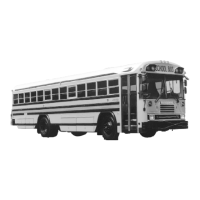
The compressed natural gas (CNG) fuel system consists of DOT-certified CNG
storage tanks (which replace the fuel tank), a structure to hold and protect the stor-
age tanks, metallic fuel lines to deliver the fuel, high and low pressure regulators to
reduce the pressure entering the throttle body, a fuel shutoff solenoid, and the throt-
tle body which delivers the CNG/air mixture to the engine. The regulator includes an
integral heater to preheat the CNG for anti-icing control.
A pressure relief system is part of the fuel system. This system is designed to vent
the tank contents when pressure and temperature become excessive.
A fill connection is located near the entrance of the bus. If so equipped, the en-
gine powering this bus is engineered specifically for use with CNG. Operation and
maintenance procedures are similar to those used on gasoline or diesel engine ve-
hicles. Differences identified are obvious.
Owner / Operator Responsibilities
The owner/operator should be aware of the code requirements and be familiar with
applicable codes which apply to the area of operation. The owner/operator should
be aware that fuel cylinders for CNG (Compressed Natural Gas) must be inspected ev-
ery three years in accordance with NGV-2 specifications. The owner/operator should
be aware that cylinder expiration date is fifteen years after the date of the cylinder
manufacture. Compressed gas cylinders must be replaced at that time.
Testing and recertification of the compressed gas cylinders is not covered by Blue
Bird warranty. Replacement of compressed gas cylinders, at the end of their service
life, is not covered by Blue Bird warranty.
National Fire Protection
Association #52 States: Cylinders shall be manufactured, inspected, marked, tested,
retested, equipped and used in accordance with U.S. Department of Transportation
(DOT) or Canadian Transport Commission (CTC) regulations, exemptions or special
permits specifically for CNG service and shall have a rated service pressure of not less
than 2400 psig at 70° F (16.5 MPa at 21.1° C).
Pressure vessels shall be manufactured, inspected, marked and tested in accor-
dance with the rules for construction of unfired pressure vessels, Section VIII (Divi-
sion 1), ASME Boiler and Pressure Vessel Code.
When a vehicle is involved in an accident or fire causing damage to the CNG
container, the CNG container shall be replaced or removed, inspected and tested in
accordance with the document under which it was originally manufactured before
being returned to service.
COMPRESSED NATURAL GAS


 To Next Page