fig. 2
fig. 3
fig. 4
0
10
10
20
30
40
50
60
70
10
5
0
0
0
15
20
25
30
05
Ignition System Vacuum Advance
On standard points systems and some electronic ignition systems, there are two types of advanced
methods used, both of which function correctly to obtain maximum performance and fuel
economy. These are the mechanical or centrifugal method and the vacuum advance method.
Mechanical or Centrifugal Method
This method operates by the use of weights located in the base of the distributor. The weights
move outwards advancing ignition timing as engine RPM increases. Firstly remove the vacuum
advance line to disable the system. Then with the timing light connected, run the engine RPM up
checking that the timing advances in accordance with the manufacturer’s specification.
Vacuum Advance Method
This method senses engine load via the manifold vacuum. A vacuum diaphragm is mounted onto
the distributor and connected to a rotating internal base plate which advances or pulls back
timing as required to suit varying engine loads. For correct operation, again with the timing light
connected raise the engine RPM and check the timing advance against the manufacturer’s
specifications. If the vacuum advance is not operating, remove the vacuum line from the
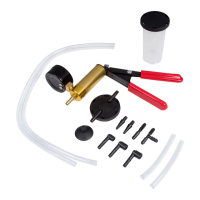
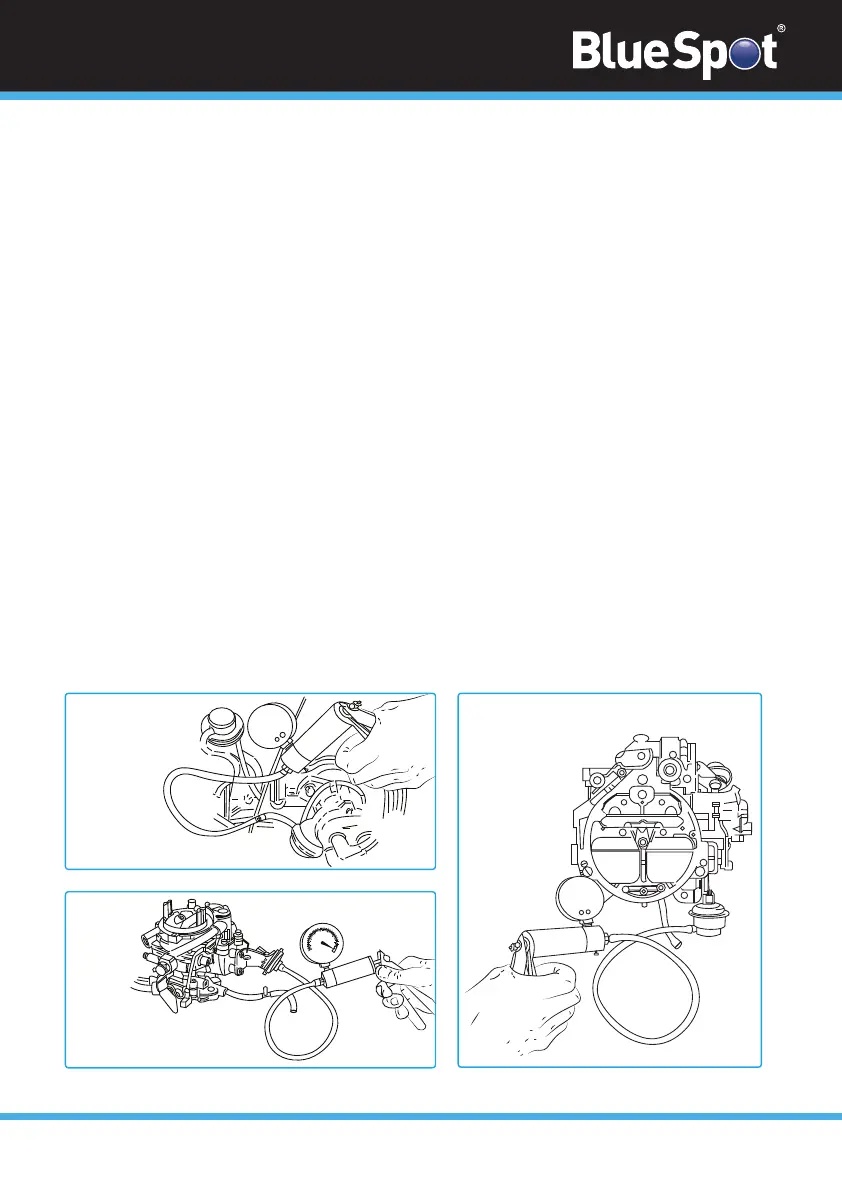
distributor advance mechanism. Connect the vacuum tester (figure 2) and create a 5-10 inHg
vacuum, monitoring the timing at the same time. If a timing advance is noted this confirms that
the vacuum diaphragm and mechanical links are in order and that the fault is a vacuum supply. To
confirm this, connect the vacuum tester to the vacuum supply line and check the gauge reading.
No vacuum should be noted at idle but when the engine RPM is increased a vacuum increase
should be observed. If this does not occur, trace the vacuum line back checking for restrictions
and breaks.


 To Next Page
 Loading...