06
Fuel Systems
The vacuum tester can be used to review the condition of a mechanical fuel pump by
testing the vacuum that it is able to create.
1. Remove the suction line from the pump.
2. Connect the vacuum tester to the suction port of the pump.
3. Start and run the engine at idle.
4. The vacuum reading that should be observed will differ slightly on different makes and
models of vehicle. However, as a general rule, approximately 15inHG of vacuum should
be created. This should also be held for approximately 1 minute after the engine is shut
down. The fuel pump will require either an overhaul or replacement.
Carburettors
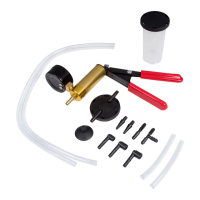
The BlueSpot Brake Bleeder and Vacuum Pump Kit allows you to accurately test different
types of vacuum control systems. Below are two examples of tests that can be carried out.
Choke Break Diaphragm
1. Run the engine until the normal operating temperature is reached.
2. Switch the engine off.
3. Disconnect the vacuum line to the diaphragm module.
4. Connect the vacuum tester (figure 3) and apply approximately 15inHG of vacuum and
wait 30 seconds.
5. Observing the gauge there should be no drop.
6. With the vacuum still applied ensure that the choke butterfly is pulled to fully open the
position.
Vacuum Operated Carburettor Secondary Barrel
1. Run the engine until the normal operating temperature is reached.
2. Switch the engine off.
3. Remove the vacuum line from the second diaphragm module.
4. Connect the vacuum tester (figure 4).
5. Hold the throttle and secondary air valve flaps open.
6. Operate the hand pump whilst observing the free and easy opening of the secondary
throttle butterfly.
Testing Fuel Injection Pressure Regulator
The multi-point fuel injection rail pressure must vary to suit changing engine loads and fuel
delivery requirements. To sense the varying loads this is done using a vacuum-operated
regulator which is connected to the engine manifold vacuum.


 To Next Page
 Loading...