Laundry Detergents
and Additives
Dispensing the correct amount
of detergent
Keep detergents and additives out of the reach
of children.
Dispense the detergent according to:
- the water hardness. This information can be
obtained from your local water authority.
- the amount of laundry.
- the amount of soil. Information on soiling can
be found on page 10.
- the specifications of the detergent
manufacturer. Dispensing the correct amount
of detergent relieves the strain on the
environment and ensures optimum washing
results.
[] DO NOT use chlorine bleach in this washing
machine.
If it is necessary to use a detergent made for
top loading washing machines, to avoid
oversudsing, it is recommended that only 1Ato
1/2(approx. 2 3 Tbl.) of the amount
recommended by the detergent manufacturer
for top loading washing machines be used.
Using this lesser amount may effect the
cleaning perfomance. The first time, start with
1Aof the recommended amount. Then, only if
there is a low level of sudsing and your clothes
are not getting clean, try a little more.
Pour liquid detergent into the appropriate
dispensing chamber.
Too little detergent:
The laundry is not cleaned properly and will, after
a while, become grey and stiff.
Greyish brown spots (fat globules) may appear on
the laundry. The heaters may calcify.
Too much detergent:
Environmentally incompatible, excessive foam
reduces wash agitation causing poor washing and
rinsing results.
Filling laundry detergent and/or
additive dispensers
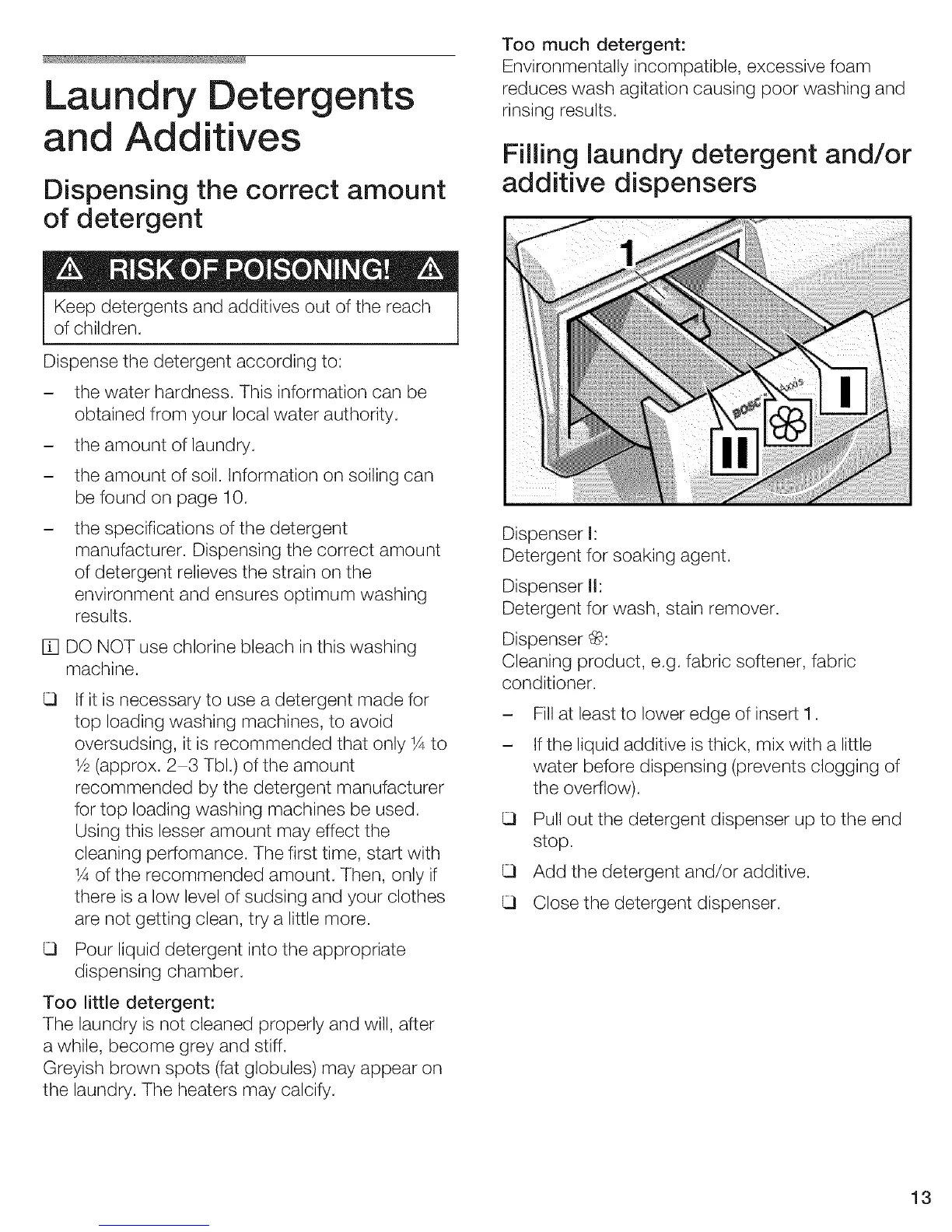
Dispenser I:
Detergent for soaking agent.
Dispenser I1:
Detergent for wash, stain remover.
Dispenser _:
Cleaning product, e.g. fabric softener, fabric
conditioner.
Fill at least to lower edge of insert I.
If the liquid additive is thick, mix with a little
water before dispensing (prevents clogging of
the overflow).
Pull out the detergent dispenser up to the end
stop.
Add the detergent and/or additive.
Close the detergent dispenser.
13


 To Next Page