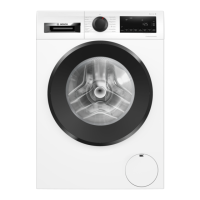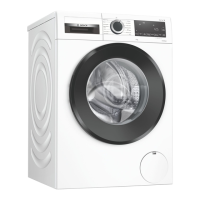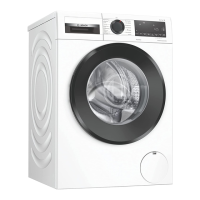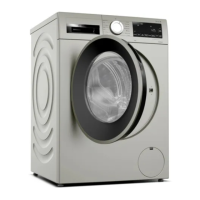
What does it mean if my Bosch WGG244010 Washer's voltage control system detects impermissible undervoltage?
- HHarold PorterSep 13, 2025
If the voltage control system in your Bosch Washer detects impermissible undervoltage, there is no possible fix.
What does it mean if my Bosch WGG244010 Washer's voltage control system detects impermissible undervoltage?
If the voltage control system in your Bosch Washer detects impermissible undervoltage, there is no possible fix.
What to do if program does not start on my Bosch Washer?
If the program on your Bosch Washer does not start, press Start/Reload.
What to do if the door is not closed on my Bosch Washer?
If the door of your Bosch Washer is not closed, close the door and press Start/Reload to begin the program.
What to do if laundry is stuck in the door of my Bosch WGG244010 Washer?
If laundry is stuck in the door of your Bosch Washer, open the door again, remove the trapped laundry, close the door, and press Start/Reload to start the program.
What to do if my Bosch Washer shows error E:30 / -10 or has low water pressure?
If the error code "E:30 / -10" is displayed on your Bosch Washer or you notice low water pressure, the issue might be clogged filters in the water inlet. You should clean the filters. Also, ensure that the water tap is open, and the water inlet hose isn't kinked or pinched. If the error persists after these steps, the water level measurement system may be defective, in this case: first wait about 5 minutes until the pumping process is finished, then switch off the device, turn the device back on, and if the error message appears again, call for service.
How to fix error E:60 / -2B on a Bosch WGG244010?
If your Bosch Washer displays error code "E:60 / -2B", it means the imbalance control system has stopped spinning because the laundry is unevenly distributed. To resolve this, redistribute the laundry inside the drum.
What to do if the temperature is too high in my Bosch WGG244010?
If the temperature in your Bosch Washer is too high, wait for the temperature to drop.
How can I prevent bacteria formation in my Bosch WGG244010?
To prevent bacteria formation in your Bosch Washer, leave the door and the detergent drawer open when you are not using the appliance. This allows any residual water to dry off, reducing moisture and detergent residue.
Why is there detergent residue on damp laundry from my Bosch WGG244010?
If you see detergent residue on damp laundry after washing in your Bosch Washer, it may be due to water-insoluble substances in the detergents. To address this, start the program Wash.
Why is there detergent residue on dry laundry from my Bosch WGG244010 Washer?
If you find detergent residue on dry laundry after washing in your Bosch Washer, detergents may contain water-insoluble substances. Brush the laundry after washing and drying to remove the residue.
General safety guidelines, intended use, and user restrictions for the washing machine.
Instructions for safe installation, grounding, and electrical connection to prevent hazards.
Guidelines for safe operation, handling the device, and avoiding injuries during use.
Procedures for safely cleaning and maintaining the washing machine to ensure longevity.
Detailed instructions on how to properly connect the water inlet hoses to the device and water supply.
Procedures for aligning the device correctly and connecting it to the electrical supply for safe operation.
Detailed instructions for cleaning the drain pump in case of blockages or noise issues.
Solutions for display errors and problems related to the drain pipe or hose.
Troubleshooting steps for water inlet problems, clogged filters, and load imbalance.
Addressing issues related to voltage fluctuations, high temperatures, and the door lock mechanism.
Solutions for programs not starting, excessive suds, and unusual noises during operation.
Information on finding product numbers and contacting customer service for support.
General safety guidelines, intended use, and user restrictions for the washing machine.
Instructions for safe installation, grounding, and electrical connection to prevent hazards.
Guidelines for safe operation, handling the device, and avoiding injuries during use.
Procedures for safely cleaning and maintaining the washing machine to ensure longevity.
Detailed instructions on how to properly connect the water inlet hoses to the device and water supply.
Procedures for aligning the device correctly and connecting it to the electrical supply for safe operation.
Detailed instructions for cleaning the drain pump in case of blockages or noise issues.
Solutions for display errors and problems related to the drain pipe or hose.
Troubleshooting steps for water inlet problems, clogged filters, and load imbalance.
Addressing issues related to voltage fluctuations, high temperatures, and the door lock mechanism.
Solutions for programs not starting, excessive suds, and unusual noises during operation.
Information on finding product numbers and contacting customer service for support.
| Type | Freestanding |
|---|---|
| Appliance placement | Freestanding |
| Product color | White |
| Built-in display | Yes |
| Control type | Rotary, Touch |
| Door hinge | Left |
| Drum material | Stainless steel |
| Drum volume | 63 L |
| Cold water fill | Yes |
| Hot water fill | No |
| Rated capacity | 9 kg |
| Maximum spin speed | 1400 RPM |
| Spin-drying class | B |
| Washing class | A |
| Noise level (spin) | 74 dB |
| Delayed start timer | Yes |
| Delay start (max) | 24 h |
| Remaining time indication | Yes |
| Child lock | Yes |
| Adjustable spin speed | Yes |
| Foam control system | Yes |
| Load balancing system | Yes |
| Self-cleaning detergent drawer | Yes |
| Energy efficiency class | A |
| Water consumption washing per cycle | 48 L |
| Power consumption (standby) | 0.5 W |
| Connected load | 2300 W |
| AC input voltage | 220-240 V |
| AC input frequency | 50 Hz |
| Dimensions (HxWxD) | 848 x 598 x 590 mm |
| Water Consumption | 48 L |
| Loading type | Front-load |