6756
12-18-95
OPERATING INSTRUCTIONS
OPERATING TECHNIQUES
ATTACHMENT TYPE BACKHOES
BASIC DIGGING TECHNIQUE
When starting an excavation, make the first cut of each section shallow,
being careful to follow the exact layout of the excavation. The reason for the
shallow cut is to minimize damage to the sod and to facilitate replacement.
These first cuts are also important because they will act as guides for the re-
maining cuts, thus getting the first few cuts as accurate as possible will help in
keeping all future cuts accurate.
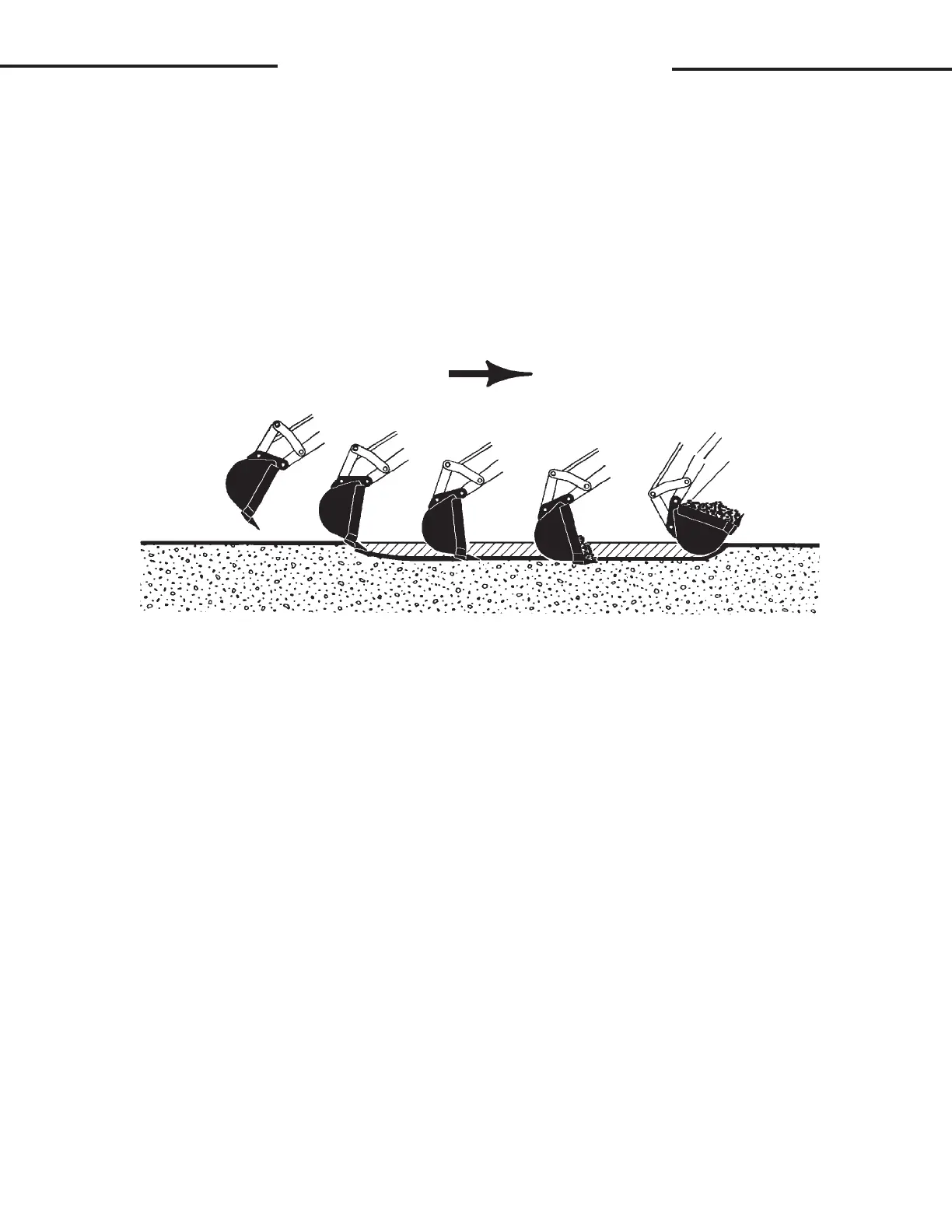
When digging with the backhoe, extend the boom, dipper and bucket out,
away from the operator. Lower the boom and dipper to start the digging process.
The bucket teeth should be at a 30° to 45° entry angle. As the digging starts,
curl the bucket until the cutting edge is level with the horizon. Crowd the bucket
in toward the operator working the bucket lever to keep the bucket level. As the
bucket moves toward the operator, manipulate the boom lever to keep the cut
level. At the end of the digging cycle, crowd the dipper out and completely curl
the bucket while lifting it from the excavation. Once you have cleared the exca-
vation, swing the bucket to the spoil pile. Start to dump the bucket before the
pile is approached. Once the bucket is empty, swing the unit back to the exca-
vation, positioning the bucket and dipper for the next cut in the process. The
whole digging process should be one smooth cycle that is repeated until the
excavation is completed.
When the excavation has been dug to within six inches of the finished
bottom, clear and touch up the sides of the excavation. Use the flat sides of the
bucket to scrape off any high spots. Dislodge any exposed rocks if they seem
loose. When finishing walls, finish the far wall by curling the bucket out, crowd-
ing the dipper out, and forcing the bucket down. To finish the closest wall, lift the
bucket up and curl it in.
GG



 To Next Page