Tire Safety Information
Bri-Mar 31
3.2.1 Trailers 10,000 Pounds GVWR or Less
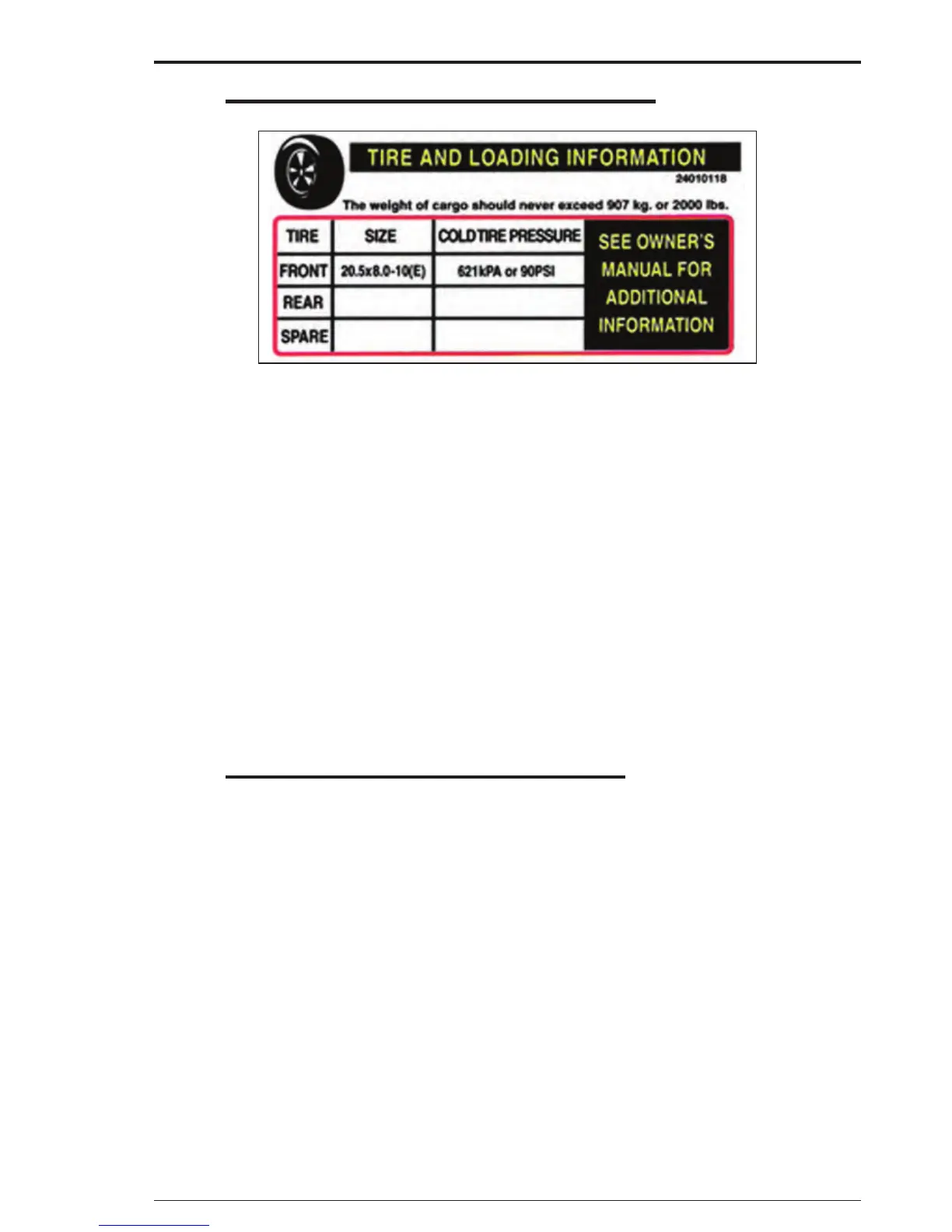
Tire Information Placard – Figure 3-1
1. Locate the statement, “The weight of cargo should never exceed
XXX kg or XXX lbs.,” on your vehicle’s placard. See figure 3-
1.
2. This figure equals the available amount of cargo and luggage
load capacity.
3. Determine the combined weight of luggage and cargo being
loaded on the vehicle. That weight may not safely exceed the
available cargo and luggage load capacity.
4. The trailer’s placard refers to the Tire Information Placard
attached adjacent to or near the trailer’s VIN (Certification) label
at the left front of the trailer.
3.2.2 Trailers Over 10,000 Pounds GVWR
(Note: These trailers are not required to have a tire information placard
on the trailer and may not have one installed)
1. Determine the empty weight of your trailer by weighing the
trailer using a public scale or other means. This step does not
have to be repeated.
2. Locate the GVWR (Gross Vehicle Weight Rating) of the trailer
on your trailer’s VIN (Certification) label.
3. Subtract the empty weight of your trailer from the GVWR stated
on the VIN label. That weight is the maximum available cargo
capacity of the trailer and may not be safely exceeded.
Trailers



 To Next Page