This document provides operating and maintenance instructions for Briggs & Stratton engines, specifically models 220700 to 220799 and 252700 to 252799. It covers essential safety guidelines, operational procedures, and maintenance schedules to ensure the longevity and safe functioning of the engine.
Function Description
These engines are single-cylinder, L-head, air-cooled types designed to power various equipment, particularly rotary lawnmowers. Their primary function is to convert fuel into mechanical energy to drive the attached machinery. The document emphasizes safe operation, proper fueling, and regular maintenance to ensure efficient performance and prevent hazards. Key components include a fuel tank, carburetor, spark plug, muffler, air cleaner, and a governor speed control system, all working in concert to deliver reliable power. The engine's design incorporates features for easy starting, whether via a rewind starter or an optional electric starter, and includes controls for choke and speed adjustment to adapt to different operating conditions.
Usage Features
The manual outlines several usage features to ensure safe and effective operation:
- Fueling: The engine should be fueled with clean, fresh "regular grade leaded or low-lead" gasoline. It explicitly states not to mix oil with gasoline. Refueling must be done outdoors or in well-ventilated areas, away from open flames or spark-producing devices. If gasoline spills, the machine should be moved away from the spill area, and all ignition sources avoided until vapors dissipate. Crucially, the engine must not be refueled while running.
- Starting: Before starting, the engine should be placed on a level surface, and the fuel valve opened. For manual choke engines, the lever is moved as illustrated, while remote choke systems require moving the equipment control lever to the "CHOKE" position. Choke-a-matic systems involve moving the lever to "Full Choke" or "Start." The governor speed control lever should be moved to "RUN" or "FAST." For rewind starters, the grip is pulled rapidly to overcome compression. Electric starters (optional) involve turning a key to "Start" or pressing a starter button. Once the engine starts, the choke should be gradually opened. Cold weather starting hints include using the proper oil, declutching external loads, setting the throttle at part-throttle, slightly enriching the fuel mixture, using a warm battery, and fresh winter-grade fuel.
- Stopping: To stop the engine, the governor speed control lever is moved to "STOP" or the key turned to "OFF."
- Safety Precautions: The document stresses several critical safety points:
- Do not run the engine at excessive speeds, as this increases the risk of personal injury.
- Do not tamper with parts that may increase the governed speed.
- Always keep hands and feet clear of rotating parts.
- Do not run the engine in an enclosed area due to carbon monoxide hazards.
- Always remove the spark plug before working on the engine or equipment to prevent accidental starting.
- Do not operate the engine if the air cleaner or carburetor air intake cover is removed, as this could create a fire hazard.
- Do not operate without a muffler or tamper with the exhaust system. Damaged mufflers or spark arresters can cause fire hazards.
- Do not strike the flywheel with hard objects or metal tools, as it may shatter.
- Always remove the key from the switch when leaving the mower unattended or not in use.
Maintenance Features
The manual provides a comprehensive maintenance schedule and instructions to keep the engine in optimal condition:
- Oil Level Check: The oil level should be checked regularly, specifically after every five hours of operation, to ensure it is maintained.
- Oil Change: The first oil change should occur after five hours of operation, followed by changes every 25 hours thereafter. This involves draining the oil while the engine is warm, replacing the drain plug, and refilling with new oil of the proper grade.
- Air Cleaner Service:
- Standard Oil Foam Air Cleaner: The foam element should be cleaned and re-oiled every three months or every 25 hours, whichever comes first, more often in dusty conditions. This involves removing the air cleaner assembly, screen, and spacers, washing the foam element in kerosene or liquid detergent, squeezing it dry, saturating it with engine oil, and then reassembling. The lip of the foam element must extend over the edge of the air cleaner body to form a protective seal.
- Ducted Oil Foam Air Cleaner: Similar to the standard type, but after removing the foam element, the element support and inside of the body should be cleaned before reassembly.
- Cartridge Air Cleaner: This type requires removing the air cleaner stud, screw, and cover. The cartridge should be removed, and the air cleaner body cleaned to prevent dirt from entering the carburetor. The cartridge itself is cleaned by gently tapping it on a flat surface. If very dirty, it can be washed in a low or non-sudsing detergent and warm water solution, rinsed thoroughly from the outside in, and air-dried. Petroleum solvents like kerosene should not be used, nor should pressurized air for cleaning or drying. The cartridge should not be oiled.
- Cooling System Cleaning: Grass, chaff, or dirt can clog the rotating screen and air cooling system. This area should be cleaned yearly or every 100 hours (whichever comes first), or more often if necessary, to prevent overspeeding, overheating, and engine damage.
- Muffler Area Cleaning: Periodically clean the muffler area to remove all grass, dirt, and combustible debris.
- Spark Plug Maintenance: The spark plug should be cleaned and the gap reset to 0.030" every 100 hours of operation. Cleaning involves scraping or wire brushing and washing with a commercial solvent, avoiding blast cleaning.
- Combustion Deposits Removal: Every 100-300 hours, combustion deposits should be removed from the cylinder, cylinder head, top of the piston, and around the valves. This involves removing the cylinder head and shield, scraping and wire brushing the deposits, and then reassembling, torquing the cylinder head screws to 165 inch-pounds (18.65 Nm) in a staggered sequence.
- Spark Arrester-Equipped Muffler: If the engine muffler has a spark arrester screen assembly, it should be removed every 50 hours for cleaning and inspection, and replaced if damaged.
- Carburetor Adjustments: Minor adjustments may be needed to compensate for differences in fuel, temperature, altitude, or load. This involves turning the needle valve clockwise until it closes, then opening it 1½ turns counterclockwise, and closing the idle valve in the same manner, opening it 1⅛ turn. Final adjustments involve placing the governor speed control lever in "FAST," turning the needle valve to slow the engine, then out past the smooth operating point, and then to the midpoint. Idle RPM is adjusted to 1750 RPM using the idle speed adjusting screw.
- Control Adjustments: Proper choke and stop switch operation depends on the adjustment of remote controls. Instructions are provided for checking and adjusting choke controls and choke-a-matic controls, ensuring the carburetor choke closes and the lever makes good contact with the stop switch.
- Storage Instructions: For storage over 30 days, the fuel system should be completely drained to prevent gum deposits. A fuel additive like STA-BIL can minimize gum formation. After draining the fuel, the engine should be run until it stops. While warm, the oil should be drained and refilled with fresh oil. The spark plug should be removed, one ounce of engine oil poured into the cylinder, and the engine cranked slowly to distribute the oil before replacing the spark plug. Finally, the engine should be cleaned of dirt and chaff and stored in a clean, dry area.

 Need help?
 General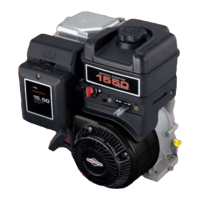



 To Next Page