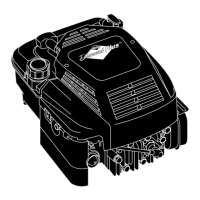
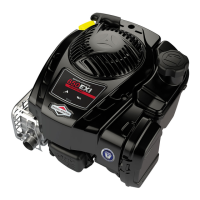
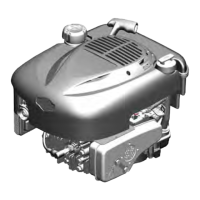
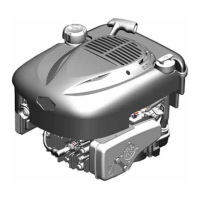
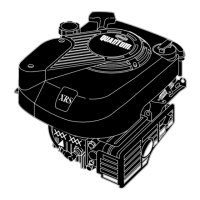
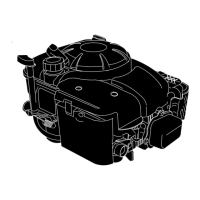
This document is an Operator's Manual for a Briggs & Stratton Quantum Snow engine, model 120000. It provides essential information for the safe operation, maintenance, and storage of the engine.
The engine is a single-cylinder, L-head, air-cooled gasoline engine designed for various equipment applications. It is certified to meet California Air Resources Board (CARB) Tier 2 Emission Standards and United States Environmental Protection Agency (U.S. EPA) Phase 2 emission standards, indicating its low emissions design.
Technical Specifications:
- Model: 120000
- Bore: 2.69 inches (68.26 mm)
- Stroke: 2.05 inches (51.99 mm)
- Displacement: 11.57 cubic inches (190 cc)
- Armature Air Gap: 0.006 – 0.010 inches (0.15 – 0.25 mm)
- Spark Plug Gap: 0.030 inches (0.76 mm)
- Valve Clearance (cold engine, piston 1/4 inch past top dead center):
- Intake: 0.005 – 0.007 inches (0.13 – 0.18 mm)
- Exhaust: 0.005 – 0.007 inches (0.13 – 0.18 mm)
- Oil Capacity: Approximately 18 oz. or 0.5 liter.
- Recommended Oil: High-quality detergent oil classified "For Service SG, SH, SJ, SL" or higher, such as Briggs & Stratton SAE 5W-30 oil (P/N 100030C) for winter use. Synthetic oil meeting ILSAC GF-2, API certification mark, and API service symbol "SJ/CF ENERGY CONSERVING" or higher is also acceptable at all temperatures.
- Fuel Type: Clean, fresh, regular unleaded gasoline with a minimum of 85 octane. Do not use gasoline containing Methanol or mix oil with gasoline.
- Engine Power Rating: Gross power rating is labeled in accordance with SAE code J1940 and J1995. Actual gross engine power may be lower due to ambient operating conditions, accessories, and application limitations.
Usage Features:
The manual outlines a clear starting procedure:
- Add Oil: Ensure oil level is at the FULL mark on the dipstick, using the correct oil type for the expected starting temperature. Overfilling should be avoided.
- Fill with Gasoline: Use fresh, regular unleaded gasoline.
- Prepare for Start: Push the stop switch to the ON position, move the choke to the choke position, and firmly press the primer bulb. The number of primer presses depends on the temperature (two times for 15°F (-9°C) or higher, four times for below 15°F (-9°C)).
- Start Engine: Grasp the rope handle, pull slowly until resistance is felt, then pull rapidly to start the engine and avoid kickback.
- Operating: After starting, allow the engine to warm up for several seconds to minutes, then slowly adjust the choke to the RUN position. Wait until the engine runs smoothly before each choke adjustment.
- Stopping: Push the stop switch to the OFF position. To prevent rewind freeze-up, pull the rope handle until resistance is felt, then stop, repeating three times.
Safety is emphasized throughout, with warnings against starting the engine indoors, cranking with the spark plug removed, using pressurized starting fluids, and overfilling the fuel tank. The manual also highlights the risk of kickback from the starter cord and contact with rotating parts. Carbon monoxide poisoning is a significant hazard when operating the engine in enclosed spaces.
Maintenance Features:
The manual provides a detailed maintenance schedule and instructions:
- Check Oil Level: Every 8 hours or daily.
- Change Oil: After the first 5 to 8 hours of use, then every 50 hours or every season. Change every 25 hours under heavy load or high temperatures. Used oil should be disposed of properly.
- Replace Spark Plug: Every season (or as needed based on inspection). Check gap and cleanliness.
- Clean Debris: Daily or before every use. Keep grass, chaff, or accumulated debris off the engine, especially around the muffler, linkage, springs, and controls. Do not use water to clean engine parts to avoid contaminating the fuel system.
- Clean Air Cooling System: Every 50 hours or every season. Remove the housing, clean internal cooling fins and surfaces to prevent overheating.
- Clean Combustion Chamber: Recommended after every 100-300 hours by an authorized service dealer to remove deposits from the cylinder, cylinder head, piston, and valves.
Storage:
For storage longer than 30 days, specific steps are required:
- Fuel System Preparation: Either run the engine until it runs out of fuel (if using oxygenated/reformulated gasoline) or add a gasoline additive and run the engine for several minutes to circulate it through the carburetor.
- Change Oil: While the engine is still warm.
- Cylinder Lubrication: Remove the spark plug, pour about 1/2 oz. (15 ml) of engine oil into the cylinder, replace the spark plug, and crank slowly to distribute the oil.
- Clean Engine: Remove surface debris, chaff, or grass.
- Storage Location: Store in a clean, dry area, away from ignition sources like stoves, furnaces, or water heaters.
Briggs & Stratton provides a limited warranty for material and workmanship defects, with transportation charges borne by the purchaser. The warranty period varies by brand/product type and usage (consumer vs. commercial). Emissions control system parts are warranted for two years. The manual clarifies owner responsibilities for maintenance and presenting the engine to an Authorized B&S Service Dealer for warranty repairs. It also lists conditions that void the warranty, such as misuse, improper maintenance, non-original parts, or alterations.


 To Next Page

 General