5
3. Irrigate the pump and turn it on according the instructions (make sure that all suction and reversing pipes
are opened), to fi ll the fi ltration container with water. When water is running out through the waste hose,
leave the pump in operation at least for one minute. The primary sand rinse is recommended due to the
removing of the dirt and fi ne particles.
4. Turn the pump off and set the valve in the position RINSE. Activate the pump and let it run for about half
a minute to one minute until the water in the aperture is not clean. Turn the pump off, set the valve back
in the position FILTER and re-activate the pump. The fi ltration is running now in the standard fi ltration
mode and fi lter off the dirt from the pool water.
5. Adjust the suction and reversible valves in a way to reach the required fl ow. Check that the water doesn’t
leak from the system and the fi lter and if necessary, tighten the connections, screws or nuts.
6. Write down the pressure while initiating the fi ltration cycle when the fi ltration is clean. (This value will
vary according to the pool, used pump and the length and shape of pipes). After some time, the pressure
will increase and the water fl ow will reduce due to the accumulation of the dirt in the fi ltration. If the
pressure gauge shows 1,5 Bar which is more than the initial pressure while the fi lter is clean, it is time
to rinse the fi ltration (see BACKWASH in the chapter Filtration and regulating valve functions).
Note: During the fi rst cleaning of the new pool water there might be necessary to rinse the fi ltration sand
more often because this water contains more dirt.
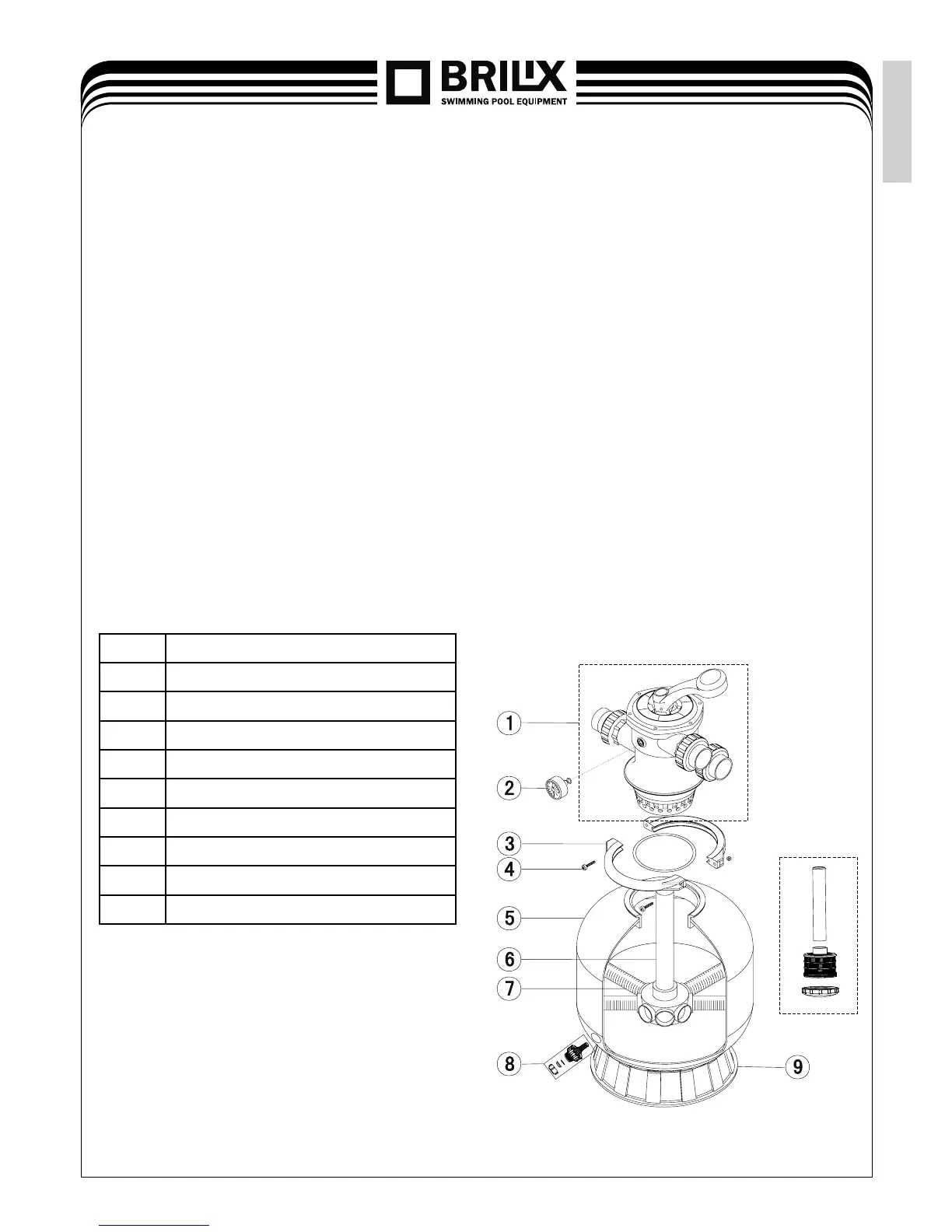
V. List of fi ltration components
Item Description
1 Valve
2 Pressure gauge with O-ring
3 Flanged clamp
4 Screw with a nut
5 Filtration container
6 Central tube
7 Water drain tube
8 Water drainage
9 Basement for a container
Central tube
for FSP 350
EN


 To Next Page