8
FIRE DAMPERS
CERTIFIED ACCORDING TO EN 15650
SERIES MDF 25
CONTENTS
SPECIFICATIONS/GENERAL INFORMATION pag 7
NORMATIVE REFERENCES 7
PRECAUTIONS FOR HANDLING AND INSTALLATION 8
MAINTENANCE 8
WALL INSTALLATION 8
LIGHT WALL INSTALLATION 9
CEILING INSTALLATION 9
OPERATING CONTROLS 11
MECHANICAL FUSE REPLACEMENT 11
OPERATION DATA AND WIRING MANUAL CONTROLS 12
OPERATION DATA AND WIRING MOTORIZED CONTROLS 12
SPECIFICATIONS/GENERAL INFORMATION
Fire damper suitable for installation on a wall, light wall and ceiling made from duct and galvanized steel components
, calcium silicate blade mono slab sp. 25 mm with perimeter seals to ensure sealing requirements to cold and hot
smoke. The control device ( manual with electromagnetic release or motorized ) consists of a plate removable and
replaceable even after installation, on which they are installed all the elements necessary for the proper operation and
functioning of the fire damper; the particular geometry of the control mechanism, prevents that the pressure present
in the duct (up to 500 Pa) opening the blade if not acting directly from the reset lever. When installation is completed,
the command will be out of the masonry simplify any post-installation actions. The dampers, installed according to
the instructions in this manual , are used in HVAC systems by restoring the partitioning between two rooms, ensuring
perfect insulation from heat and smoke seal.
The installer has the obligation to follow the installation procedures and use of the equipment described in this
manual, in order to comply with the same conditions as the samples to be tested. Any deviation from the instruc-
tions, affect the validity of the certification of the product and the declaration of correct installation
NORMATIVE REFERENCES
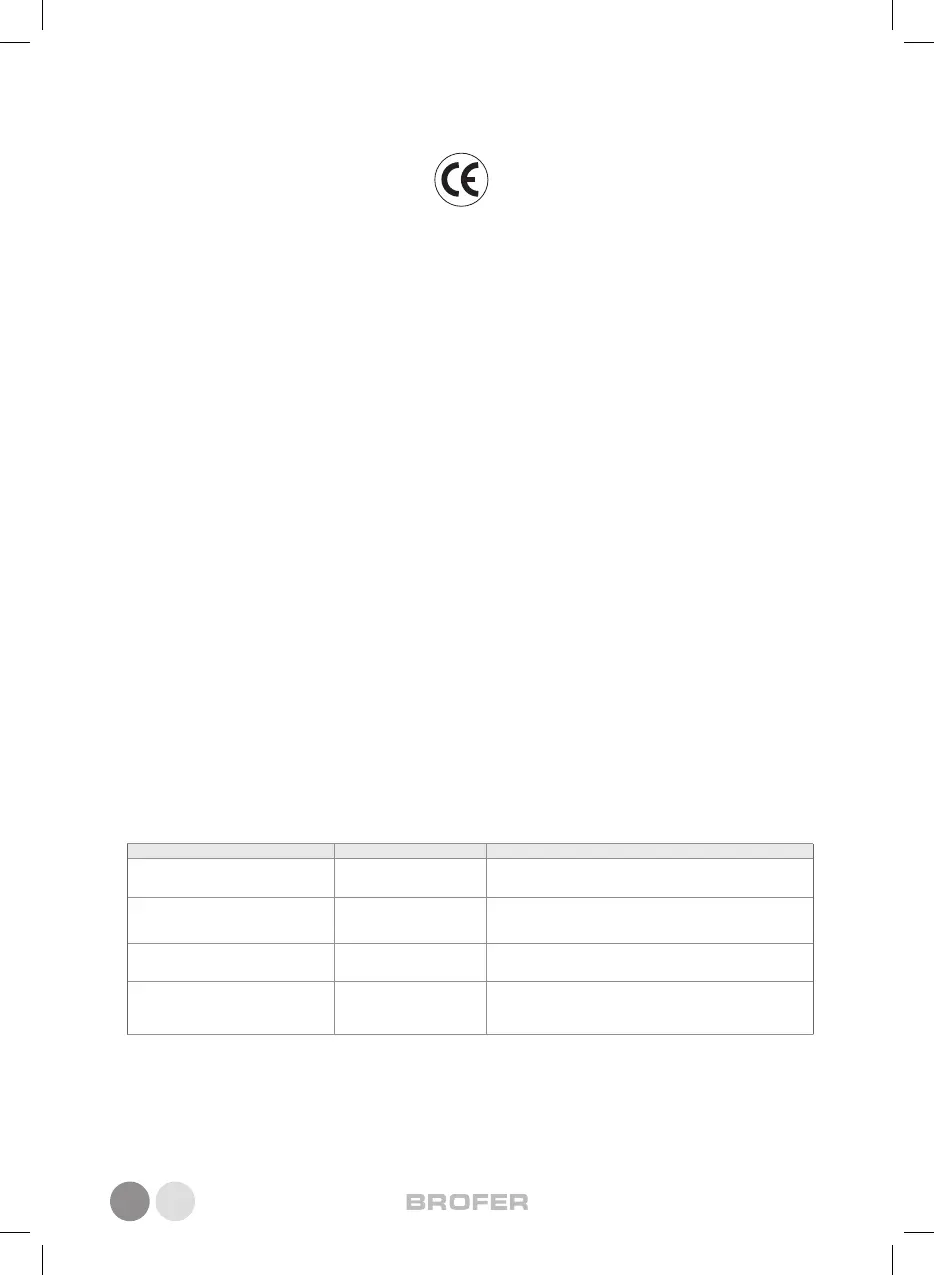
Fire dampers tested according EN 1366/2 and classified according to EN 13501/3
ITENG
EI 120 S - 500 Pa EI 90 S - 500 Pa
Aerated concrete wall thickness 100 mm
(v
e
i o)
from 100x200 to 800x600 SR/M from 100x200 to 800x600 SR/M
Aerated concrete slab thickness 150 mm*
(h
o
i o)
from 100x200 to 800x600 SR/M from 100x200 to 800x600 SR/M
Gypsum plasterboards type F wall thickness
100 mm *
from 100x200 to 800x600 SR/M from 100x200 to 800x600 SR/M
Gypsum plasterboards type F thickness 100
mm
(v
e
i o)
-
from 100x200 to 800x600 SR/M
*Need to use thermo expanding gasket model LFC
Legenda
v
e
= vertical installation
h
o
= horizontal installation
i o = side exposed to fire indifferent
E = entirety
I = thermal insulation
S = smoke seal
M = manual reset device
SR = device with servomotor
FIRE DAMPERS MDF 25 L
CERTIFIED ACCORDING TO EN 15650
INSTRUCTION OF INSTALLATION, USE AND MAINTENANCE
brofer.it
LIGHT WALL INSTALLATION
1 Before proceeding with the installation, verify the integrity of the damper, the correct positioning of the blade in
the closed position and operation of the command
2 Provide an opening in the wall (fig.1A) having larger dimensions than the nominal size of the damper (see
table 1 according to the type of installation).
3 Apply band expanding around the entire perimeter of the damper. Place the center of the opening the damper
and making sure that the blade in the closed position is parallel to the wall. Maintain the axis of rotation of the
blade horizontal as from tests carried out. Observe the projections indicated in fig.2A Table 1
4 Fix the damper to the wall using the brackets, then fill with cement mortar class M10 and dab from both of the
sides of the wall with the plasterboard thickness 12.5mm
(Fig.3A).
CEILING INSTALLATION
1 Before proceeding with the installation, verify the integrity of the damper, the correct positioning of the blade in
the closed position and operation of the command
2 Provide an opening in the floor (fig.1A) having larger dimensions than the nominal size of the damper (see
table 1 according to the type of installation).
3 Place the center of the opening the damper, taking care that the plane containing the blade in the closed
position is parallel to the slab, and comply with the protrusions shown in fig.2 Table 1
4 Fix the damper to the floor with the brackets, then fill with cement mortar class M10
Ceiling – aerated concrete
WALL INSTALLATION
1 Before proceeding with the installation, verify the integrity of the damper, the correct positioning of the blade in
the closed position and operation of the command
2 Provide an opening in the wall (Figure 1) having larger dimensions than the nominal size of the damper (see
table 1 according to the type of installation).
3 Positioning the damper at the center of the opening and making sure that the blade in the closed position is
parallel to the wall. Maintain the axis of rotation of the blade horizontally or vertically as from tests carried out.
Observe the projections shown in Figure 2 Table 1
4 Fix the damper to the wall using the brackets, then fill with cement mortar class M10 (Fig. 3.1)
fill with
cement mortar
class M 10
IT ENG
PRECAUTIONS FOR HANDLING AND INSTALLATION
CAUTION!
• All operations of handling and installation shall be made with the blade of the fire damper in the closed position
(our standard delivery).
• All operations of connection power line must be performed by qualified service personnel.
• Keep clean the connecting end from residues of cement to securely connect the rest of the duct
• Avoid any deformation of the duct and / or obstacle inside the duct which may prevent the successful rotation of
the blade
• Check that there are no external obstacles (cables, pipes, etc. ..) to prevent the correct operation of the controls
outside of the duct
• Keep the most accessible as possible to the control side in order to ensure the necessary space usage and mainte-
nance of the damper.
MAINTENANCE
Is advisable to periodically run a check the correct operation of the actuating and signal the damper. In particular,
check the correct and complete opening and closing of the blade: for the operation of the controls follow the instruc-
tions listed “CONTROL OPERATION.” Also check that the warning devices at the beginning and ending are in good
condition and working properly.
DIMENSIONAL
WALL INSTALLATION
1 Before proceeding with the installation, verify the integrity of the damper, the correct positioning of the blade in
the closed position and operation of the command
2 Provide an opening in the wall (Figure 1) having larger dimensions than the nominal size of the damper (see
table 1 according to the type of installation).
3 Positioning the damper at the center of the opening and making sure that the blade in the closed position is
parallel to the wall. Maintain the axis of rotation of the blade horizontally or vertically as from tests carried out.
Observe the projections shown in Figure 2 Table 1
4 Fix the damper to the wall using the brackets, then fill with cement mortar class M10 (Fig. 3.1)
fill with
cement mortar
class M 10
WALL INSTALLATION
1 Before proceeding with the installation, verify the integrity of the damper, the correct positioning of the blade in
the closed position and operation of the command
2 Provide an opening in the wall (Figure 1) having larger dimensions than the nominal size of the damper (see
table 1 according to the type of installation).
3 Positioning the damper at the center of the opening and making sure that the blade in the closed position is
parallel to the wall. Maintain the axis of rotation of the blade horizontally or vertically as from tests carried out.
Observe the projections shown in Figure 2 Table 1
4 Fix the damper to the wall using the brackets, then fill with cement mortar class M10 (Fig. 3.1)
fill with
cement mortar
class M 10
fig.1
fig.2
fill with mortar
class M 10
ITENG
pag 8
8
9
9
9
10
10
10
12
13
13
3
FIRE DAMPERS
CERTIFIED ACCORDING TO EN 15650
SERIES MDF 25
CONTENTS
SPECIFICATIONS/GENERAL INFORMATION pag 7
NORMATIVE REFERENCES 7
PRECAUTIONS FOR HANDLING AND INSTALLATION 8
MAINTENANCE 8
WALL INSTALLATION 8
LIGHT WALL INSTALLATION 9
CEILING INSTALLATION 9
OPERATING CONTROLS 11
MECHANICAL FUSE REPLACEMENT 11
OPERATION DATA AND WIRING MANUAL CONTROLS 12
OPERATION DATA AND WIRING MOTORIZED CONTROLS 12
SPECIFICATIONS/GENERAL INFORMATION
Fire damper suitable for installation on a wall, light wall and ceiling made from duct and galvanized steel components
, calcium silicate blade mono slab sp. 25 mm with perimeter seals to ensure sealing requirements to cold and hot
smoke. The control device ( manual with electromagnetic release or motorized ) consists of a plate removable and
replaceable even after installation, on which they are installed all the elements necessary for the proper operation and
functioning of the fire damper; the particular geometry of the control mechanism, prevents that the pressure present
in the duct (up to 500 Pa) opening the blade if not acting directly from the reset lever. When installation is completed,
the command will be out of the masonry simplify any post-installation actions. The dampers, installed according to
the instructions in this manual , are used in HVAC systems by restoring the partitioning between two rooms, ensuring
perfect insulation from heat and smoke seal.
The installer has the obligation to follow the installation procedures and use of the equipment described in this
manual, in order to comply with the same conditions as the samples to be tested. Any deviation from the instruc-
tions, affect the validity of the certification of the product and the declaration of correct installation
NORMATIVE REFERENCES
Fire dampers tested according EN 1366/2 and classified according to EN 13501/3
EI 120 S - 500 Pa EI 90 S - 500 Pa
Aerated concrete wall thickness 100 mm
(v
e
i o)
from 100x200 to 800x600 SR/M from 100x200 to 800x600 SR/M
Aerated concrete slab thickness 150 mm*
(h
o
i o)
from 100x200 to 800x600 SR/M from 100x200 to 800x600 SR/M
Gypsum plasterboards type F wall thickness
100 mm *
from 100x200 to 800x600 SR/M from 100x200 to 800x600 SR/M
Gypsum plasterboards type F thickness 100
mm
(v
e
i o)
-
from 100x200 to 800x600 SR/M
*Need to use thermo expanding gasket model LFC
Legenda
v
e
= vertical installation
h
o
= horizontal installation
i o = side exposed to fire indifferent
E = entirety
I = thermal insulation
S = smoke seal
M = manual reset device
SR = device with servomotor
FIRE DAMPERS MDF 25 L
CERTIFIED ACCORDING TO EN 15650
INSTRUCTION OF INSTALLATION, USE AND MAINTENANCE
brofer.it


 To Next Page
 Loading...