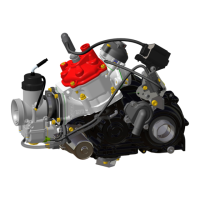
This document is a repair manual for ROTAX FR 125 MAX and FR 125 Junior MAX kart engines, manufactured by Bombardier-Rotax GmbH. It provides essential advice and data for professional maintenance and repair.
Function Description
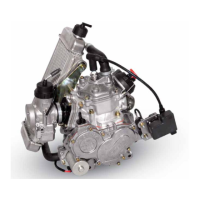
The ROTAX FR 125 MAX and FR 125 Junior MAX engines are designed for use in karts on specified tracks. They are liquid-cooled, two-stroke engines with a digital battery ignition system. The FR 125 MAX features a pneumatic exhaust control system that optimizes performance by adjusting the exhaust valve based on exhaust gas pressure, which increases with engine speed. This system withdraws the projecting exhaust valve from the exhaust port at approximately 7,500 rpm. The engine's ignition timing is controlled by a breakerless, digital battery ignition unit, making manual ignition adjustment unnecessary. Power is transmitted from a centrifugal clutch to the rear axle of the kart via a roller chain.
Important Technical Specifications
Engine Type: FR 125 MAX / FR 125 Junior MAX
Bore/Stroke: 54.0 mm / 54.5 mm
Displacement: 125.0 cm³
Performance (max.):
- FR 125 MAX: 21 kW at 11,500 rpm
- FR 125 Junior MAX: 15 kW at 8,500 rpm
Torque (max.):
- FR 125 MAX: 21 Nm at 8,750 rpm
- FR 125 Junior MAX: 17 Nm at 8,500 rpm
Idle Speed: 1,500 rpm
Speed Limit (at operation on the track, under load):
- FR 125 MAX: 13,500 rpm
- FR 125 Junior MAX: 12,200 rpm
Ignition Unit: Breakerless, digital battery ignition, DENSO
Spark Plug: NGK BR10EG, M14x1.25 or DENSO IW31, M14x1.25
Electrode Gap: 0.5 - 0.6 mm (NGK), 0.6 - 0.7 mm (DENSO)
Fuel: Premium unleaded, 95 octane (min.)
Cooling System: Liquid cooled, integrated coolant pump
Coolant Flowrate: 22 l/min. at 11,000 rpm
Coolant Mixture: 50% Antifreeze (al-compatible), 50% Water (distilled)
Coolant Quantity: 0.6 l
Engine Lubrication System: Mixture lubrication, super 2-stroke oil (1:50 or 2% oil)
Balance Shaft Drive Lubrication: Motoroil SAE 15W-40
Oil Quantity for Balance Shaft Drive Lubrication: 0.05 l (50 ml)
Clutch: Centrifugal clutch, dry
Clutch Engagement Speed: Approx. 4,000 rpm
Power Transmission: Roller chain
Chain Dimension: 7.75 x 4.6 x 4.5
Number of Teeth of Drive Sprocket: 11, 12, 13 or 14 teeth
Weight (dry): Approx. 12 kg (without silencer, carburetor, fuel pump, radiator, muffler and battery)
Usage Features
The manual emphasizes that the engine is exclusively for kart use on specified tracks. It provides detailed instructions for engine removal from the chassis, disassembly, and reassembly. Specific components like the centrifugal clutch, cylinder assembly, exhaust valve, reed valve, and piston can be repaired without removing the entire engine from the chassis. Safety precautions include disconnecting the battery before repair work and handling fuel in well-ventilated areas. The engine's design incorporates features like a pneumatic exhaust valve for performance optimization (FR 125 MAX) and a centrifugal clutch for power transmission. The squish gap between the piston and combustion chamber insert is a critical adjustment for engine performance, with specific ranges provided for both MAX and Junior MAX versions.
Maintenance Features
The manual outlines a comprehensive maintenance schedule and detailed repair procedures for individual components.
Inspection and Maintenance Schedule:
- Before each kart operation: Inspect chain sprocket for wear, coolant elbow fittings for tight fit and sealing, and exhaust valve for easy movement.
- After each kart operation: Apply oil against corrosion to the exhaust system.
- Latest after every 10 hours of operation (depending on conditions): Clean and apply oil to the filter element in the intake silencer, check coolant pump for oil/coolant leaks, check oil level in gear compartment, inspect drive gears for balance shaft for wear, clean and apply grease to starter reduction gear assembly, clean and grease needle cage or bearing bush of clutch drum, inspect friction lining of flyweights for wear, and replace insulating mat of aftermuffler.
- After every 2 hours of operation: Check oil level in gear compartment and replenish as required.
- After every 50 hours of operation or at least once a year: Oil change for gear compartment.
- After 50 hours of operation (Engine Overhaul): Inspection of piston, piston pin, needle cage, crankshaft oil seals, balance shaft drive, and waterpump shaft sealing. This should be carried out by an authorized distributor or Service Center.
Repair and Replacement Guidelines:
- Repeating Symbols: The manual uses specific symbols for warnings (injury risk), attention (engine damage risk), and notes (useful information).
- Replacement Parts: Only GENUINE-ROTAX parts and accessories are recommended to ensure warranty validity and proper engine function.
- Modifications: Any engine modifications not approved by ROTAX will void the warranty.
- Special Tools: Specific special tools, securing, and sealing agents are required for proper repair.
- Tightening Torques: Adherence to specified tightening torques is crucial.
- Sealing Components: Removed sealing rings, gaskets, circlips, O-rings, and oil seals must always be renewed during an engine overhaul.
- Cleanliness: Use only clean screws and nuts, and check threads for damage.
- Crankshaft Repair: Requires special tooling and expertise; if not available, the complete crankshaft should be replaced. The crankshaft repair set (conrod, crankpin, needle bearing, thrustwashes) must be replaced as a complete set.
- Balance Shaft: Inspect grooves, bearing seats, and gears for wear. Replace both drive gears if cracks or backlash are perceptible.
- Waterpump: Inspect drive gears, idle gear, waterpump pinion, and shaft for wear and damage.
- Centrifugal Clutch: Inspect friction lining, bearing bore of flyweights, springs, and rubber sleeves for wear. Replace all three flyweights if one is badly worn.
- Cylinder Assembly: Check for calcareous deposits, combustion deposits, cracks, and wear. Conicity and ovality limits are provided, and cylinders may be re-worked by diamond-honing if limits are exceeded.
- Piston and Piston Ring: Inspect for cracks, pressure marks, seizure, and wear. Check piston ring clearance and end gap. Replace piston if wear limits are exceeded.
- Combustion Chamber Insert and Cylinder Head Cover: Clean, inspect for cracks, and verify sealing surfaces.
- Ignition Unit: Troubleshooting guide for starting issues, focusing on battery, connections, spark plug, and coils.
- Spark Plug: Clean electrodes and adjust gap.
- Radiator and Intake Silencer: Clean cooling fins, inspect for cracks, and check hoses. Filter elements should be cleaned or replaced.
- Fuel Pump: Only diaphragm and gasket set can be replaced.
- Exhaust System: Inspect for cracks, clean ball joint, and verify riveting of covers. Damping mats may be renewed if noise emission increases.

 Need help?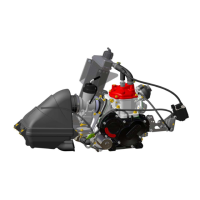



 To Next Page
 General