EasyManua.ls Logo

Bryant 619PEQ018BBMA - User Manual

Bryant 619PEQ018BBMA
14 pages
Print Icon
To Next Page IconTo Next Page
Loading...
619PB
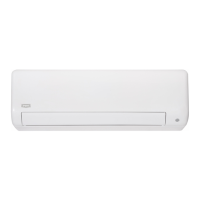
High Wall Ductless System
Sizes 09 to 36
Installation Instructions
NOTES:
Read the entire instruction manual before starting the
installation.
Images are for illustration purposes only. Actual models
may differ slightly.
TABLE OF CONTENTS
PAGE
SAFETY CONSIDERATIONS 2.........................
PARTS LIST 3.......................................
SYSTEM REQUIREMENTS 4...........................
WIRING 4...........................................
DIMENSIONS 5......................................
CLEARANCES 9.....................................
INSTALLATION TIPS 10...............................
INDOOR UNIT INSTALLATION 10......................
ELECTRICAL DATA 11...............................
CONNECTION DIAGRAMS 11.........................
FINAL TUBING CHECK 11............................
WIRELESS REMOTE CONTROL INSTALLATION 13......
WIRED REMOTE CONTROL INSTALLATION 13..........
START−UP 13........................................
TROUBLESHOOTING 14..............................
Question and Answer IconNeed help?

Do you have a question about the Bryant 619PEQ018BBMA and is the answer not in the manual?

Summary

Installation Instructions

SAFETY CONSIDERATIONS

PARTS LIST

SYSTEM REQUIREMENTS

WIRING

DIMENSIONS

CLEARANCES

INSTALLATION TIPS

INDOOR UNIT INSTALLATION

Steps and guidance for installing the indoor unit.

DRILL HOLE IN WALL FOR PIPING AND WIRING

Instructions on creating holes for pipes and wiring.

ELECTRICAL DATA

CONNECTION DIAGRAMS

Visual guides for electrical connections.

TERMINAL BLOCK LOCATION

Details on the location of the terminal block.

INSTALL INTERCONNECTING WIRING AND PIPING TO INDOOR UNIT

FINAL TUBING CHECK

DRAIN CONNECTIONS

Instructions for connecting and insulating the drain line.

WIRELESS REMOTE CONTROL INSTALLATION

WIRED REMOTE CONTROL INSTALLATION

START-UP

Test Operation

Performing a test run to verify functionality.

SYSTEM CHECKS

INDOOR UNIT CHECKS

Checks related to the indoor unit's functions.

TROUBLESHOOTING

INDOOR UNIT DIAGNOSTIC GUIDES

Error code display and LED status for indoor unit diagnostics.

Summary

Installation Instructions

SAFETY CONSIDERATIONS

PARTS LIST

SYSTEM REQUIREMENTS

WIRING

DIMENSIONS

CLEARANCES

INSTALLATION TIPS

INDOOR UNIT INSTALLATION

Steps and guidance for installing the indoor unit.

DRILL HOLE IN WALL FOR PIPING AND WIRING

Instructions on creating holes for pipes and wiring.

ELECTRICAL DATA

CONNECTION DIAGRAMS

Visual guides for electrical connections.

TERMINAL BLOCK LOCATION

Details on the location of the terminal block.

INSTALL INTERCONNECTING WIRING AND PIPING TO INDOOR UNIT

FINAL TUBING CHECK

DRAIN CONNECTIONS

Instructions for connecting and insulating the drain line.

WIRELESS REMOTE CONTROL INSTALLATION

WIRED REMOTE CONTROL INSTALLATION

START-UP

Test Operation

Performing a test run to verify functionality.

SYSTEM CHECKS

INDOOR UNIT CHECKS

Checks related to the indoor unit's functions.

TROUBLESHOOTING

INDOOR UNIT DIAGNOSTIC GUIDES

Error code display and LED status for indoor unit diagnostics.

Overview

This document provides installation and operational instructions for the Bryant 619PB High Wall Ductless System, available in sizes ranging from 09 to 36. This system is designed for air conditioning and heating applications, offering a compact and efficient solution for various indoor environments.

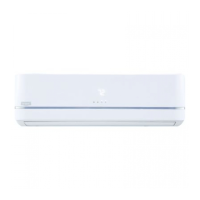
The system's primary function is to provide heating and cooling, ensuring comfortable indoor temperatures. It operates as a heat pump, capable of both cooling and heating modes. The indoor unit is typically mounted on a wall, designed to blend with interior aesthetics while delivering effective air distribution.

Installation Features:

Installation of the 619PB system requires careful attention to safety and adherence to local codes. The manual emphasizes that only trained and qualified installers and service mechanics should perform the installation, start-up, and servicing of this equipment due to potential hazards related to system pressures, electrical components, and equipment location.

Key installation steps include:

  • Mounting Plate Attachment: The indoor unit's mounting plate is first secured to the wall. The manual provides detailed dimensions and orientation guidelines to ensure proper placement, emphasizing the importance of horizontal and level positioning. Minimum clearances from walls, ceilings, and the floor are specified to ensure optimal airflow and unit performance.
  • Wall Hole Drilling: A hole must be drilled through the wall for the interconnecting piping, drain, and wiring. The manual specifies that the outside pipe hole should be slightly lower than the inside one to facilitate proper drainage. Different routing options for refrigerant lines (through the back, right, or left side) are detailed, with recommendations for maximizing serviceability by having flare and drain connections outside the wall.
  • Piping Connections: Refrigerant lines, both liquid and gas, must be connected between the indoor and outdoor units. The manual provides precise instructions for cutting pipes at a 90-degree angle, removing burrs, and installing flare nuts. It also includes a table specifying tightening torque for flare nuts to ensure secure, leak-free connections. The importance of insulating both refrigerant lines separately is highlighted.
  • Drainage System: The drain line must be installed without traps and with a continuous downward pitch to ensure proper condensate drainage. It should be insulated up to the outside wall to prevent condensation. Instructions are given for attaching a drain hose extension and sealing connections with Teflon tape. A test is recommended to ensure water flows smoothly from the drain pan.
  • Electrical Wiring: The system requires specific electrical connections between the indoor and outdoor units. The main power is supplied to the outdoor unit, and a 14/3 stranded wire with ground is used for power and communication between units. The manual stresses the importance of using copper conductors with a 600-volt insulation rating and ensuring all connections are firm and tight to prevent overheating or malfunction. Polarity sensitivity of connections is also noted.
  • Final Tubing Check: Before completing the installation, installers must verify that factory tubing on the indoor unit has not shifted during shipment, that tubes are not rubbing against each other or sheet metal, and that wire ties on feeder tubes are secure.

Usage Features:

The 619PB system offers flexible control options:

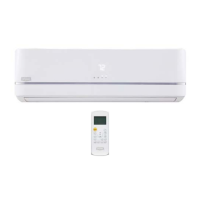
  • Wireless Remote Control: The system comes with a wireless remote control for convenient operation. Instructions are provided for installing the mounting bracket on the wall, inserting batteries into the remote, and placing it in the holder. The remote allows users to turn the unit on/off, select operating modes (COOLING, HEATING, FAN), set desired temperatures, and program timers.
  • Wired Remote Control: For installations requiring a fixed control point, a wired remote control option is available. Separate installation instructions are provided for this accessory.
  • Manual Control Button: A manual control button is located on the indoor unit, typically behind the front panel. This button allows for basic operation (AUTO/COOL) in case the remote control is unavailable.

Maintenance Features:

Regular maintenance is crucial for the longevity and efficient operation of the 619PB system. The manual outlines several key maintenance-related features and instructions:

  • Air Filter Cleaning: The manual instructs users on how to remove and clean the air filter, a routine maintenance task essential for maintaining good indoor air quality and system efficiency.
  • Drain System Check: As part of the installation and start-up, the drain system is checked to ensure proper water flow, preventing potential leaks and water damage.
  • Diagnostic Codes: The system is equipped with diagnostic code display LEDs on both the indoor and outdoor units. These LEDs flash in specific patterns to indicate various error conditions, aiding in troubleshooting. The manual provides a table listing different operation lamp and timer lamp patterns corresponding to specific error codes (e.g., EEPROM parameter error, communication error, fan speed issues, sensor faults, refrigerant leakage detection, overload protection). This feature helps service personnel quickly identify and address problems.
  • Owner's Manual: Installers are instructed to explain various operational and maintenance aspects to the customer, including how to use the remote control, clean air filters, set air deflection louvers, and understand general care and maintenance. The owner's manual is provided to the customer for ongoing reference.
  • Condensate Pump Accessory: For applications where gravity drainage is not feasible, a condensate pump accessory is available. This indicates a design consideration for diverse installation scenarios and ease of maintenance in challenging environments.

The 619PB system is designed with user convenience and serviceability in mind, providing clear instructions for installation, operation, and troubleshooting to ensure reliable performance.

Bryant 619PEQ018BBMA Specifications

General IconGeneral
BrandBryant
Model Number619PEQ018BBMA
CategoryAir Conditioner
RefrigerantR-410A
Operating Voltage208/230V
Phase1
Cooling Capacity18, 000 BTU
Unit Dimensions (Outdoor)31.5 x 31.5 x 26.5 inches

Related product manuals