
 Need help?
Do you have a question about the Bryant EVOLUTION V 288BNV and is the answer not in the manual?
General safety warnings and precautions for operating the heat pump unit.
Specific warnings about personal injury, death, or property damage from improper operation.
Locate model and serial numbers for referencing your Bryant heat pump system.
Learn how to operate your Bryant heat pump system using the wall-mounted control.
Understand the benefits of variable speed operation for consistent indoor temperatures.
Instructions for setting the mode, temperature, and fan for heating or cooling.
Factors that affect heat pump operation duration during extreme weather.
Key features and normal operations of heat pump systems, including defrost cycles.
Understanding the normal sounds associated with variable speed heat pump operation.
Safety warnings regarding electrical shock and cut hazards during maintenance.
Instructions on keeping air filters clean and vents unobstructed for efficiency.
Guidance on not blocking the outdoor unit and checking base pan drainage.
Minimum and maximum operating temperatures for cooling and heating modes.
Specific maintenance for outdoor units in coastal areas due to salt corrosion.
Steps to check before requesting dealer service for common issues.
Importance of professional inspection and service contracts for system longevity.
Checklist for outdoor unit maintenance tasks and recommended intervals.
Checklist for indoor unit maintenance tasks and recommended intervals.
Important notes regarding maintenance items, intervals, and cleaning procedures.
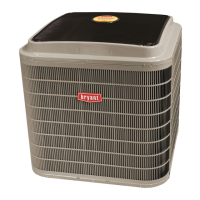
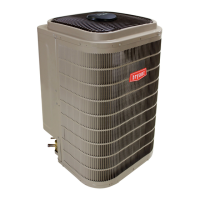
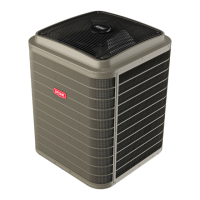
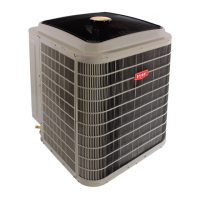
This document describes the 288BNV EVOLUTION® V Variable Speed Heat Pump with Puron® Refrigerant, an advanced heating and cooling system designed for residential use.
The 288BNV EVOLUTION® V is a "split system" heat pump, meaning it consists of an outdoor unit and an indoor unit connected by copper refrigerant lines. Its primary function is to provide both heating and cooling for a home, maintaining a desired indoor temperature. A key feature of this system is its variable speed operation, which allows it to adjust its performance based on temperature and humidity conditions. This variable speed capability contributes to more consistent indoor temperatures, reduced drafts, improved humidity control, enhanced comfort, and greater energy efficiency compared to traditional single-speed systems. The system is controlled by a wall-mounted Evolution® Connex™ Control or a standard thermostat.
For cooling operation, the system removes humidity from the home, with water trickling from the condensate drain of the indoor coil. During the heating cycle, the heat pump delivers a constant flow of air at temperatures ranging from approximately 95°F (35°C) to 105°F (41°C). In colder conditions, the system may automatically engage a defrost cycle to melt ice or frost that forms on the outdoor coil, a normal operation that may produce steam or fog. The system can also utilize a supplementary heating source, which can be engaged automatically or manually as needed.
The manual does not provide specific numerical technical specifications like BTU ratings, SEER/HSPF values, or electrical requirements. However, it does specify operational temperature ranges:
The manual outlines routine maintenance tasks to ensure economical and dependable operation. These include:




 To Next Page

 General