The Bathycorrometer® (BCM) is an underwater corrosion voltmeter manufactured by Buckleys (UVRAL) Ltd. It is designed for detecting corrosion potential in underwater steel structures, such as piles, subsea pipelines, and through coatings or marine growth. The device is powered by a rechargeable Nickel Metal Hydride battery, offering extended operational life and ease of maintenance.
Function Description
The BCM measures the corrosion potential of underwater steel structures. It utilizes a high-impedance LCD Volt Meter with a 3½ digit display, capable of reading voltages from 0.001V up to 1.999V D.C. The corrosion potential is detected by a robust Silver/Silver Chloride (Ag/AgCl) reference electrode, strategically mounted in the protective nose cone, only 5cm from the probe tip. This close proximity ensures accurate and localized readings. The unit's display is backlit, making it suitable for operation in murky underwater conditions.
Important Technical Specifications
- Operating Depth: Up to 300m (pressure tested to 600psi / 42bar).
- Display: 3½ digit LCD, backlit, ranging from 0.001V to 1.999V DC.
- Accuracy: 0.05% typical (±1 count).
- Input Impedance: >10MΩ.
- Operating Temperature Range: 0 to 30°C.
- Temperature Stability: ±100 ppm/°C.
- Storage Temperature Range: 0 to 50°C.
- Operating Time (full charge): 50+ hours.
- Reference Electrode: Silver/Silver Chloride (Ag/AgCl).
- Accuracy Ag/AgCl: +5mV (±5mV).
- Temperature Coefficient: 0.2mV/°C.
- Effective Life (Reference Electrode): 1 to 2 years if looked after.
- Contact with Structure: Hardened, Stainless Steel probe.
- Output Input Socket: Used for charging, reference test, remote readout, and on/off switching.
- Weight in Air: 2.5Kg.
- Weight in Water: 0.85Kg (negative buoyancy).
- Instrument Size: 100mm diameter x 275mm long.
- Carrying Case Size: 450mm x 340mm x 220mm.
BCM Charger Specifications:
- Supply Voltage: 110V to 240V A.C. 45-55 Hz.
- Input Power: 3.5 VA maximum.
- Output Voltage: 10.5V D.C. open circuit.
- Output Current: 30mA ± 2mA.
- Charging Indicator: Green LED.
Usage Features
- Probe Tips: Six standard stainless steel pointed probe tips are supplied, suitable for various applications including steel work with paint or tape coatings, subsea pipelines, and through thicker marine growth. The probe tip is screwed onto a stainless steel stud and tightened with a spanner. Silicone grease assists fitting and sealing.
- Blanking Plug: The BCM is switched ON by inserting a 5-pinned rubber Blanking Plug. This plug must be disconnected when the instrument is out of water to conserve battery life. Silicone grease facilitates insertion. The plug is not designed for underwater plugging and must be inserted before immersion to prevent spurious readings or damage. A white locking ring secures the plug.
- Battery: The unit uses a rechargeable Nickel Metal Hydride battery, offering over 50 hours of operation on a full charge. A low battery symbol on the LCD display indicates low voltage. NiMH batteries have no memory effect, allowing for "top-up" charging. Only the supplied charger should be used to prevent damage and maintain warranty.
- Charging: Before initial use, a 24-hour charge is recommended. Normal recharge time from flat is 14 hours, but it can be left on charge for up to 48 hours without damage. A 12-minute charge is recommended for each hour of use to top up the battery. The green LED on the charger indicates it is connected to the mains supply. There is no charge completion indicator.
- Initial Soaking: Prior to initial use, it is recommended to soak the unit in seawater for 20-30 minutes to rehydrate the reference electrode.
- Taking Readings: To take an underwater reading, simply push the pointed probe onto the steel structure, ensuring good contact. The corrosion potential will then be displayed.
- Calibration Check (Electronics): The BCM's electronics can be checked using an optional BCM Checker (not supplied), which provides a precision voltage of 1.990V DC. If the BCM's reading deviates by more than ±10mV from this test voltage, the unit should be returned to Buckleys for service, as the pressure housing should not be opened by the user.
- Calibration Check (Reference Electrode): A test procedure using a screw-on Calomel Reference Electrode is provided. This involves unscrewing the white Delrin Probe Cone, smearing the Calomel Reference Electrode's O-ring with silicone grease, screwing it onto the threaded Tie Rod, inserting the Blanking Plug, and immersing the BCM in seawater. After 10-15 minutes for stabilization, the voltage difference between the Calomel and internal Ag/AgCl electrodes can be read. The values depend on seawater salinity and temperature. According to Det Norske Veritas (D.N.V.) specifications, the Ag/AgCl electrode potential should be +4mV ±5mV at 20°C when connected to the positive terminal of the voltmeter.
- Zinc Test Block: A quick operational check can be performed using a Zinc test block. Readings should be logged to monitor for significant variations, which can be caused by changes in water salinity or temperature. As a guide, readings in a 3% salt solution at 25°C should be 1.00 - 1.05V. The BCM should be soaked for 2 hours in seawater before this test. The state of the test block (e.g., tarnished) affects readings. The test block should be removed after use.
Maintenance Features
- Cleaning: After use, wash the BCM in clean seawater to remove debris from inside the red nose cone. Keep the holes in the red nose cone clear of obstructions.
- Socket Cleaning: Clean the socket in the handle and apply silicone grease to prevent contact corrosion.
- O-Ring Inspection: Regularly check the condition of the "O" Ring in the White Delrin Probe Cone and replace if necessary.
- Reference Electrode Replacement:
- Remove the Stainless Steel Probe Tip.
- Remove the White Delrin Probe Cone using grips.
- Remove the stainless steel slotted nut and washer from the Tie Rod.
- Gently "rock" and remove the Red Nose Cone to expose the grey plastic Reference Electrode.
- Carefully unscrew the Reference Electrode.
- Ensure no foreign bodies are in or around the seat of the Reference Electrode or the O-ring around the Tie Rod.
- Smear the O-ring and thread of the new Reference Electrode with Silicone Grease.
- Screw in the new Reference Electrode until the O-ring seats, then tighten half a turn (do not overtighten).
- Replace the Red Nose Cone, ensuring no debris and correct positioning for the electrode.
- Replace the stainless steel washer and slotted nut, tightening to eliminate gaps.
- Check and replace O-rings on the white Delrin Probe Cone if necessary, apply silicone grease, and replace the cone.
- Replace the stainless steel Probe Tip.
- Charger Maintenance: The battery charger must be maintained according to local statutory requirements for portable electronic equipment.
- Long Term Storage (Laying Up):
- Flush the Red Nose Cone with clean seawater and allow to dry. If salt encrustation is present, briefly wash the Ag/AgCl half cell in fresh water, then thoroughly rinse in 3% salt solution.
- Clean the Blanking Plug and socket, apply silicone grease, and then remove the plug, re-greased for storage.
- The BCM can be stored with the battery in any state of charge.
- Store the BCM, charger, probes, spanner, silicone grease, and manual in the carrying case.
- Store at an ambient temperature between 0°C and 40°C to prevent damage to the LCD display.
- Re-commissioning:
- Remove the BCM from its case and fit the Blanking Plug. If the display comes on, charge for 14 hours. If dead, charge for 24 hours.
- Leave the BCM working with the Blanking Plug fitted. If it works for 50 hours, the battery has recovered. If not, the battery is faulty and the BCM/charger should be repaired.
- Soak the BCM for 2 hours in a seawater solution.
- Perform calibration checks.
Safety Considerations
All diving operations involving the Bathycorrometer must adhere to current local statutory requirements for conducting Diving Operations at Work. The BCM and its charger do not generate RF energy and will not interfere with other electronic equipment. However, as a sensitive voltmeter, the BCM can be affected by electromagnetic interference when used on the surface (e.g., during calibration). Potential sources of interference include radio telephones, radar, arc welding, or electrical storms.

 Need help?
 General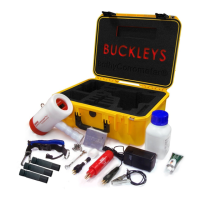

 To Next Page