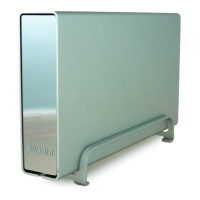
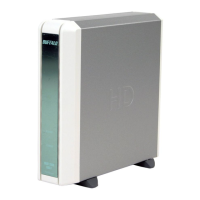
The Buffalo DriveStation, models HD-HB160U2 and HD-HB250U2, is an external hard drive designed to provide additional storage for your computer or other compatible devices. It offers a straightforward solution for expanding storage capacity, backing up important data, and transferring files with ease. The device is designed for user-friendly setup and operation, making it accessible for both novice and experienced users.
Function Description
The primary function of the DriveStation is to act as an external storage device, connecting to your computer via a USB interface. It provides a plug-and-play experience, particularly with Windows 2000 and XP systems, where it is automatically recognized upon connection and power-on. Once connected and recognized, the DriveStation appears as a new drive (e.g., 'Local Disk') in 'My Computer', allowing you to store, retrieve, and manage files just like any internal hard drive. The device comes pre-formatted, enabling immediate use after the initial setup. For Windows 98SE and ME users, an Easy Setup program is provided on the DriveNavigator CD to guide through the installation process, ensuring compatibility and proper functionality. The DriveStation is also designed to integrate with Buffalo's LinkStation products, offering enhanced functionality for network-attached storage environments.
Usage Features
The DriveStation emphasizes ease of use through its simple setup and operation.
- Unpacking and Initial Setup: Upon opening the shipping carton, users will find the main DriveStation unit, a power adapter, two DriveStation feet, a USB cable, a DriveNavigator Installation CD, and a Quick Setup Guide. Before connecting, a protective plastic film on the front face of the DriveStation should be removed. The initial setup involves flipping the power switch on the back of the DriveStation to the OFF position, plugging the power cord into an outlet, and then connecting the included USB cable to the USB port on the back of the DriveStation. Finally, the USB cable is connected to an available USB port on the computer or device.
- Power-On and Recognition: For Windows 2000 and XP, after connecting the DriveStation, the user simply flips the power switch to the ON position. The system will automatically detect and install the new hardware. A "Found New Hardware" notification will appear, and the DriveStation will be listed as a 'Local Disk' in 'My Computer', ready for use.
- Windows 98SE & ME Setup: For older Windows operating systems like 98SE and ME, the setup process involves inserting the DriveNavigator CD into the computer's CD-ROM drive. The Easy Setup program should launch automatically. If it doesn't, users can manually launch it by navigating to
X:\easysetup.exe (where X is the CD-ROM drive letter) via the 'Run' option in the Start Menu. The Easy Setup Wizard will then guide the user through the installation, ensuring all necessary drivers and utilities are installed.
- DriveNavigator CD Utilities: The DriveNavigator CD is a valuable resource, containing several useful utilities designed to enhance the DriveStation's functionality and manageability. These utilities may include tools for backup, power saving, and disk formatting. Users are encouraged to explore the CD contents to learn more about these features and how they can benefit their system.
- LinkStation Integration: For users with Buffalo LinkStation devices, the DriveStation can be configured as an external USB disk. This integration allows the DriveStation to function as shared storage within a network environment, expanding the LinkStation's capacity and offering additional backup options. Configuration details for this integration are provided in the LinkStation's User Manual, typically found on its LinkNavigator CD. This feature allows for flexible storage solutions, enabling the DriveStation to serve as a direct-attached storage or a network-accessible drive when paired with a LinkStation.
- Power Mode Switch: The DriveStation features a POWER MODE switch, located just below the main power switch. This switch toggles whether the device is powered up via a USB signal (bus-powered, if supported by the USB port and device power requirements) or purely based on the power switch's position. This provides flexibility in how the device is powered on and off, potentially allowing for automatic power management with the host computer.
Maintenance Features
The DriveStation is designed for minimal maintenance, but certain aspects are important for ensuring its longevity and proper operation.
- Protective Film: As mentioned, the front face of the DriveStation comes with a protective plastic film. Removing this film upon unpacking is a simple step that helps maintain the aesthetic condition of the device.
- Disk Formatting: In cases where the DriveStation is recognized but inaccessible (e.g., in 'My Computer'), it may require formatting. The DriveNavigator CD includes a Disk Formatter Utility for this purpose. Users can consult the manual for the Disk Formatter Utility (also found on the DriveNavigator CD-ROM) for detailed instructions on how to format the drive. This is a crucial maintenance step if the drive becomes corrupted or if a fresh start is desired.
- Power Save Utility: The DriveNavigator CD may include a Power Save Utility. If installed, this utility can help manage the DriveStation's power consumption by putting it into a power-saving mode when not in use. Users should consult the manual for the Power Save Utility for guidance on its configuration and operation. Proper use of this utility can extend the life of the hard drive by reducing unnecessary spin-up and operation time.
- Troubleshooting: The manual provides a dedicated troubleshooting section to address common issues.
- Inaccessible Drive: If the DriveStation is visible in 'My Computer' but inaccessible, formatting using the Disk Formatter Utility is recommended.
- Invisible Drive: If the DriveStation does not appear in 'My Computer', users should verify that the POWER light is green and that the power switch is in the ON position. Toggling the POWER MODE switch is also suggested. If the Power Save Utility is installed, checking if the drive is in power-saving mode is important.
- Hard Drive Spin-Up: To verify if the internal hard drive is spinning, users can place a hand on the sides of the case to feel for slight vibrations. The device should also become warm after about fifteen minutes of operation. If these checks fail, it indicates a potential hardware issue, and technical support should be contacted.
- Technical Support: Buffalo Technology offers 24/7 toll-free technical support for its products. Customers in the United States and Canada can reach support via phone at 866-752-6210, email at info@buffalotech.com, or by visiting www.buffalotech.com. When contacting support, having the proof of purchase readily available is essential.
- Warranty Information: The DriveStation comes with a one-year limited warranty from the date of purchase. This warranty covers good operating condition and repair or replacement of the product at no charge, provided it has not been subjected to misuse, abuse, or unauthorized alterations. For warranty claims, the original proof of purchase is required, and defective products should be returned to the original place of purchase with a copy of the receipt.

 Need help?
 USB Interface
 Power
Power Weight and Dimensions

 To Next Page
