
 Need help?
Do you have a question about the Buffalo TeraStation 3420DN and is the answer not in the manual?
Provides information regarding FCC rules and European compliance for the device.
Compliance information specific to customers in Taiwan.
Explains the meaning of warning symbols and graphical icons used on the product.
Basic safety instructions to be followed before using the device.
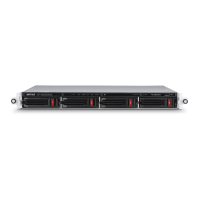
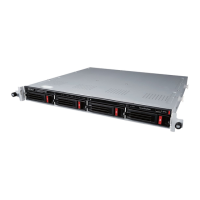
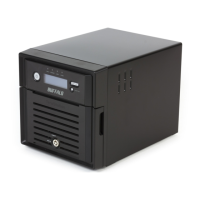
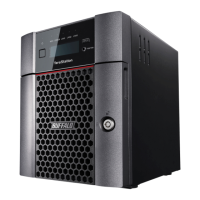
Visual representation of the TeraStation unit components and their labels.
Diagrams specific to the TS3010 series TeraStation models.
Diagrams specific to the TS3020 series TeraStation models.
Step-by-step instructions on how to power the TeraStation on and off.
Procedure for re-inserting internal drives, often for troubleshooting errors.
Guide on creating a USB drive for initializing settings or system recovery.
How to configure initial TeraStation settings using the setup wizard.
Instructions on how to launch the setup wizard again after initial setup.
Steps to access the TeraStation settings interface via NAS Navigator2.
How to view essential device information from the TeraStation's dashboard.
Steps to set up and manage shared folders on the TeraStation.
Detailed instructions for creating a new shared folder on the TeraStation.
Information on configuring and managing the recycle bin feature for shared folders.
How to set shared folders or USB drives to read-only access.
Steps to hide shared folders from network browsing, restricting access.
Manages user accounts for accessing the TeraStation's shared resources.
Procedure to create new user accounts for accessing shared folders.
How to import user data from a CSV file for bulk user creation.
Instructions for creating user groups to manage permissions more efficiently.
How to set access permissions for specific shared folders for users and groups.
Managing local user and group accounts for access control.
Integrating the TeraStation with an Active Directory environment for centralized management.
Setting access permissions for individual subfolders within shared folders.
Steps to enable access restrictions for subfolders within shared folders.
How to restore folder ownership and permission settings to their previous state.
Troubleshooting steps when shared folders are inaccessible due to security reasons.
Explains the different RAID modes supported by the TeraStation and their characteristics.
General procedures for managing RAID arrays, including changing settings.
How to use drives individually in JBOD mode instead of a RAID array.
Steps to change the RAID mode of existing arrays, often requiring data backup.
Configuring automatic shutdown when a drive error occurs in a redundant RAID array.
Setting actions for when a drive in a RAID array is not detected during startup.
How to set up a spare drive that automatically replaces a failed drive in a RAID array.
Procedures for increasing RAID array capacity by adding drives without data loss.
Steps to add a new drive to the TeraStation, typically for expanding storage.
Instructions for changing drives from JBOD to a RAID 1 array.
How to add drives to existing RAID 1 or RAID 5 arrays.
Performing scans on RAID arrays to check for and repair bad sectors.
Setting up notifications for when drive space is running low.
Connecting and using external USB drives with the TeraStation.
Lists supported file systems for external USB drives.
Procedures for safely dismounting internal or external drives before removal.
How to dismount drives using the physical function button on the TeraStation.
Steps to dismount drives through the TeraStation's settings interface.
Running drive checks to test data integrity and automatically fix errors.
Understanding and checking S.M.A.R.T. information for internal drive reliability.
How to view S.M.A.R.T. data for internal drives.
Interpreting drive attributes and identifying potential issues based on threshold values.
Procedures for formatting internal or external drives.
Encrypting internal drives and arrays using AES for enhanced security.
Securely erasing all data and settings from the TeraStation to factory defaults.
Setting storage quotas for users and groups to manage disk space usage.
How to limit the shared folder space available for individual user accounts.
How to limit the shared folder space available for user groups.
Information on creating volumes with maximum size limits when LVM is enabled.
Configuring the TeraStation to function as an iSCSI target for block-level storage access.
Overview of iSCSI protocol and its use with the TeraStation.
Comparison of NAS file sharing versus iSCSI block-level storage access.
Recommendations for network setup when using iSCSI for optimal performance.
Information about the Microsoft iSCSI Software Initiator.
Step-by-step guide to creating iSCSI volumes on the TeraStation.
How to connect to iSCSI volumes from a client computer.
Procedures for disconnecting from iSCSI volumes.
Considerations for accessing a single iSCSI volume from multiple computers.
Verifying the connection status of iSCSI volumes.
Setting up CHAP authentication for secure iSCSI access.
Enabling access control for all iSCSI volumes on the TeraStation.
How to connect to iSCSI volumes when access restrictions are enabled.
Setting up access controls for specific iSCSI volumes.
How to connect to individual iSCSI volumes with access restrictions.
How to increase the size of existing iSCSI volumes.
Procedures for deleting iSCSI volumes.
Configuring advanced parameters for iSCSI volumes.
Overview of backing up data from the TeraStation to various destinations.
Explains the different backup modes available (Full, Overwrite Incremental/Differential).
Details on performing a full backup of all files from the source to the destination.
How incremental backups work, backing up only changed files.
How differential backups work, backing up changes since the last full backup.
Storing management information and changed files for version tracking.
Steps to configure a shared folder or USB drive as a backup destination.
Setting up scheduled or manual backup jobs.
How to enable rsync access for backing up data from compatible devices to the TeraStation.
Procedures for restoring data from backups, varying by backup mode.
Information on troubleshooting backup failures using error codes and logs.
Setting up replication to copy data to another TeraStation for redundancy.
Configuring a shared folder or USB drive as a replication destination.
Setting up replication jobs to copy data between TeraStations.
Automating data synchronization between TeraStations on a schedule.
Configuring a secondary TeraStation to take over if the primary fails.
Prerequisites and network considerations before setting up failover.
Limitations and conflicts when failover is enabled with other features.
Step-by-step guide to setting up the failover configuration between two TeraStations.
How to manually switch operations to the backup TeraStation.
Steps to reconfigure failover settings after a failover event.
Setting up periodic synchronization between main and backup TeraStations.
Configuring the TeraStation to work with macOS Time Machine backups.
Setting up synchronization with Amazon S3 cloud storage.
Initial steps to configure the TeraStation for Amazon S3 integration.
How to upload files to Amazon S3 buckets using backup jobs.
Setting up synchronization with Dropbox cloud storage.
Steps to create a new synchronization job for cloud services like Dropbox.
Modifying the settings of existing synchronization jobs.
Troubleshooting common error codes encountered during cloud service synchronization.
Utility for accessing TeraStation files remotely via the internet.
Enabling and configuring FTP access for remote file transfer.
Synchronizing data with Microsoft Azure cloud storage.
Setting up a new backup job for Microsoft Azure.
Setting up a new restore job from Microsoft Azure.
Modifying the settings of existing Microsoft Azure synchronization jobs.
Setting up synchronization with Microsoft OneDrive cloud storage.
Steps to create a new synchronization job for OneDrive.
Modifying the settings of existing OneDrive synchronization jobs.
Troubleshooting common error codes encountered during OneDrive synchronization.
Utility for accessing TeraStation files remotely via the internet.
Enabling and configuring FTP access for remote file transfer.
Protection against viruses, malware, and spyware using Trend Micro NAS Security.
How to enable and configure virus scanning on the TeraStation.
Adjusting antivirus settings like pattern updates and scan schedules.
Information about licensing for the antivirus software.
Configuring proxy server settings for internet access, required for updates.
Setting up automatic updates for antivirus pattern files.
Excluding specific shared folders from virus scans.
Setting up different types of virus scans (real-time, scheduled, manual).
How to view virus scan logs.
Accessing the integrated online help for the antivirus software.
Configuring email alerts for events like errors or status changes.
Scheduling the TeraStation to enter sleep (standby) mode to save energy.
Enabling remote power-on functionality for the TeraStation.
Connecting a UPS for automatic shutdown during power outages.
Configuring multiple LAN ports for increased bandwidth and redundancy.
Enabling offline access to TeraStation files for Windows clients.
Configuring the TeraStation to allow access from NFS clients.
Securing data transfer using SSL/TLS encryption.
How to update server certificates and private keys for SSL.
Configuring SNMP for network management and monitoring.
Backing up and restoring TeraStation settings using a USB drive.
Steps to save the current configuration to a USB drive.
How to transfer saved settings from a USB drive to another TeraStation.
Moving configurations from one TeraStation to another.
Creating a configuration file for transferring settings, especially for TS-X series.
Resetting the TeraStation to its original factory default settings.
Performing a factory reset using the settings interface.
Resetting the TeraStation to factory defaults using a prepared USB drive.
Step-by-step guide to creating a USB drive for initializing settings.
Procedures to initialize the TeraStation using a created USB drive.
How to reset the admin password if it's forgotten or settings are inaccessible.
Managing and viewing system logs.
Viewing system and file access logs from the TeraStation.
Configuring the TeraStation to send logs to an external syslog server.
Creating a shortcut to log files within a shared folder for easier access.
Configuring how long and how many file access logs are stored.
Procedures for updating the TeraStation's firmware.
How to manually install firmware updates.
Configuring the TeraStation to update firmware automatically.
Setting up notifications for new firmware versions.
Configuring the TeraStation's hostname, date, time, and language settings.
Configuring audible alerts for specific errors or events.
Adjusting the brightness of the TeraStation's LEDs.
Configuring proxy server settings for internet connectivity.
Enabling Jumbo Frames to potentially improve network performance.
How to manually change the TeraStation's IP address.
Configuring hostname (FQDN) mapping for network communication.
Explains the status and error LEDs on the TeraStation drives.
General steps for replacing a TeraStation drive.
Procedure for replacing a failed drive in a redundant RAID or JBOD array while the unit is on.
Procedure for replacing a failed drive in a redundant RAID or JBOD array while the unit is off.
Procedure for replacing a drive in a RAID 0 array.
Configuring a new drive as a hot spare after replacement.
Instructions for replacing a drive that is not malfunctioning.
Behavior of a RAID 0 array after replacing a drive.
Behavior of a JBOD setup after replacing a drive.
Behavior of redundant RAID modes after replacing a drive.
Utility for managing Buffalo NAS devices, including IP address and drive checks.
Instructions for downloading and installing NAS Navigator2 on Windows.
Instructions for downloading and installing NAS Navigator2 on macOS.
Utility for backing up computer data using NovaBACKUP.
Troubleshooting guide for common issues preventing the TeraStation from booting.
Steps to recover from drive setup mode when the power LED blinks.
Procedures to recover the TeraStation from emergency mode.
Details event/error codes indicated by LEDs and their corrective actions.
Lists specific error codes (E10-E30) and their corrective actions.
Lists status codes (I01-I72) and their corrective actions.
Lists the default administrator, password, shared folders, and network settings.
Technical specifications of the TeraStation, including LAN, USB, and RAID modes.
 General
| Type | NAS |
|---|---|
| Device class | Home & Home Office |
| Backup features | Cloud |
| Web-based management | Yes |
| Processor cores | 4 |
| Processor model | Alpine AL-214 |
| Processor family | Annapurna Labs |
| Processor frequency | 1.4 GHz |
| Processor manufacturer | - |
| Internal memory | 1 GB |
| Internal memory type | DDR3 |
| AC input voltage | 100 - 240 V |
| AC input frequency | 50 - 60 Hz |
| Power consumption (max) | 85 W |
| Power consumption (typical) | 33 W |
| Power consumption (HDD standby) | 0.93 W |
| Wi-Fi | No |
| Ethernet LAN data rates | 10, 100, 1000, 2500 Mbit/s |
| Supported network protocols | TCP/IP |
| Operating temperature (T-T) | 0 - 40 °C |
| Operating relative humidity (H-H) | 10 - 85 % |
| Chassis type | Desktop |
| Product color | Black |
| RAID levels | 0, 1, 5, 6, 10, JBOD |
| Storage drive size | - \ |
| Storage drive capacity | 2000 GB |
| Storage drive interface | Serial ATA III |
| Installed storage drive type | HDD |
| Supported storage drive types | HDD & SSD |
| Total installed storage capacity | 4 TB |
| Number of storage drives supported | 2 |
| USB 2.0 ports quantity | 0 |
| Operating system installed | Linux |
| Mac operating systems supported | Mac OS X 10.11 El Capitan |
| Server operating systems supported | Windows Server 2012, Windows Server 2016, Windows Server 2019 |
| Windows operating systems supported | Windows 10, Windows 7, Windows 8.1 |
 Weight and Dimensions
| Depth | 230 mm |
|---|---|
| Width | 170 mm |
| Height | 215 mm |
| Weight | 7100 g |


 To Next Page