EasyManua.ls Logo

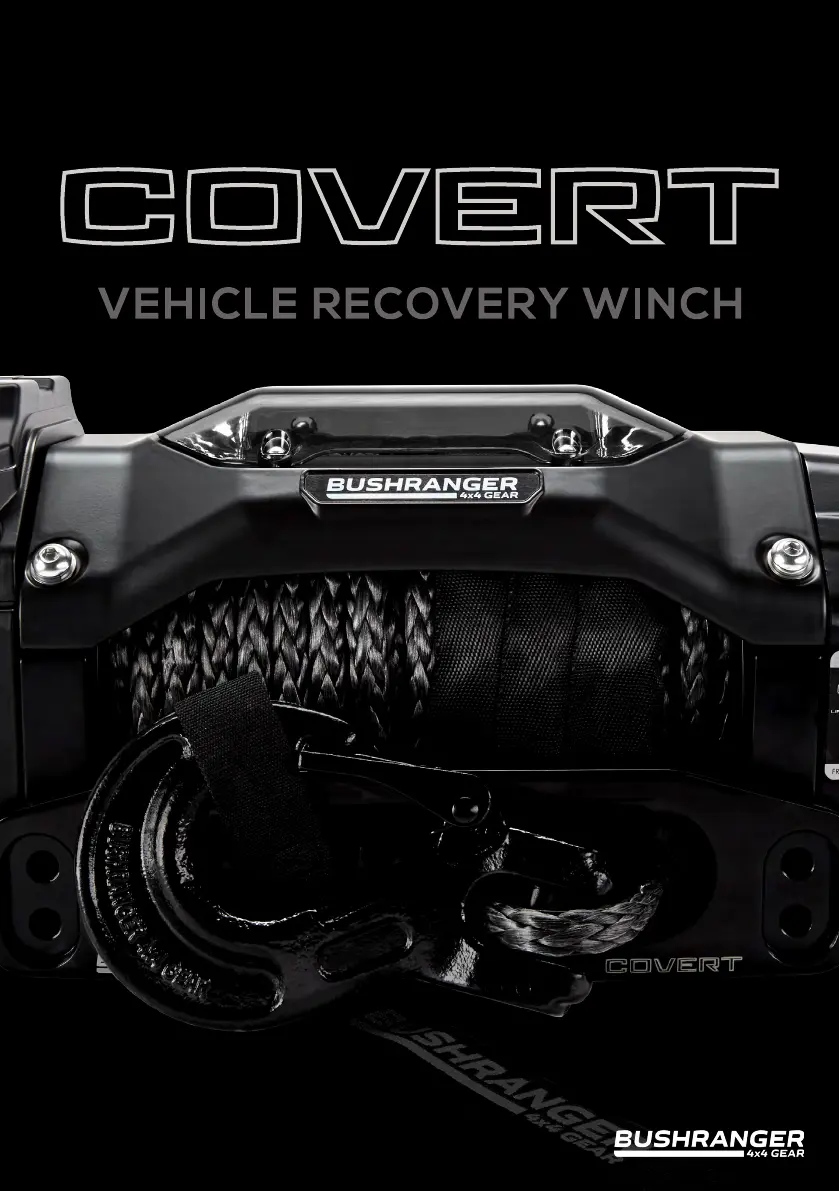
Bushranger COVERT RWC100S - User Manual

Bushranger COVERT RWC100S
36 pages
Print Icon
To Next Page IconTo Next Page
Loading...
OWNERS MANUAL
RWC100S
|
RWC100W

Questions and Answers

  • M
    Mitchell MendozaAug 12, 2025
    Why my Bushranger COVERT RWC100S will not operate?
    • F
      francisco74Aug 12, 2025
      Your Bushranger Winches might not be operating due to several reasons. It could be a cut circuit, in which case you should check the battery lead. A weak battery (less than 650CCA) could also be the cause, so recharge or replace it. Other potential issues include bad wiring connections (reconnect tightly), a damaged contactor (replace it), a cut circuit on the switch (replace the switch), damaged motor or worn brushes (replace the motor or brushes), or faulty motor wirings (replace the wirings).
  • S
    Steven PopeAug 16, 2025
    What to do if my Bushranger COVERT RWC100S motor runs extremely hot?
    • T
      tina28Aug 16, 2025
      If your Bushranger Winches motor is running extremely hot, it could be due to a long period of operation; in this case, allow it to cool. Alternatively, the motor itself might be damaged, requiring replacement or repair. A damaged or inoperative brake could also cause this issue, so consider replacing or repairing the brake.
  • D
    Deborah FordAug 19, 2025
    What to do if Bushranger COVERT RWC100S motor runs in only one direction?
    • C
      Charles RogersAug 19, 2025
      If the motor of your Bushranger Winches only runs in one direction, it might be due to broken wirings or bad connections; try reconnecting or replacing the wirings. Another cause could be a damaged or stuck contactor, which would need to be replaced. An inoperative switch or faulty wiring could also be the problem, requiring replacement.
  • R
    Ryan FranklinAug 23, 2025
    Why Bushranger COVERT RWC100S brake fails to operate?
    • J
      Jennifer EdwardsAug 25, 2025
      If the brake fails to operate on your Bushranger Winches, it could be due to a few reasons. The gear train might be mechanically binding up, so ensure the winch is mounted on a flat, rigid surface. Other potential causes include a damaged brake (replace it), a damaged gear box (replace the gear box), or a damaged ratchet (replace the ratchet components).
  • E
    Elizabeth MatthewsAug 27, 2025
    How to fix a Bushranger Winches drum that will not free spool?
    • J
      Jennifer MillerAug 27, 2025
      If the drum on your Bushranger Winches won't free spool, it could be because the clutch does not disengage; try to engage the clutch. Other potential issues include a damaged 1st stage shaft, damaged brake, or damaged motor output shaft, all of which would need to be replaced.
  • J
    Jennifer GrantAug 30, 2025
    What causes a damaged gear box in Bushranger COVERT RWC100S?
    • B
      Barbara HernandezAug 31, 2025
      A damaged gear box in your Bushranger Winches can be caused by several factors: being hit by an external force, a damaged gear train, or an overload operation. In case of overload operation, stop the winch operation and reduce the load. For other causes replace the damaged components.
  • J
    Jose ZavalaSep 4, 2025
    Why is the braking distance too long on my Bushranger COVERT RWC100S Winches?
    • D
      Derek JacksonSep 4, 2025
      If the braking distance is too long on your Bushranger Winches, it is likely due to a worn brake, which will need to be replaced.
  • H
    harveyandreaSep 7, 2025
    What causes a brake jam in Bushranger Winches?
    • T
      Theresa BrewerSep 7, 2025
      A brake jam in Bushranger Winches is caused by a proportional mechanism that is damaged or worn and needs replacement.

Summary

Warnings & Safety

Safety Warnings

Key safety precautions for winch operation, including dangers and care.

General Safety Guidelines

Essential safety points for operators and bystanders during winch use.

Specifications

Installation

Winch Mounting

Guidance on correctly mounting the winch to a vehicle for secure operation.

Gearbox Rotation

Motor Rotation

Battery Recommendations

Wiring Diagram

Operational Checklist (Prior to Use)

Installation Checklist

Checks to ensure the winch is correctly installed and ready for first use.

Rope Preparation

How to tension and wind the rope for optimal performance and safety.

Optional Winch Products;Accessories

Tree Trunk Protector Strap

A strap for protecting trees and providing an anchor point during recovery.

Snatch Block

Device to increase pulling power or change pull direction during recovery.

Recovery Damper

Safety device to absorb energy in case of rope failure.

Winching Principles

Bow Shackles

Guidelines for selecting and using load-rated bow shackles for recovery.

Winch Extension Strap

How to use an extension strap for greater reach to anchor points.

Bridal;Equaliser Strap

Strap to distribute recovery load across two vehicle points.

Calculating Fleet Angle

Determining the correct pull angle to prevent damage to rope and winch.

Required Pulling Force

Surface Drag and Gradient Factors

Factors influencing required pulling force: surface type and gradient.

Duty Cycle Ratings

Duty Cycle Ratings Explained

Explanation of S1, S2, and S3 duty cycle classifications for winches.

Load Rating Explained

How load and speed vary with the amount of rope on the drum.

Winch Operation

Clutch Operation

How to engage and disengage the winch clutch for free spooling.

Powering Out (No Load)

Using the winch to pay out rope without a load.

Powering Out (Under Load)

Limitations and advice for powering out rope while under load.

Cable-in;Cable-out Operation

Wireless Mode

Instructions for activating and using the wireless hand controller.

Pairing of new Hand Controller

Steps to pair a replacement wireless hand controller.

Wired Mode

How to operate the winch using the wired hand controller.

Basic Winching Process

Establish an Anchor Point

How to select and secure a suitable anchor point.

Turn on Power to the Winch

Steps to power up the winch system.

Turn on the Hand Controller

How to activate and connect the hand controller.

Disengage the Clutch (for freespool operation)

How to put the winch into freespool mode.

Pull or Power Out the Rope

Extending the rope to the anchor point safely.

Engage the Clutch

Re-engaging the clutch after freespooling.

Check the Rope

Inspecting the rope for damage and proper winding.

Attach the Shackle and Hook

Connecting the hook and shackle to the load.

Use a Recovery Damper

Placing a damper on the rope for safety.

Prepare the Vehicle

Setting up the vehicle for winching.

Begin Winching

Starting the winching operation and managing the rope.

After Winching

Post-winching procedures for securing and checking.

Disconnect the Hand Controller

Safely disconnecting and storing the hand controller.

Precautions Whilst Winching

Rope Winding and Handling Precautions

Best practices for winding and handling the winch rope to prevent damage.

Winching Area Safety

Ensuring the winching area is clear and safe for all involved.

Hand Controller Cable Safety

Protecting the hand controller cable from damage.

Battery Maintenance During Use

Importance of maintaining battery power during winching operations.

Maintenance

Cleaning Procedures

How to clean the winch and synthetic rope correctly.

Prolonging Synthetic Rope Life

Tips for maintaining the synthetic rope's condition and longevity.

Servicing and Lubrication

Recommended servicing schedule and lubrication points.

Maintenance Schedule

Regular Inspection Schedule

A structured inspection schedule for daily, monthly, and three-monthly checks.

Synthetic Rope Replacement

Step-by-step guide to replacing the synthetic rope on the winch.

Wire Rope Replacement

Wire Rope Replacement Procedure

Steps for replacing the wire rope on the winch.

Kingsley Products - Warranty Policy

Our Warranty Coverage

Details of the warranty provided for workmanship and materials.

Fitting and Use Guidelines

Requirements for correct installation and product usage.

Warranty Exclusions

What the warranty does not cover, including wear and misuse.

Making a Claim

Procedure for submitting a warranty claim.

Warranty Policy Details

Australian Consumer Law Rights

Consumer rights under Australian law related to product failures.

Other Consumer Rights

Additional rights and remedies beyond the stated warranty.

Warranty Terms and Definitions

Definitions of key terms used in the warranty policy.

Bushranger COVERT RWC100S Specifications

General IconGeneral
ModelCOVERT RWC100S
TypeElectric Winch
Motor5.5hp Series Wound
Gear Ratio218:1
Cable TypeSteel
Voltage12V
Rated Line Pull10, 000 lbs (4, 536 kg)
Cable Diameter3/8 inch
Mounting Pattern10.0 x 4.5 inches
Cable Length100 ft (30.5 m)
Remote ControlHandheld Remote

Related product manuals