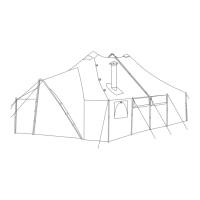
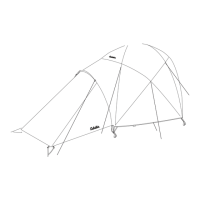
The Cabela's Outback Lodge Tent is a robust and spacious shelter designed for outdoor enthusiasts, offering a blend of durability, ease of assembly, and practical features for various camping conditions. This gear guide provides comprehensive instructions for setting up, using, and maintaining the tent, ensuring a long lifespan and optimal performance.
Function Description:
The Cabela's Outback Lodge Tent serves as a temporary outdoor shelter, providing protection from the elements for campers. Its design emphasizes stability, ventilation, and user-friendliness, making it suitable for a range of outdoor adventures. The tent is intended to be assembled by two people, enhancing the setup process and ensuring proper installation. It features a main tent body, a vestibule for additional covered space, and a ventilation system to manage airflow and reduce condensation. The tent's structure is supported by a combination of poles and guy lines, which are crucial for stability, especially in windy conditions.
Important Technical Specifications:
- Cabela's Set Number: 58-2649, 58-2650
- Parts List:
- Tent Body: QTY: 1
- Poles: QTY: 6
- Stakes: QTY: 28
- Guy Lines: QTY: 16
- Seam Sealer: QTY: 1
- Fabric Treatment: Flame-retardant treated per CPAI-84 specifications. (Note: This does not mean it is fireproof; open flames should still be avoided.)
- Assembly Recommendation: Two people are recommended for assembly.
Usage Features:
- Ease of Assembly: The manual stresses that the tent is easy to assemble provided instructions are followed carefully and excessive force is avoided. It's recommended to familiarize oneself with all parts and fully assemble the tent before the first adventure.
- Site Selection: Users are advised to choose a tent site carefully, avoiding sharp objects like rocks and sticks that could damage the tent floor. Placing a footprint under the tent is highly recommended. Awareness of potential hazards like falling rocks, tree limbs, lightning strikes, flash floods, and strong winds is crucial.
- Pole Handling: Poles should be used as intended and not bent beyond the tent's curvature. Joints must be fully engaged before bending poles to prevent unnecessary stress and damage.
- Staking: Stakes should be inserted into the ground at a 45° angle, with the tops facing away from the center of the tent. When staking the tent body, the webbing should be pulled taut to achieve a straight line without distorting the tent's shape, ensuring a secure and symmetrical fit.
- Ventilation System: The tent includes a dedicated ventilation system, which involves a smaller fiberglass pole inserted into a sleeve on the top of the tent. This system must be assembled early in the setup process to allow for adjustment of back-side ventilation. Opening doors when possible is also recommended to increase ventilation and reduce condensation.
- Vestibule: The tent features a vestibule, providing additional covered space. The vestibule pole attaches to the tent, with its bottom secured in grommets on either side of the door. Clips from the tent body attach to the vestibule pole, and vestibule guy lines are staked out for security. The vestibule webbing must wrap around the pole to prevent stress on the tent body.
- Guy Lines: The manual highly recommends setting up all guy lines every time the tent is used. Guy lines are essential for stabilizing the tent in windy conditions and ensuring proper ventilation.
- Door Orientation: It can be easier to assemble the tent with the door facing the wind initially. Once fully assembled, the tent can be re-staked to face the desired direction.
- Accessory Hang Point: If the tent has fabric ties or hooks on top, these should be secured to the poles, as they often serve as support for an accessory hang point inside the tent.
- Disassembly: Disassembly involves reversing the assembly steps. Users should slightly loosen all rain-fly buckles or webbing and window zippers to relieve stress for future assembly. The tent should be folded into thirds or quarters, matching the width of the unassembled poles, with the pole and stake bag placed on the short end before rolling it up firmly into the carry bag.
Maintenance Features:
- Cleaning and Storage: The tent must always be stored dry and clean. For soiled areas, gentle application of non-detergent soap and water is recommended. Scrubbing the tent fabric should be avoided as it can damage the water-repellent properties.
- Stake Removal: A hammer or stake puller should be used to remove tent stakes. Pulling on the tent fabric to remove stakes can cause damage.
- Insecticides: Users are warned not to spray the tent with insecticides, as most contain chemicals that can damage tent materials.
- Annual Inspection: It is advised to set up and inspect the tent annually before use, ensuring all parts from the provided list are present.
- Seam Sealing: Inspect seams for wear and apply seam sealer if needed to maintain waterproofing.
- Safety Warnings:
- Carbon Monoxide Hazard: Fuel-burning devices (stoves, lanterns, candles, heaters) must not be used inside or near the tent. These devices produce carbon monoxide and consume oxygen, leading to asphyxiation, carbon-monoxide poisoning, and potentially death or serious injury.
- Flame Retardancy: While the tent fabrics are flame-retardant treated, they are not fireproof. Open flames should never be used in or near the tent, as flame-resistant materials can still burn or melt.
- General Safety: Heeding all warnings in the manual is crucial to prevent injuries.
The Cabela's Outback Lodge Tent is backed by Cabela's Lifetime Guarantee, which covers defects in workmanship under normal wear and tear conditions, reinforcing the product's quality and durability.

 Need help?

 To Next Page
 General