29
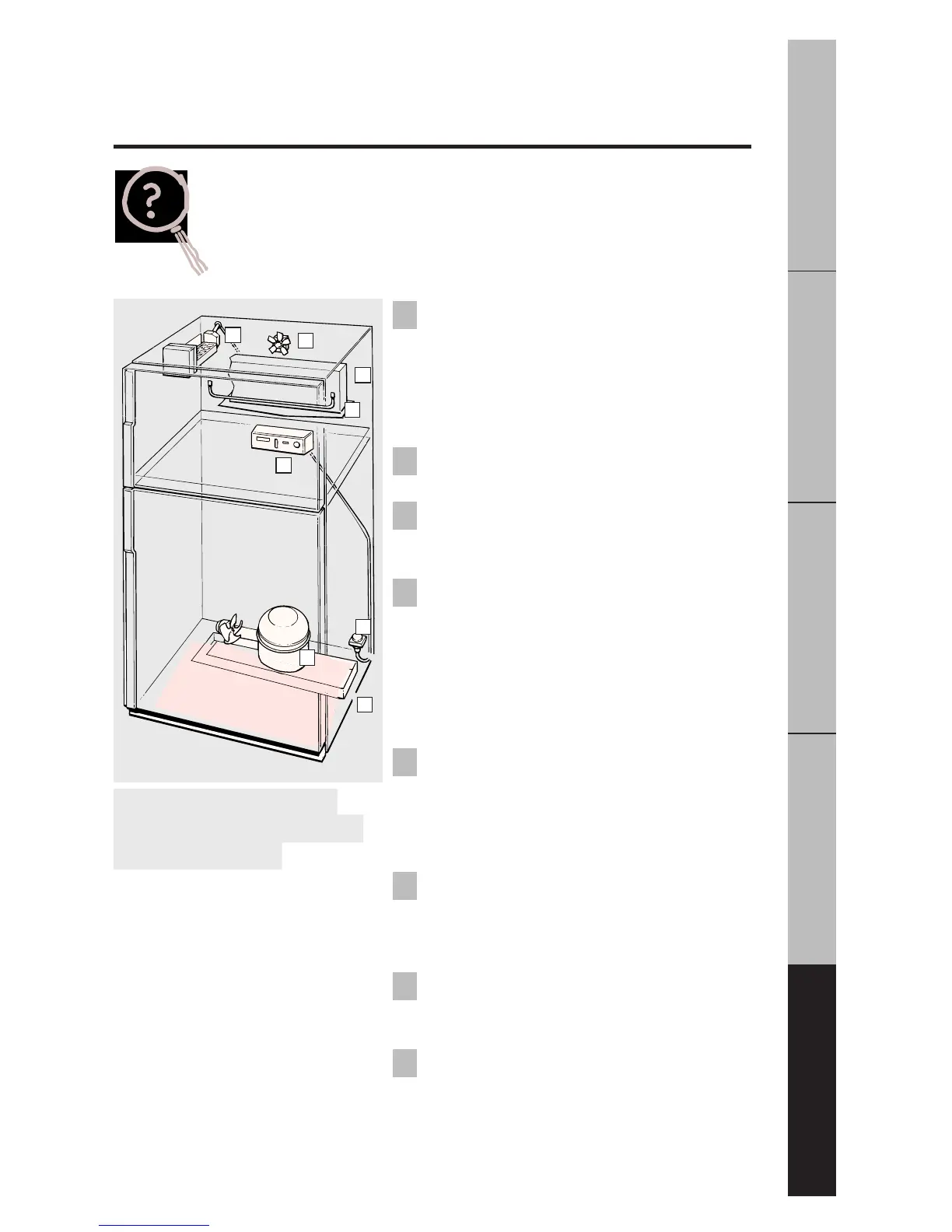
Normal operating sounds.
Depending on the placement of the refrigerator in your
kitchen, you may want to place a piece of rubber backed
carpet under the refrigerator to reduce noise.
Icemaker (on some models).
Occasionally
you will hear ice cubes dropping into the
ice bin. If this is your first icemaker, you’ll
hear occasional sounds that may be
unfamiliar. They are normal icemaking
sounds and are not a cause for concern.
Evaporator Fan.
You may hear air being
forced through the cabinet by the fan.
Evaporator.
The flow of refrigerant
through the evaporator may create a
boiling or gurgling sound.
Defrost Heater.
During defrost cycles,
water dripping onto the heater may cause
a hissing or sizzling sound. After
defrosting,
a popping sound may occur and the
evaporator may create a boiling or
gurgling sound.
Cold Control & Defrost Timer.
These parts
can produce a snapping sound when
turning the refrigerator on or off. The
timer also produces a sound similar to an
electric clock.
Water Valve (on models equipped with an
automatic icemaker).
When the icemaker
fills with water, a buzzing sound and
running water will be heard.
Water Pan.
Water may be heard running
into the drain pan during the defrost
cycle.
Compressor.
Modern, high efficiency
compressors operate much faster than
older models. The compressor may have a
high pitched hum or pulsating sound.
8
7
6
5
4
3
2
1
These sounds are normal
and are due mostly to highly
efficient operation.
1
2
3
4
5
6
7
8
Operating InstructionsInstallation Instructions Troubleshooting TipsSafety InformationCustomer Service


 To Next Page