EasyManua.ls Logo

Cannondale Topstone - User Manual

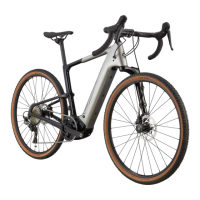
Cannondale Topstone
106 pages
Print Icon
To Next Page IconTo Next Page
Loading...
Bicycle
Owner‘s Manual
CANNONDALE BICYCLE OWNER’S MANUAL
131264 (07/18)
FOLLOW THIS CHECKLIST BEFORE EVERY RIDE. IF YOU HAVE ANY REASON TO SUSPECT
THAT YOUR BICYCLE IS NOT FUNCTIONING PROPERLY, DO NOT RIDE IT. Have it inspected
by an Authorized Cannondale Retailer. To locate your nearest Authorized Cannondale Retailer
call the 1-800-BIKE-USA. Failure to follow this checklist and to have any potential problem
inspected could lead to an accident, with risk of serious injury, paralysis or death.
Are you wearing a helmet and other
appropriate equipment and clothing, such as
protective glasses and gloves? Do not wear
loose clothing that could become entangled in
the bicycle (See PART I, Section 2.A The Basics).
Are your seatpost and stem securely
fastened? Twist the handlebars rmly from side
to side while holding the front wheel between
your knees. The stem must not move in the
steering tube. Similarly, the seatpost must be
secure in the seat tube (See PART I, Section 3.
Fit).
Are you visible to motorists? If you are riding at
dusk, dawn or at night, you must make yourself
visible to motorists. Use front and rear lights
and a strobe or blinker. Reectors alone do
not provide adequate visibility. Wear reective
clothing (See PART I, Section 2.E Night Riding
and PART II, A. Important Safety Information).
Is it raining or wet? If so, be more cautious.
Your braking distances will increase, and
your tires’ grip on the road will decrease.
Remember that motorists’ visibility decreases
with bad weather (See PART I, Section 2.D Wet
Weather Riding and PART II, A. Important Safety
Information).
Are your tires properly inated? Tires must
inated to the recommended pressure. (See
PART I, Section 4.G Tires and Tubes).
Are your wheels true? Lift each end of the bike
and spin each wheel. Does the space between
the rim and the brake pads, or the tire and
the frame, remain nearly the same size as the
wheel turns? Are your spokes tight? (See PART I,
Section 1.C Mechanical Safety Check).
Are your wheels’ quick-releases properly
fastened? Be sure to read the section on proper
operation of quick-release skewers (See PART I,
Section 4.A Wheels).
Are your front and rear brakes functioning
properly? With V-brakes, the quick release
“noodle” must be properly installed. With
cantilever brakes, the quick release straddle
cable must be properly attached. With caliper
brakes the quick release lever must be closed.
With any rim brake, the brake pads must make
rm contact with the rim without the brake levers
hitting the handlebar grip (See PART I, Section
4.C Brakes).
With hydraulic disc brakes, check that the lever
feels rm, does not move too close to the
handlebar grip, and there is no evidence of
leaking brake uid. With cable actuated disc
brakes, check that the lever feels rm and does
not move too close to the handlebar grip. With
any disc brakes, the brake pads must make rm
contact with the rotor without the brake levers
hitting the handlebar grip (See PART I, Section
4.C Brakes).
How do your clipless pedals work today?
Clip in and out of your pedals before you begin.
Experienced cyclists do. The connection between
cleat and pedal is affected by dozens of factors
including dirt, mud, lubrication, spring tension
and wear. By clipping in and out you will check
the function and have a fresh memory of how
they feel (See PART I, Section 4.E Pedals).
How recently were your frame, fork and
components inspected? Never ride a frame,
fork or components with any crack or damage.
(See PART II, Section D. Inspect For Safety).
PRE-RIDE CHECKLIST
THIS MANUAL CONTAINS IMPORTANT SAFETY,
PERFORMANCE AND SERVICE INFORMATION.
Read it before you take the rst ride on your new
bicycle, and keep it for reference.

Table of Contents

Other manuals for Cannondale Topstone

Question and Answer IconNeed help?

Do you have a question about the Cannondale Topstone and is the answer not in the manual?

Summary

PART I

GENERAL WARNING

Discusses general risks and responsibilities of bicycle riding.

A SPECIAL NOTE FOR PARENTS

Guidance for parents regarding child safety and bicycle use.

SECTION 1. FIRST

Initial steps and checks before the first ride.

1.A - BIKE FIT

Guidance on ensuring the bicycle is the correct size for the rider.

1.B - SAFETY FIRST

Emphasizes essential safety precautions and equipment checks.

1.C - MECHANICAL SAFETY CHECK

Instructions for performing a routine mechanical safety check before riding.

SECTION 2. SAFETY

Covers fundamental safety principles and best practices for bicycling.

2.A - THE BASICS

Covers fundamental safety principles and basic riding practices.

2.B - RIDING SAFETY

Details essential rules and practices for safe riding on roads and paths.

2.C - OFF-ROAD SAFETY

Specific safety considerations for riding off-road.

2.D - WET WEATHER RIDING

Precautions and advice for riding in wet conditions.

2.E - NIGHT RIDING

Safety guidelines and equipment for riding in low visibility conditions.

2.F - EXTREME, STUNT OR COMPETITION RIDING

Warnings and advice regarding high-risk riding activities.

SECTION 3. FIT

Guidance on adjusting the bicycle for optimal rider fit and comfort.

SECTION 4. TECH

Technical explanations of bicycle components and systems.

4.C - BRAKES

Overview of brake types, controls, and operation for safe stopping.

5.B - IF YOUR BICYCLE SUSTAINS AN IMPACT

Procedures for checking bike damage after a crash or impact.

PART II

SECTION A. IMPORTANT SAFETY INFORMATION

General safety information and inherent risks of bicycling.

BICYCLING INHERENT RISK

Explains the unavoidable risks associated with the sport of bicycling.

RIDING IN TRAFFIC, COMMUTING

Safety advice for riding in urban traffic and commuting.

RIDING AT NIGHT, DUSK, DAWN

Safety guidelines and equipment for riding in low visibility conditions.

SECTION B. INTENDED USE

Tables and explanations of intended use categories for different bike types.

INTENDED USE

Details intended use for various bicycle categories based on ASTM standards.

HIGH-PERFORMANCE ROAD

Intended use, limitations, and weight limits for high-performance road bikes.

GRAVITY, FREERIDE, DOWNHILL, DIRT JUMP

High-risk riding categories and associated dangers.

SECTION C. MOUNTAIN BIKE RIDING

Explains the unique challenges and skills required for mountain biking.

OFF-ROAD RIDING

Explains the complexity and challenges of off-road riding.

INSPECTION AND MAINTENANCE ROUTINES

Emphasizes frequent cleaning, maintenance, and inspection for mountain bikes.

STAY IN CONTROL

Importance of riding in control to prevent accidents.

DOWNHILL AND LIFT SERVICED RIDING

High-risk nature of downhill riding and necessary precautions.

FREERIDING & DOWNHILL

Extreme dangers of freeriding and downhill riding, and fundamental risks.

SECTION D. INSPECT FOR SAFETY

Guidelines for inspecting bicycle components and materials for safety.

Composite Frame, Fork, and Component Inspection

How to inspect composite frames, forks, and components for damage.

BICYCLE LIFESPAN

Understanding the finite useful life of bikes and components.

SECTION E. MAINTENANCE

Guidance on bicycle maintenance, service intervals, and dealer recommendations.

SECTION G. PRE-RIDE CHECKLIST

A comprehensive checklist to ensure the bike is safe before each ride.

Summary

PART I

GENERAL WARNING

Discusses general risks and responsibilities of bicycle riding.

A SPECIAL NOTE FOR PARENTS

Guidance for parents regarding child safety and bicycle use.

SECTION 1. FIRST

Initial steps and checks before the first ride.

1.A - BIKE FIT

Guidance on ensuring the bicycle is the correct size for the rider.

1.B - SAFETY FIRST

Emphasizes essential safety precautions and equipment checks.

1.C - MECHANICAL SAFETY CHECK

Instructions for performing a routine mechanical safety check before riding.

SECTION 2. SAFETY

Covers fundamental safety principles and best practices for bicycling.

2.A - THE BASICS

Covers fundamental safety principles and basic riding practices.

2.B - RIDING SAFETY

Details essential rules and practices for safe riding on roads and paths.

2.C - OFF-ROAD SAFETY

Specific safety considerations for riding off-road.

2.D - WET WEATHER RIDING

Precautions and advice for riding in wet conditions.

2.E - NIGHT RIDING

Safety guidelines and equipment for riding in low visibility conditions.

2.F - EXTREME, STUNT OR COMPETITION RIDING

Warnings and advice regarding high-risk riding activities.

SECTION 3. FIT

Guidance on adjusting the bicycle for optimal rider fit and comfort.

SECTION 4. TECH

Technical explanations of bicycle components and systems.

4.C - BRAKES

Overview of brake types, controls, and operation for safe stopping.

5.B - IF YOUR BICYCLE SUSTAINS AN IMPACT

Procedures for checking bike damage after a crash or impact.

PART II

SECTION A. IMPORTANT SAFETY INFORMATION

General safety information and inherent risks of bicycling.

BICYCLING INHERENT RISK

Explains the unavoidable risks associated with the sport of bicycling.

RIDING IN TRAFFIC, COMMUTING

Safety advice for riding in urban traffic and commuting.

RIDING AT NIGHT, DUSK, DAWN

Safety guidelines and equipment for riding in low visibility conditions.

SECTION B. INTENDED USE

Tables and explanations of intended use categories for different bike types.

INTENDED USE

Details intended use for various bicycle categories based on ASTM standards.

HIGH-PERFORMANCE ROAD

Intended use, limitations, and weight limits for high-performance road bikes.

GRAVITY, FREERIDE, DOWNHILL, DIRT JUMP

High-risk riding categories and associated dangers.

SECTION C. MOUNTAIN BIKE RIDING

Explains the unique challenges and skills required for mountain biking.

OFF-ROAD RIDING

Explains the complexity and challenges of off-road riding.

INSPECTION AND MAINTENANCE ROUTINES

Emphasizes frequent cleaning, maintenance, and inspection for mountain bikes.

STAY IN CONTROL

Importance of riding in control to prevent accidents.

DOWNHILL AND LIFT SERVICED RIDING

High-risk nature of downhill riding and necessary precautions.

FREERIDING & DOWNHILL

Extreme dangers of freeriding and downhill riding, and fundamental risks.

SECTION D. INSPECT FOR SAFETY

Guidelines for inspecting bicycle components and materials for safety.

Composite Frame, Fork, and Component Inspection

How to inspect composite frames, forks, and components for damage.

BICYCLE LIFESPAN

Understanding the finite useful life of bikes and components.

SECTION E. MAINTENANCE

Guidance on bicycle maintenance, service intervals, and dealer recommendations.

SECTION G. PRE-RIDE CHECKLIST

A comprehensive checklist to ensure the bike is safe before each ride.

Cannondale Topstone Specifications

General IconGeneral
BrakesHydraulic Disc
Frame MaterialAluminum / Carbon
ForkCarbon
Wheel Size700c or 650b
Rear DerailleurShimano GRX or SRAM
ShiftersShimano GRX or SRAM
CranksetShimano GRX or SRAM
CassetteShimano or SRAM
ChainShimano or SRAM
HubsFormula
TiresWTB
StemAlloy or Carbon
HeadsetIntegrated
SeatpostAlloy or Carbon

Related product manuals