
 Need help?
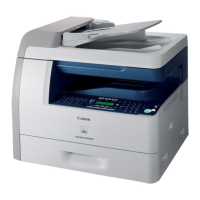
Do you have a question about the Canon imageCLASS Mf6180dw and is the answer not in the manual?
Turn off power, disconnect cord, and open feeder cover before cleaning.
Use a damp cloth to clean feeder rollers (A), then wipe with a dry cloth.
Wipe the scanning area (A) of the platen glass and close the feeder cover.
Reconnect the power cord and turn ON the power switch to complete.
This document outlines the procedures for cleaning the feeder of a Canon imageCLASS MF6180dw or MF6160dw multifunction device. The feeder is an integral part of the device, designed to automatically feed documents for scanning, copying, or faxing. Its primary function is to streamline the process of digitizing or duplicating multi-page documents, enhancing efficiency by eliminating the need for manual placement of each page on the platen glass.
The feeder mechanism is responsible for accurately picking up individual sheets from a stack of documents, guiding them through the scanning path, and then ejecting them. This automated process is crucial for tasks involving multiple pages, such as scanning a multi-page report, copying a booklet, or sending a lengthy fax. The feeder ensures consistent document alignment and smooth paper transport, which are essential for producing high-quality scans and copies. It integrates with the device's scanning unit, allowing for rapid capture of document images. The design typically includes rollers that grip and move the paper, and a scanning area where the document's image is captured. The platen glass, a flat glass surface, is also part of the scanning system, used for scanning single pages or delicate items that cannot be fed through the automatic feeder.
The feeder is designed for ease of use, allowing users to load a stack of documents and initiate a scanning or copying job with minimal manual intervention. It typically accommodates various standard paper sizes and weights, making it versatile for different document types. Users simply place their documents face up or face down in the feeder tray, depending on the device's specific loading instructions, and the device handles the rest. The feeder's automation significantly reduces the time and effort required for large scanning tasks, making it a valuable feature in busy office environments. The device's control panel or associated software allows users to select various scanning parameters, such as resolution, color mode, and file format, which are then applied to the documents fed through the feeder.
Regular maintenance of the feeder is critical to ensure its optimal performance and to prevent common issues like paper jams, streaks on scanned documents, or misfeeds. The provided manual details a straightforward cleaning process that users can perform to maintain the feeder's functionality.
The maintenance procedure begins with safety precautions: turning off the power switch and disconnecting the power cord. This ensures that there is no electrical hazard during the cleaning process and prevents accidental operation of the device.
The first step in cleaning involves opening the feeder cover. This action provides access to the internal components of the feeder, specifically the rollers and the scanning area.
The core cleaning task focuses on the rollers inside the feeder, which are labeled as (A) in the diagrams. These rollers are crucial for gripping and transporting documents. Over time, paper dust, ink residue, and other debris can accumulate on their surfaces, leading to poor paper feeding, misalignments, or streaks on scanned documents. To clean these rollers, a well-wrung cloth dampened with water is recommended. The emphasis on "well-wrung" is important to prevent excess moisture from entering the device, which could cause damage. After damp cleaning, the rollers should be wiped with a soft, dry cloth to remove any remaining moisture and ensure they are completely dry before use. This two-step cleaning ensures that the rollers are free of dirt and moisture, promoting smooth and accurate paper handling.
After cleaning the internal rollers, the feeder cover is closed.
The next critical area for maintenance is the scanning area of the platen glass, also labeled as (A) in the diagrams. This is where the document's image is captured. Dirt, smudges, or dust on the platen glass can result in streaks, spots, or blurry areas on scanned images. The cleaning process for the platen glass is similar to that of the rollers: first, wipe with a well-wrung cloth dampened with water, and then follow with a soft, dry cloth. This ensures a clear, streak-free scanning surface.
An important precaution highlighted during the platen glass cleaning is to "Take care not to bend the clear sheet (A) at the left edge of the platen glass." This indicates the presence of a delicate component, likely a thin plastic or film strip, that is part of the scanning mechanism or document guide. Bending or damaging this sheet could impair the feeder's ability to accurately position documents or affect scan quality.
Finally, after all cleaning is complete and the feeder cover is closed, the device is reconnected to power, and the power switch is turned ON. This prepares the device for normal operation.
Regularly performing these cleaning steps helps to prevent common issues such as black streaks or dirty appearances on scanned documents, which are often indicators of dirty rollers or scanning surfaces. By adhering to this maintenance schedule, users can ensure the longevity and consistent high performance of their Canon imageCLASS MF6180dw/MF6160dw feeder.
 General
| Functions | Print, Copy, Scan, Fax |
|---|---|
| Print Resolution (Black) | 600 x 600 dpi |
| Duplex Printing | Yes |
| Automatic Document Feeder (ADF) | Yes |
| ADF Capacity | 50 sheets |
| Paper Capacity (Standard) | 250 sheets |
| Connectivity | USB 2.0, Ethernet, Wi-Fi |
| Display | 5-line LCD |
| Memory (Standard) | 256 MB |
| Scanner Type | Color Contact Image Sensor (CIS) |
| Scan Resolution (Optical) | Up to 600 x 600 dpi |
| Fax Speed | 33.6 Kbps |
| Paper Sizes Supported | Letter, Legal, A4, A5, B5 |
| Mobile Printing | Apple AirPrint, Google Cloud Print, Canon PRINT Business |
| Duty Cycle (Monthly) | 50, 000 pages |
| Print Speed (Black) | 35 ppm (Letter) |
| Type | Monochrome Laser Printer |


 To Next Page