Need help?
Do you have a question about the Caple RBL5 and is the answer not in the manual?
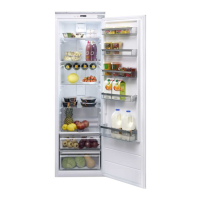
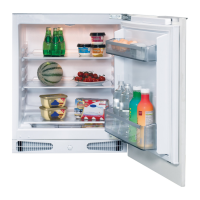
This document is an instruction manual for the Caple RBL5 Built-under Larder Fridge, providing comprehensive guidance on its safe installation, operation, maintenance, and troubleshooting. The fridge is designed for household and similar applications, including staff kitchen areas, farmhouses, hotels, motels, and bed and breakfast environments. It is intended for use by individuals who are supervised or have been shown how to use it safely, and who can recognize and understand potential dangers. Children aged 8 years and above can use the appliance under supervision, while those aged 3 to 8 years are permitted to load and unload it.
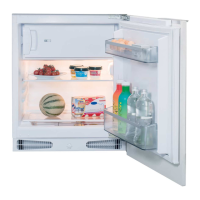
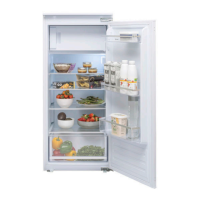
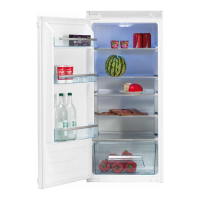
The Caple RBL5 is a larder fridge, meaning it is designed solely for refrigeration and does not include a freezer compartment. Its primary function is to store food and drinks at cool temperatures, helping to preserve their freshness and extend their shelf life. The appliance features adjustable fridge shelves, a crisper cover, a crisper drawer for fruits and vegetables, door shelves for bottles and smaller items, and an egg holder. The internal temperature is regulated by a thermostat knob, allowing users to select colder temperatures by rotating it from position 1 to 5. The fridge is designed to operate within specific ambient temperature intervals, as indicated by its climate class (SN, N, ST, T), ensuring optimal cooling effectiveness.
Before initial use, all internal parts of the fridge should be wiped with a solution of warm water and sodium bicarbonate, then rinsed and dried. Any transport tapes and foam protection pieces must be removed. The adjustable front legs should be stabilised to ensure the fridge operates in a stable and proper way. It is crucial to connect the fridge to the electrical socket but not switch on the power for at least 12 hours after transport to allow the coolant to settle, which is vital for optimal cooling performance.
The thermostat knob allows for flexible temperature control. For short-term food storage, positions 1-3 are recommended, while for long-term storage, positions 3-4 are suggested. The manual advises that ambient temperature, the temperature of freshly stored food, and door opening frequency all affect the internal temperature, so users may need to adjust the thermostat accordingly. When first switched on, it's recommended to run the appliance without food for 24 hours, or at least limit the amount of food placed inside if immediate use is necessary. If the unit is switched off or unplugged, a minimum of 5 minutes should pass before restarting to prevent compressor damage.
For efficient food storage, liquids should always be stored in sealed containers to reduce humidity and frost formation. Warm food should be cooled to room temperature before being placed in the fridge to ensure adequate air circulation. It's important to prevent items from touching the rear wall to avoid frost development and packaging sticking. Frequent door opening should be avoided to maintain internal temperature. Meat and clean fish are best stored loosely wrapped on the glass shelf above the vegetable bin, where the air is cooler. Loose fruits and vegetables should be stored in the crisper containers, with ethylene-sensitive vegetables separated from ethylene-releaser fruits to prevent spoilage. Wet vegetables should not be placed directly into the refrigerator. To prevent cross-contamination, meat products should not be stored with fruits and vegetables, and any leakages from meat should be cleaned promptly. Food should not block the air flow passage, and packaged foods should be consumed before their expiry date. The manual also provides a table with recommended maximum storage times and locations for various food items.
Regular cleaning and maintenance are essential for the appliance's efficiency and longevity. Before any cleaning or maintenance, the fridge must be disconnected from the power supply. The appliance should not be washed by pouring water directly onto it, nor should abrasive products, detergents, or soaps be used. Instead, it should be cleaned regularly with a solution of bicarbonate of soda and lukewarm water, then rinsed with clean water and dried carefully. Care must be taken to prevent water from entering the lamp housing and other electrical components. Accessories should be cleaned separately by hand and not in a dishwasher. The condenser should be cleaned with a brush at least twice a year to save energy and increase productivity.
Defrosting of the refrigerator compartment occurs automatically. The water from defrosting is collected in an evaporation tray and evaporates naturally. The evaporation tray and the water drain hole should be cleaned periodically with the defrost drain plug to prevent water from accumulating at the bottom of the fridge. The drain hole can also be cleaned by pouring half a glass of water down it.
In case of a power outage or if the appliance is unplugged, wait at least 5 minutes before plugging it back in or restarting to prevent compressor damage. The cooling unit at the rear of the appliance may cause water droplets or ice to form on the rear surface, which is normal and does not require manual defrosting unless there is excessive ice. The LED light, if it needs replacement, must be done by an authorised engineer or similar qualified person.
For short holidays (less than three weeks), the fridge can be left operating. For long holidays (several months), all items should be removed, the appliance turned off, the thermostat set to "•" position, defrosted, and cleaned. To prevent odours and mould, the door should be left slightly ajar.
When transporting or repositioning the appliance, it is advisable to keep the original packaging and foam. The appliance should be fastened with thick packaging, bands, or strong cords, following the transportation instructions. All movable parts (shelves, accessories, vegetable bins) should be removed or secured with bands/tape to prevent damage from shocks. The appliance must always be carried in an upright position. If the appliance uses R600a as a refrigerant, care must be taken during transportation and installation to prevent damage to the cooler elements, as R600a is flammable. In case of a leak, the appliance should be moved away from open flames or heat sources, and the room ventilated. The door handles should not be used for lifting, and due to its weight, the appliance should be transported by two people.
Disposal of old appliances requires careful consideration due to isolation material and refrigerant (CFCs). Locks on old fridges or freezers should be broken or removed before discarding to prevent children from getting trapped. Care must be taken to avoid damaging the pipework during disposal.
 General
| Category | Refrigerator |
|---|---|
| Energy Efficiency Class | A+ |
| Refrigerant | R600a |
| Door Hinge | Right |
| Number of Shelves | 3 |
| Reversible Door | Yes |
| Colour | White |

 To Next Page