Need help?
Do you have a question about the Caple Ri731 and is the answer not in the manual?
Instructions for safely disposing of an old refrigerator, including environmental considerations.
Guidelines for disposing of refrigerator packaging materials, emphasizing recycling.
General safety advice before operating the refrigerator, emphasizing the importance of the user guide.
Lists important safety warnings and precautions for operating and maintaining the appliance.
Describes the intended use and purpose of the refrigerator, including household vs. commercial use.
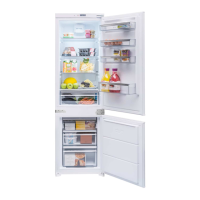
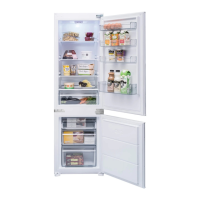
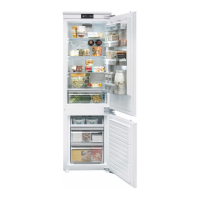
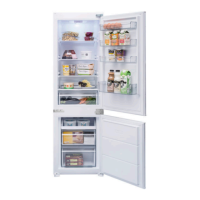
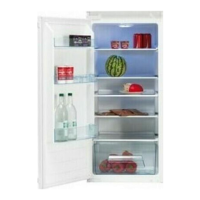
Lists and labels all components of the refrigerator as shown in the diagram.
Instructions for proper placement and leveling of the refrigerator for optimal performance.
Advises on avoiding heat sources, direct sunlight, and ensuring proper ventilation.
Steps for unpacking the refrigerator and verifying all included accessories.
Describes the initial power connection and standby status after installation.
Detailed instructions for changing the refrigerator door opening direction.
Step-by-step guide for installing the refrigerator within kitchen units.
Explains the components and indicators of the refrigerator's control panel.
How to adjust the temperature for refrigerator and freezer, and the quick freezing feature.
Details how the freezer temperature is displayed via indicator F and its corresponding ranges.
Explains the over-temperature warning indicator and buzzer, and how to silence it.
Describes potential error indications from temperature sensors and their meanings.
Guide on connecting the appliance to power and initial operation.
Reiteration of temperature control via thermostats for refrigerator and freezer.
Advice on when and how to load food into the refrigerator after operation starts.
Information on where to store different types of food within the refrigeration compartment.
Instructions on how to adjust the height and space of the food shelves.
Details on the lamp specifications and how to replace it safely.
Advises cooling hot food, drying moisture, and sealing food before refrigeration.
Warns against overloading shelves and placing food too close to walls for optimal storage.
Tips to extend the storage life of vegetables by orienting them towards the cold source.
Recommends removing leaves from root vegetables and proper storage of certain fruits.
Lists vegetables and fruits not suitable for refrigeration, recommending alternative storage.
Guidelines for storing food long-term in the freezer compartment.
Instructions for making ice using the freezer compartment, including safe removal.
Advice on not exceeding the refrigerator's capacity when loading food into the freezer.
Suggests cutting food into portions and using appropriate packaging for freezer storage.
Instructions on handling defrosted food, emphasizing it should not be re-frozen without cooking.
Explains the automatic defrosting process for the refrigerator compartment.
Details manual defrosting procedures for the freezer compartment, including precautions.
General instructions and precautions for cleaning the refrigerator regularly to prevent odors.
Advice on food storage and refrigerator operation during power outages.
Instructions for long-term power cessation, including cleaning and door handling.
Recommendations for handling the refrigerator during short and long vacations.
Steps and precautions for safely moving the refrigerator, including tilting limits.
Lists normal operating sounds and conditions that are not indicative of a malfunction.
Discusses causes of vibration and ice formation, and ambient temperature effects.
A guide to identifying common refrigerator problems and their likely causes before attempting repairs.
 General
| Energy efficiency class | F |
|---|---|
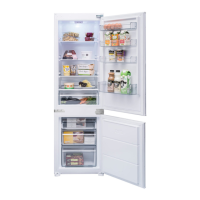
| Freezer position | Bottom |
| Colour | White |
| Energy Rating | F |
| Number of Shelves | 5 |
| Freezer Compartment | Yes |
| Dimensions (H x W x D) | 1770 x 540 x 540 mm |
| Type | Integrated |

 To Next Page