EasyManua.ls Logo

Carrier 19XR Series - User Manual

Carrier 19XR Series
16 pages
Print Icon
To Next Page IconTo Next Page
Loading...
Manufacturer reserves the right to discontinue, or change at any time, specifications or designs without notice and without incurring obligations.
PC 211 Catalog No. 531-984 Printed in U.S.A. Form 19XR-6SI Pg 1 5-04 Replaces: 19XB-1SI
Book 2
Tab 5 a
Installation, Operating, and
Maintenance Instructions
Positive pressure storage systems are designed to provide
safe and reliable service when operated within design specifi-
cations. When operating this equipment, use good judgment
and safety precautions to avoid damage to equipment and
property or injury to personnel.
Installation, start-up, and servicing of this equipment can be
hazardous due to system pressures, electrical components,
and equipment location (roofs, elevated structures, etc.). Only
trained, qualified installers and service technicians should
install, start up, and service this equipment.
Be sure you understand and follow the procedures and safety
precautions contained in this guide.
DO NOT VENT refrigerant relief valves within a building. Outlet from
rupture disc or relief valve must be vented outdoors in accordance with
the latest edition of ASHRAE 15 (American Society of Heating,
Refrigeration, and Air Conditioning Engineers). The accumulation
of refrigerant in an enclosed space can displace oxygen and cause
asphyxiation.
PROVIDE adequate ventilation in accordance with ASHRAE 15, espe-
cially for enclosed and low overhead spaces. Inhalation of high concen-
trations of vapor is harmful and may cause heart irregularities,
unconsciousness, or death. Misuse can be fatal. Vapor is heavier than
air and reduces the amount of oxygen available for breathing. Product
causes eye and skin irritation. Decomposition products are hazardous.
DO NOT USE OXYGEN to purge lines or to pressurize a machine for
any purpose. Oxygen gas reacts violently with oil, grease, and other
common substances.
NEVER EXCEED specified test pressures, VERIFY the allowable test
pressure by checking the instruction literature and the design pressures
on the equipment nameplate.
DO NOT USE air for leak testing. Use only tracer gases and dry
nitrogen.
DO NOT VALVE OFF any safety device.
BE SURE that all pressure relief devices are properly installed and
functioning before operating any machine.
DO NOT WELD OR FLAMECUT any refrigerant line or vessel until
all refrigerant (liquid and vapor) has been removed from chiller. Traces
of vapor should be displaced with dry air or nitrogen and the work area
should be well ventilated. Refrigerant in contact with an open flame
produces toxic gases.
DO NOT USE eyebolts or eyebolt holes to rig machine sections or the
entire assembly.
DO NOT work on high-voltage equipment unless you are a qualified
electrician.
DO NOT WORK ON electrical components, including control panels,
switches, starters, or oil heater until you are sure ALL POWER IS
OFF and no residual voltage can leak from capacitors or solid-state
components.
LOCK OPEN AND TAG electrical circuits during servicing. IF
WORK IS INTERRUPTED, confirm that all circuits are deenergized
before resuming work.
AVOID SPILLING liquid refrigerant on skin or getting it into the eyes.
USE SAFETY GOGGLES. Wash any spills from the skin with soap
and water. If any enters the eyes, IMMEDIATELY FLUSH EYES with
water and consult a physician.
NEVER APPLY an open flame or live steam to a refrigerant cylinder.
Dangerous overpressure can result. When necessary to heat refrigerant,
useonlywarm(110F[43C])water.
DO NOT REUSE disposable (nonreturnable) cylinders or attempt to
refill them. It is DANGEROUS AND ILLEGAL. When cylinder is
emptied, evacuate remaining gas pressure, loosen the collar and
unscrew and discard the valve stem. DO NOT INCINERATE.
CHECK THE REFRIGERANT TYPE before transferring refrigerant
to the machine. The introduction of the wrong refrigerant can cause
damage or malfunction to this machine.
Operation of this equipment with refrigerants other than those cited
herein should comply with ASHRAE 15 (latest edition). Contact
Carrier for further information on use of this machine with other
refrigerants.
ENSUREthatrefrigerantisonlypumpedtoorstoredintanksthatare
ASME (American Society of Mechanical Engineers) certified for the
pressures appropriate to the refrigerant being handled.
DO NOT ATTEMPT TO REMOVE fittings, covers, etc., while
machine is under pressure or while machine is running. Be sure pres-
sure is at 0 psig (0 kPa) before breaking any refrigerant connection.
CAREFULLY INSPECT all relief devices, rupture discs, and other
relief devices AT LEAST ONCE A YEAR. If machine operates in a
corrosive atmosphere, inspect the devices at more frequent intervals.
DO NOT ATTEMPT TO REPAIR OR RECONDITION any relief
device when corrosion or build-up of foreign material (rust, dirt, scale,
etc.) is found within the valve body or mechanism. Replace the device.
DO NOT install relief devices in series or backwards.
USE CARE when working near or in line with a compressed spring.
Sudden release of the spring can cause it and objects in its path to act as
projectiles.
EQUIPMENT should be operated by certified personnel only.
DO NOT STEP on refrigerant lines. Broken lines can whip about and
cause personal injury and damage to the machine.
DO NOT climb over a machine. Use platform, catwalk, or staging. Fol-
low safe practices when using ladders.
USE MECHANICAL EQUIPMENT (crane, hoist, etc.) to lift or move
inspection covers or other heavy components. Even if components are
light, use such equipment when there is a risk of slipping or losing your
balance.
BE AWARE that certain automatic start arrangements CAN ENGAGE
THE STARTER. Open the disconnect ahead of the starter in addition to
shutting off the machine or pump.
USE only repair or replacement parts that meet the code requirements
of the original equipment.
DOUBLE-CHECK that coupling nut wrenches, dial indicators, or other
items have been removed before rotating any shafts.
DO NOT LOOSEN a packing gland nut before checking that the nut
has a positive thread engagement.
PERIODICALLY INSPECT all valves, fittings, and piping for corro-
sion, rust, leaks, or damage.
DO NOT MIX REFRIGERANT from chillers that use different com-
pressor oils. Compressor damage can result.
19XR
Positive Pressure Storage System
50/60 Hz

Questions and Answers

  • M
    Margaret HarrisJul 27, 2025
    Why is my Carrier 19XR compressor losing oil?
    • D
      Diane JonesJul 27, 2025
      If the Carrier Storage compressor is losing oil, there could be a leak in the system, so locate and repair the leak. Alternatively, the compressor oil return check valve may be plugged or stuck, requiring repair or replacement. Liquid refrigerant might be carrying oil out of the compressor, so check to ensure only refrigerant vapor enters the compressor suction line and add oil as necessary. The motor may have shut down due to the internal thermal protection high-temperature cutout. The high-temperature cutout should reset within 120 minutes.
  • A
    Amy CrossAug 5, 2025
    What to do if the Carrier 19XR compressor does not run?
    • S
      sara60Aug 6, 2025
      If the Carrier Storage compressor does not run, it could be due to several reasons. The main power line might be open, in which case you should replace the fuse or reset the circuit breaker. There may be a loose terminal connection, so check the connections. The controls could be improperly wired, so check the wiring and rewire if necessary. A low line voltage could be the cause; check the line voltage and determine the location of the voltage drop. The compressor motor may be defective, so check the motor winding for an open or short and replace the compressor if needed. The compressor might be seized, requiring replacement. Finally, a high-level gage alarm could be the reason, so check the refrigerant level and remove any excess.
  • J
    James FowlerAug 17, 2025
    What to do if Carrier 19XR Storage compressor cycles on high-pressure control?
    • K
      Karen WrightAug 17, 2025
      If your Carrier Storage compressor cycles on high-pressure control, it could be due to several reasons. The high-pressure control might be acting erratically; check the capillary tube for pinches and set the control as required. The discharge valve may be partially closed; open the valve. Air might be in the system, so purge the system. The condenser could be scaled, requiring cleaning. Finally, the condenser water pump or fans may not be operating; start the pump or fans.

Summary

Safety and Precautions

General Safety Warnings

Essential safety warnings and precautions for operating the system, including dangers, warnings, and cautions.

Refrigerant Handling Safety

Guidelines for safe handling of refrigerants, including venting, cylinder use, and pressure limits.

Electrical and Mechanical Safety

Precautions for electrical work and mechanical operations to prevent injury and equipment damage.

Operation - Refrigerant Transfer

Refrigerant Transfer Overview

Introduction to transferring refrigerant using pressure or gravity differentials.

Transferring Liquid Refrigerant (Cooler to Condenser;Tank)

Procedure to move liquid refrigerant from chiller cooler to condenser or storage tank.

Operation - Refrigerant Transfer Procedures

Transferring Refrigerant to Pumpout Storage Tank

Steps to move refrigerant from chiller to the pumpout storage tank.

Operation - Chiller Service Procedures

Operation - Distillation and Conditions

Maintenance and Troubleshooting

Troubleshooting Common Issues

Guide to identifying and resolving common system problems and symptoms.

Overview

The Carrier 19XR Positive Pressure Storage (PPS) System is designed to facilitate the safe and reliable storage of HFC-134a refrigerant for positive pressure chillers during service and repair operations. This system aims to conserve refrigerant and prevent excessive releases into the atmosphere, thereby minimizing HFC loss.

Function Description:

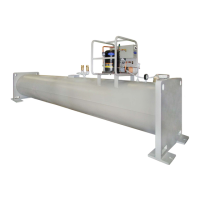
The 19XR PPS system consists of a pumpout unit mounted on a storage tank. It can also be offered as a free-standing unit for use with chillers that have existing storage tanks or built-in refrigerant storage with isolation valves. The pumpout unit is a complete, hermetic, compact assembly comprising a reciprocating compressor with a direct-drive motor, a water-cooled refrigerant condenser, an oil separator, and suction and discharge valves to control refrigerant flow. It also includes prewired safety and control devices. The system is factory tested and certified to the ASME (American Society of Mechanical Engineers) pressure vessel code.

The primary function of the system is to transfer refrigerant between chiller vessels and the storage tank, and to distill refrigerant. Refrigerant transfer is achieved by creating a pressure differential between vessels, either through gravity flow or by actively lowering pressure in one vessel while increasing it in another. The pumpout unit facilitates this by discharging refrigerant vapor into the cooler vessel, lowering pressure in the condenser vessel/storage tank, and forcing liquid from the cooler vessel into the condenser vessel/storage tank. For distillation, refrigerant vapor is transferred from the chiller cooler vessel or pumpout storage tank through the pumpout condenser, condensed to a liquid, and then pumped to the chiller condenser vessel, allowing impurities to be drained off.

Important Technical Specifications:

  • Storage Vessels: All storage vessels are rated for 185 psig (1276 kPa) per ASME Boiler Pressure Vessel Code, Section VIII Division 1.
  • Refrigerant: Designed for HFC-134a. Operation with other refrigerants requires compliance with ASHRAE 15 (latest edition) and consultation with Carrier.
  • Pumpout Unit Weight: 164 lb (75 kg), including compressor/condenser, control box, and oil separator.
  • Pumpout Condenser Water Flow Rate: 7-9 gpm (0.45-0.58 L/s).
  • Pumpout Condenser Water Pressure Drop: 0.3 psig (2.0 kPa).
  • Maximum Entering Condenser Water Temperature: 85 F (29 C).
  • Maximum Leaving Condenser Water Temperature: 100 F (37 C).
  • Relief Valve Setting (Pumpout Unit): 235 psig (1620 kPa).
  • Condenser Pressure Rating: Refrigerant Side: 450 psig (3102 kPa); Waterside: 450 psig (3102 kPa).
  • Storage Tank Relief Valve Setting: 185 psig (1276 kPa).
  • Compressor Motor: Nominal horsepower for all pumpout units is 3.0. Available in 208/230-3-50/60V, 460-3-60V, and 400-3-50V configurations.
  • Storage Tank Capacities (R-134a):
    • 28 cu ft (0.8 cu m) tank: 1860 lb (844 kg) per ASHRAE/ANSI 15; 1716 lb (778 kg) per UL 1963.
    • 52 cu ft (1.5 cu m) tank: 3563 lb (1616 kg) per ASHRAE/ANSI 15; 3286 lb (1491 kg) per UL 1963.
  • Safety Controls: High-pressure switch (cut-in: 185 ± 10 psig, cutout: 140 ± 10 psig); Low-pressure control (NC open < 7 psia, close > 9 psia).
  • Electrical Connections: Copper conductors only. Control box is NEMA 1 compliant.

Usage Features:

  • Mounting Options: The pumpout unit can be mounted directly on the chiller or floor-mounted.
  • Rigging: The complete 19XR system can be rigged as a single assembly using specific lifting points. Rigging equipment must be adequate for the assembly weight.
  • Piping Connections: Standard 1/2-in. OD copper tubing for refrigerant transfer (7/8-in. OD for runs over 50 ft). 3/4-in. NPT (female) for water connections. 3/8-in. male flare for safety relief head pumpdown.
  • Vent Piping: Relief devices must be vented outdoors according to ANSI/ASHRAE 15 Safety Code.
  • Operation Modes: The pumpout selector switch offers Manual, Off, and Automatic modes. In Automatic mode, the compressor cycles on a low pressure/vacuum switch and shuts off when suction pressure drops to 7 psia or 15 in. Hg vacuum. In On mode, the compressor runs continuously until motor overload.
  • Refrigerant Level Monitoring: The storage tank is equipped with a level gage (magnetically coupled dial type) with an electronic shut-off at 90% liquid capacity to prevent overfilling.
  • Safety Precautions: Always run chiller cooler and condenser water pumps during refrigerant transfer and charge/transfer refrigerant as a gas when chiller vessel pressure is less than 35 psig (241 kPa) to prevent tube freeze-up. Never vent relief valves indoors. Do not use oxygen for purging or pressurizing. Never exceed specified test pressures. Do not use air for leak testing.

Maintenance Features:

  • Periodic Inspection: All relief devices, rupture discs, and other relief devices should be inspected at least once a year, or more frequently in corrosive atmospheres. Replace, do not repair, corroded or damaged relief devices.
  • Oil Charge: The pumpout oil separator comes pre-charged with 13 oz of ISO viscosity 220 POE (Polyol Ester) oil. The pumpout compressor is approved for ISO viscosity 220 POE oil or ISO viscosity 68 POE oil. Monitor and adjust compressor oil level as needed. When replacing lost oil, add the same type used in the chiller being pumped out.
  • Storage Tank Maintenance: Maintain positive pressure in the tank when not transferring refrigerant to prevent moisture and contaminants. Leak test the storage tank periodically.
  • Troubleshooting: A troubleshooting guide is provided to address common issues such as compressor not running, compressor cycling on high-pressure control, unit operating too long, system noises, and compressor losing oil.
  • Replacement Parts: When ordering parts, provide machine model and serial number, name, quantity, part number, delivery address, and shipment method.

Carrier 19XR Series Specifications

General IconGeneral
BrandCarrier
Model19XR Series
CategoryStorage
LanguageEnglish

Related product manuals