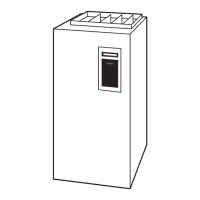
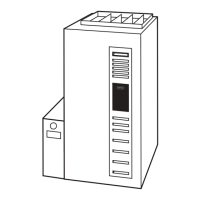
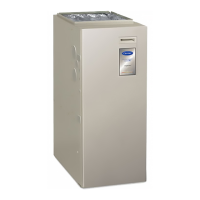
58MVP
Variable-Speed 2-Stage
Electronic Condensing Furnace
Troubleshooting Guide
NOTE: Read the entire instruction manual before starting the
installation.
SAFETY CONSIDERATIONS
INDEX
PAGE
Instructions .....................................................................................1
Example..........................................................................................2
Sequence of Operation................................................................1-5
Self-Test Mode..........................................................................2
Heating Mode............................................................................2
Heating Mode-Two Stage.........................................................2
Emergency Heat Mode..........................................................2-3
Cooling Mode ...........................................................................3
Heat Pump Mode...................................................................3-4
Continuous Fan Mode ..............................................................4
Component Test.....................................................................4-5
Bypass Humidifier Mode..........................................................5
Dehumidification Mode............................................................5
Zone Mode................................................................................5
Start Here........................................................................................6
Service Label/Fault Code Instructions.......................................7-8
Improper Operation With No Flashing Fault Code......................9
Not Enough Cooling Airflow ......................................................10
High-Fire Temperature Rise Too Low (Cold Blow)..................11
LEDs 1, 2, 3, or 4 On Solid...................................................11-12
RED LED2 Flashing....................................................................12
Fault Code 11—No Fault in Recent History Display ................13
Fault Code 12—Blower Calibration Lockout........................13-15
Fault Code 13—Limit Switch Lockout..................................15-16
Fault Code 14—Ignition Lockout................................................17
Fault Code 21—Invalid Model Selection....................................17
Fault Code 22—Set Up Error......................................................18
Fault Code 23—Invalid Blower Airflow Selection ....................18
Fault Code 24—Secondary Voltage Fuse Is Open................19-20
Fault Code 31—High-Pressure Switch Fault.........................21-22
Fault Code 32—Low-Pressure Switch Fault .........................23-24
Fault Code 33—Limit Switch Fault.......................................24-25
Fault Code 34—Ignition Proving Fault .................................26-27
Fault Code 41—Blower Outside Valid Speed Range...........27-28
Fault Code 42—Inducer Outside Valid Speed Range...........29-30
Fault Code 43—Pressure Switch Calibration Fault...............30-31
Fault Code 44—Blower Calibration Fault ..................................32
Cleanup and Start-Up Instructions ..............................................33
APPENDIX A—Board Layout & Wiring Schematic ...........34-35
APPENDIX B—Isolation Circuits ..............................................36
APPENDIX C—Pressure Check Diagram..................................36
APPENDIX D—Quick Motor Test Procedure......................37-39
APPENDIX E—Variable-Speed Condensing Furnace Duct Static
and Blower Operation.............................................................40-44
APPENDIX F—Quick Reference Information...........................45
APPENDIX G—Thermostat Staging Algorithm...................46-47
INSTRUCTIONS
This guide uses your expertise and observations to lead you to the
trouble spot as efficiently as possible. This is only intended as a
guide and should not be used blindly. Your experience and
expertise are of high value when troubleshooting this unit. Do not
disregard all of your instincts.
The microprocessor furnace control was designed with diagnostic
capabilities built in. LEDs are used to flash a fault code which will
lead you to 1 of the subsections as listed in the Index.
You should ALWAYS begin in the START HERE subsection
(see Index for page number) which will guide you to the
appropriate subsection where a minimal number of steps will be
used to correct the problem. If you are very experienced at how
this furnace operates and you suspect the problem is either the
blower motor, inducer motor, or furnace control board, you can use
the quick motor test procedure at the end of the troubleshooting
guide to isolate the problem or direct you to appropriate section in
main troubleshooting guide.
Once in a subsection, read the statement or question. A statement
will have a number in the "GO TO" column. Do whatever the
statement says, then proceed to step indicated in the "GO TO"
column.
If the step is a question (a question will have a number in the
"YES" or "NO" column), answer it "YES" or "NO." If the answer
is "YES," go to step indicated in "YES" column. If the answer is
"NO," go to step indicated in "NO" column.
Let’s try our guide out using the EXAMPLE section below, and
see how it works. Suppose that the problem is a defective
low-pressure switch (for example will not make). This is an
internal problem and cannot simply be seen. We go to the START
HERE section to Step 1.
Additional Service Tools are available for current variable speed
condensing furnaces. The Advanced Product Monitor Kit
KGAFP0101APM includes a harness and diskette that allows
communication with the control board through a personal com-
puter (RS-485 adapter required). The ICM Motor Simulator Kit
KGASD0101FMS is a plug-in device to help trooubleshoot ICM
inducer and blower motors and control boards. Reference price
pages for current kit numbers.
SEQUENCE OF OPERATION
Furnace control must be grounded for proper operation, or
control will lock out. Control is grounded through green wire
routed to gas valve and burner box screw.
Using schematic diagram (see Appendix A), follow sequence of
operation through different modes. This furnace has a new control
system. Read and follow wiring diagram carefully.
NOTE: If 115-v power supply to furnace or blower access panel
switch is interrupted during a call for heat, blower operates at
low-heat speed for 60 sec when power is restored before heating
cycle is resumed.
Visit www.carrier.com
Manufacturer reserves the right to discontinue, or change at any time, specifications or designs without notice and without incurring obligations.
Book 1 4
Tab 6a 8a
PC 101 Catalog No. 535-754 Printed in U.S.A. Form 58MVP-8SM Pg 1 9-99 Replaces: 58MVP-6SM


 To Next Page


 General