Spark Plug
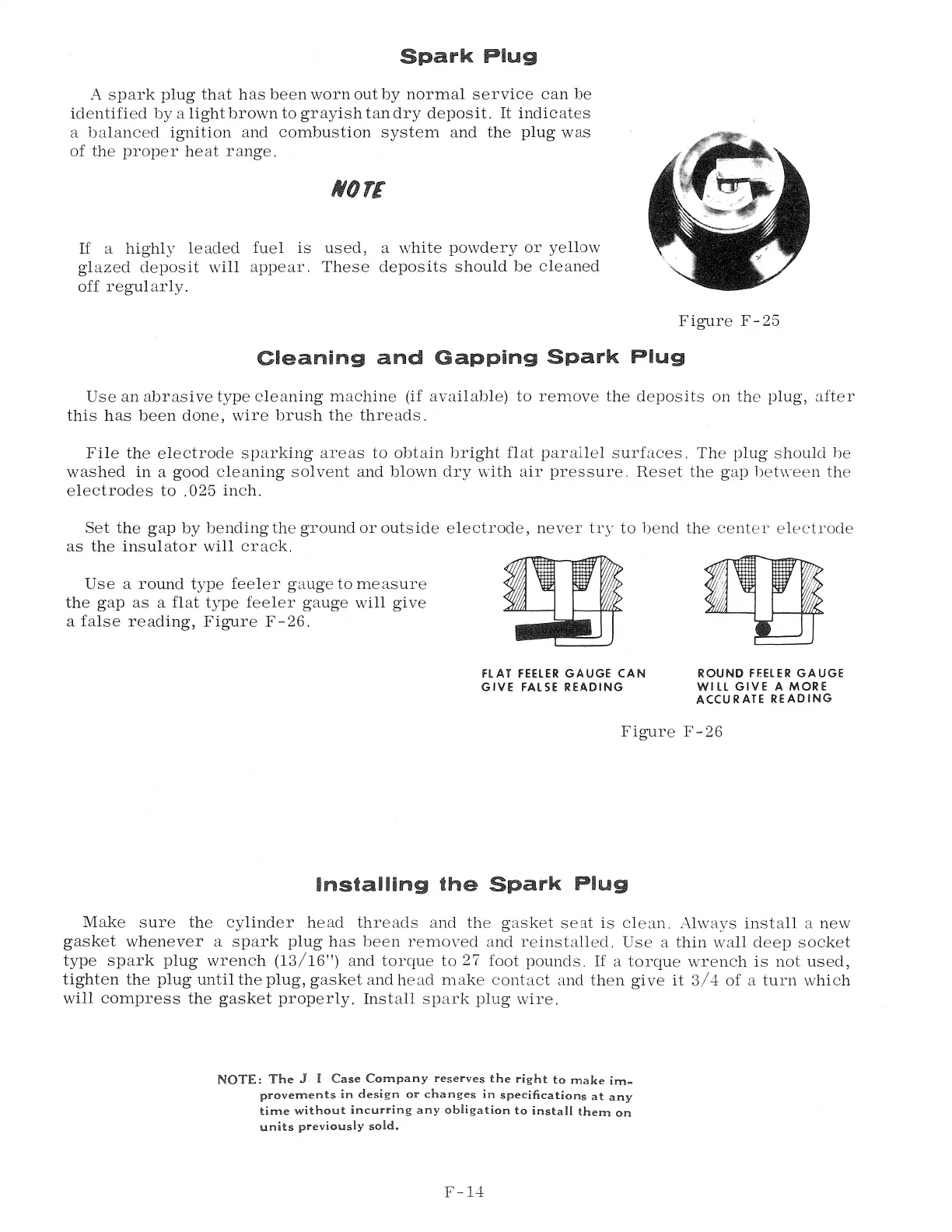
A spark plug that has been worn out by normal service can be
identified by a light brown to grayish tan dry deposit. It indicates
a balanced ignition and combustion system and the plug was
of the proper heat range.
NOTE
If a highly leaded fuel is used, a white powdery or yellow
glazed deposit will appear. These deposits should be cleaned
off regularly.
Figure F-25
Cleaning and Gapping Spark Plug
Use an abrasive type cleaning machine (if available) to remove the deposits on the plug, after
this has been done, wire brush the threads.
File the electrode sparking areas to obtain bright flat parallel surfaces. The plug should be
washed in a good cleaning solvent and blown dry \Vith air pressure. Reset the gap between the
electrodes to .025 inch.
Set the gap by bending the ground or outside electrode, never try to bend the center electrode
as the insulator will crack.
Use a round type feeler gauge to measure
the gap as a flat type feeler gauge will give
a false reading, Figure F-26.
FLAT FEHER GAUGE CAN
GIVE FALSE READING
ROUND FEELER GAUGE
WI LL GIVE A MORE
ACCURATE READING
Figure F-26
Installing the Spark Plug
Make sure the cylinder head threads and the gasket seat is clean. Always install a new
gasket whenever a spark plug has been removed and reinstalled. Use a thin wall deep socket
type spark plug wrench (13/16") and torque to 27 foot pounds.
If a torque wrench is not used,
tighten the plug until the plug, gasket and head make contact and then give it 3/
4 of a turn which
will compress the gasket properly. Install spark plug wire.
NOTE: The J. I Case Company reserves the right to make im-
provements in design or changes in specifications at any
time without incurring any obligation to install them on
units previously sold.
F-14



 To Next Page