Medium or Normal Heat Range Spark Plugs
The medium length insulator nose cools normally and is not subjected to constant high or
low temperatures or constant light or heavy loads. This medium range plug represented a com-
promise to cover the widest range of operating conditions.
If a hot plug is installed in an engine for lightloads or cold weather operation, it is very im-
portant that
it
be replaced by a colder plug when engine is operated at sustained heavy loads
in hot weather. Using too hot a plug for sustained heavy load operation, may result in the spark
plug becoming over heated, causing pre-ignition, cracking of the plug insulator and serious
engine damage.
Electrodes
Examine the spark plug electrodes to determine if the p ug is the proper heat range. Depo-
sits on the electrodes will give some indication of the condition of the engine.
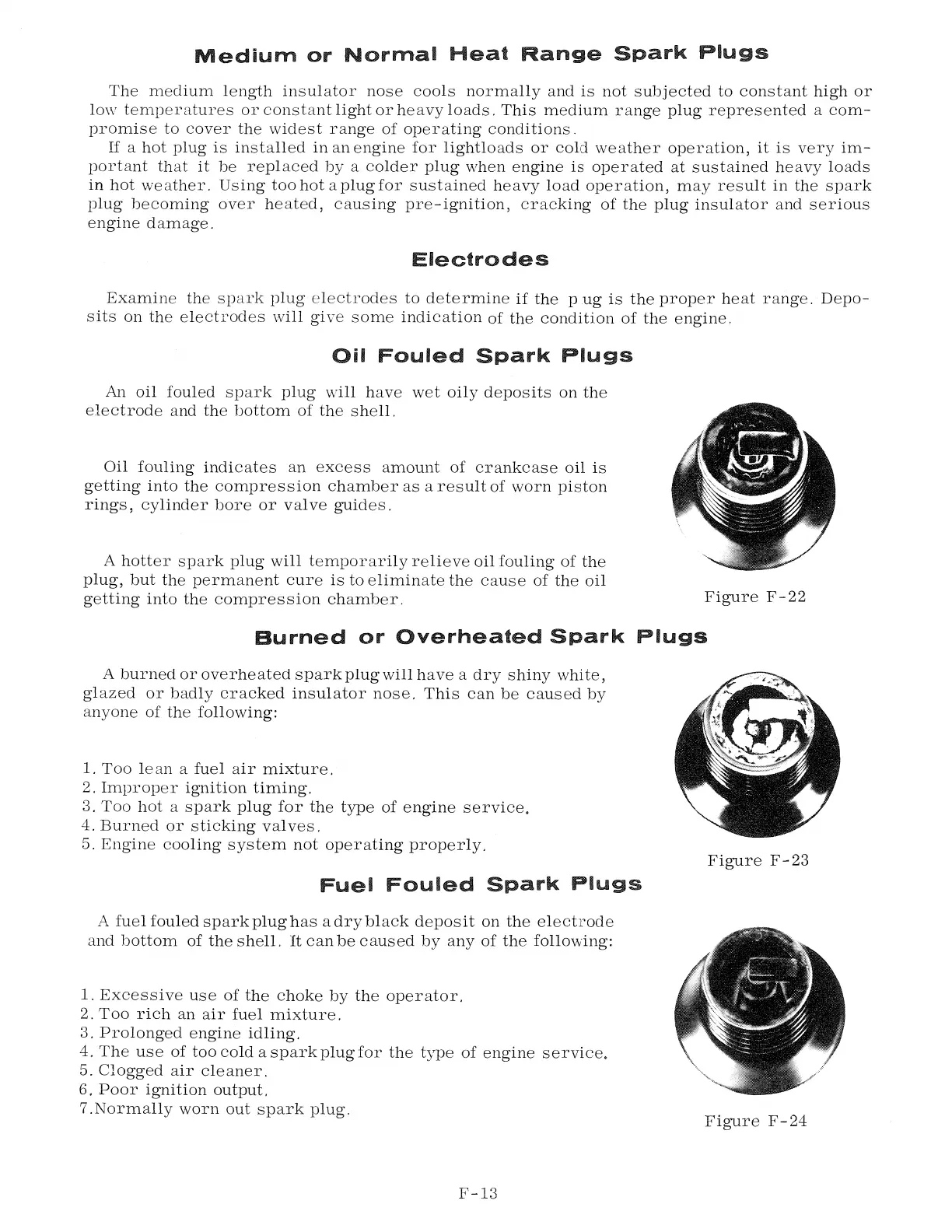
Oil Fouled Spark Plugs
An oil fouled spark plug will have wet oily deposits on the
electrode and the bottom of the shell.
Oil fouling indicates an excess amount of crankcase oil is
getting into the compression chamber as a result of worn piston
rings, cylinder bore or valve guides.
A hotter spark plug will temporarily relieve oil fouling of the
plug, but the permanent cure is to eliminate the cause of the oil
getting into the compression chamber.
Figure F-22
Burned or Overheated Spark Plugs
A burned or overheated spark plug will have a dry shiny white,
glazed or badly cracked insulator nose. This can be caused by
anyone of the following:
1.
Too lean a fuel air mixture.
2. Improper ignition timing.
3. Too hot a spark plug for the type of engine service.
4. Burned or sticking valves.
5. Engine cooling system not operating properly.
Fuel Fouled Spark Plugs
A fuel fouled spark plug has a dry black deposit on the electrode
and bottom of the shell.
It
can be caused by any of the following:
1.
Excessive use of the choke by the operator.
2. Too rich an air fuel mixture.
3. Prolonged engine idling.
4. The use of too cold a spark plug for the type of engine service.
5. Clogged air cleaner.
6.
Poor ignition output.
7.Normally worn out spark plug.
F-13
Figure F-23
Figure F-24



 To Next Page