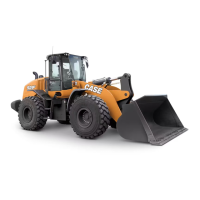
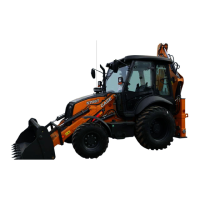
This document is an Operation and Maintenance Instruction Manual for Case Telescopic Handlers, specifically covering the TX130-40, TX130-43, TX130-45 Turbo, TX140-43, TX140-45 Turbo, and TX170-45 Turbo models. The manual provides essential information for the safe and efficient use, maintenance, and repair of these machines.
Function Description:
The Case Telescopic Handlers are designed and manufactured primarily for digging and moving earth and loose materials. Any other application is considered contrary to the designated use and may absolve the manufacturer from responsibility for damages or injuries. These machines are self-powered and self-propelled, engineered for maximum performance, economy, and ease of operation across a wide range of conditions. They are equipped with a telescopic boom for lifting and extending loads, making them versatile for various material handling tasks. The manual emphasizes that operation, servicing, and repairs must only be performed by personnel trained on the equipment and relevant safety rules, and who are authorized to operate the machine.
Important Technical Specifications:
The manual provides a table with key specifications for the different models:
- Engine: All models are equipped with an 88 kW (120 CV - 118 HP) Turbo Aftercooler engine.
- Max. lifting height (m):
- TX130-40, TX130-43, TX130-45: 12.300 - 12.450 m
- TX140-43, TX140-45: 13.550 m
- TX170-45: 16.600 m
- Max. capacity (kg) at 500 mm from fork stop:
- TX130-40: 4000 kg
- TX130-43, TX140-43, TX170-45: 4300 kg
- TX130-45, TX140-45: 4500 kg
- Capacity at max. height (kg):
- TX130-40: 2600 kg
- TX130-43, TX140-45: 3600 kg
- TX130-45: 4000 kg
- TX140-43: 3000 kg
- TX170-45: 2500 kg
- Extension at max. height (m):
- TX130-40: 1.200 m
- TX130-43, TX140-43: 0.500 m
- TX130-45: 0.000 m
- TX140-45: 0.300 m
- TX170-45: 1.000 m
- Max. longitudinal extension (m):
- TX130-40, TX130-43, TX130-45: 8.650 m
- TX140-43, TX140-45: 9.330 m
- TX170-45: 12.540 m
- Capacity at max. extension (kg):
- TX130-40: 700 kg
- TX130-43: 1700 kg
- TX130-45: 1800 kg
- TX140-43: 1400 kg
- TX140-45: 1500 kg
- TX170-45: 450 kg
- Weight (kg):
- TX130-40, TX130-43, TX130-45: 10480 kg
- TX140-43, TX140-45: 10780 kg
- TX170-45: 11760 kg
- Length (m):
- TX130-40, TX130-43, TX130-45: 5.850 m
- TX140-43, TX140-45: 6.070 m
- TX170-45: 6.135 m
- Stabilizers: TX130-40 has no stabilizers, while TX130-43 and TX140-43 have small stabilizers. TX130-45, TX140-45, and TX170-45 have large stabilizers.
- Fuel Capacity: 135 Litres.
The manual also details Product Identification Numbers (P.I.N.) for each model, which are crucial for parts and service requests. These numbers are stamped on the main frame and located on identification plates within the vehicle and on major components like the engine, axles, and transmission. The cab itself also has an identification plate with serial number and ROPS/FOPS structure details.
Usage Features:
The manual emphasizes safe operating practices. Key usage features and warnings include:
- Pre-Operation Checks: Daily checks of fluid levels (engine oil, hydraulic reservoir oil, transmission oil, fuel, cooling liquid, brake oil) are mandatory. The operator must be fully acquainted with all controls, instruments, and vehicle capabilities. Before driving, the steering wheel should be turned lock-to-lock with the engine running to ensure hydraulic circuits are fully charged.
- Driving Considerations: Always use normal two-wheel steering on public roads. Fasten the safety belt. Drive slowly on wet, slippery, or uneven ground, braking progressively. Use control levers only for driving. Do not place body parts outside the cab or allow passengers to ride on the machine. Maintain control of speed and avoid overspeeding. Be aware of falling objects and overhead power cables.
- Load Handling: Engage forks fully under the load, transport loads low and with the arm retracted and inclined backward. Avoid overfilling or transporting unstable loads. Do not lift loads with only one fork or exceeding the machine's rating. Do not accelerate or brake sharply with a load in an elevated position. Avoid stopping or turning with the load elevated. The machine's use as lifting equipment is subject to compliance with local laws.
- Operating Angles: The manual specifies that operating angles shown in diagrams (e.g., 20 degrees) must never be exceeded for safety and effective operation.
- Attachments: Only manufacturer-approved attachments should be used. An identification plate on each attachment lists its type, cubic capacity, date of manufacture, unladen weight, and serial number. For craning equipment, SWL (Safe Working Load), Rated Load, and Test No. CE are also listed.
- Road Travel: When driving on public roads, steering is admissible only on the front axle. The arm must be lowered to rest on a special ledge, the fork guard installed, and cab controls locked.
- Loading Bucket: When using a loading bucket, the filling operation must be performed with the loader arm extension fully retracted.
- Crane Use: Do not lift improperly placed loads, avoid sudden movements, load oscillations, and oblique pulls/towing. Tampering with hydraulic system calibration values is strictly forbidden.
- Safety Cab: The machine is equipped with a safety cab that must be maintained in serviceable condition. Modifications, drilling, or altering the cab structure are forbidden as they can weaken it and endanger safety.
Maintenance Features:
The manual outlines critical maintenance practices to ensure the machine's longevity and safe operation:
- Routine Service: Maintenance must be carried out using original parts and according to the schedule in Section 4 of the manual. Regular checks by an authorized dealer are recommended.
- Engine Shutdown: After intensive work, let the engine idle for a few moments to allow cooling liquid and oil temperatures to lower before stopping. This prevents damage to parts from sudden temperature changes.
- Leaks and Repairs: All leaks (engine cooling, hydraulic system) and minor defects must be repaired immediately.
- Cleanliness: Keep the machine clean, especially before maintenance. Protect electrical components and connections from water, steam, or cleaning agents.
- Hydraulic System: Do not loosen unions, hoses, or any hydraulic component with the circuit under pressure. Handling and dismounting balancing valves can be dangerous. This operation should only be performed by authorized technical staff when the cylinder is at rest and the hydraulic circuit is not under residual pressure.
- Fuel Handling: Never refuel with the engine running or hot. Do not smoke near fuel. Maintain control of the filler pipe nozzle. Do not overfill the tank; allow room for expansion. Wipe up spilled fuel immediately and secure the cap. Use only approved fuel tank caps. Never use rexiol, alcohol, or blended fuels with diesel.
- Battery: Isolate the battery before working on the electrical circuit or welding. Connect the negative welding cable directly to the part being welded to avoid high tension current passing through the alternator.
- Safety Decals: Replace any unreadable or damaged safety plates or decals.
- Environmental Considerations: The manual provides guidelines for ecological practices, including proper disposal of used engine coolant, oils, brake fluids, and fuels. It advises against mixing different types of used fluids and recommends storing them safely. Modern coolant mixtures should be replaced every two years and disposed of safely. Skin contact with fuels, oils, acids, and solvents should be avoided.
- Air Conditioning: Do not open the air-conditioning system yourself; consult a dealer or specialist for servicing.
- Hoses: Protect hoses during welding to prevent damage.
The manual stresses that compliance with these operations is essential for qualifying the use designated by the manufacturer and for ensuring the safety and reliability of the telescopic handler.

 Need help?
 General

 To Next Page