EasyManua.ls Logo

CDI FF4 - User Manual

CDI FF4
6 pages
Print Icon
To Next Page IconTo Next Page
Loading...
FLEXIBLE FURLER INSTRUCTIONS
FF4/FF6
WARNING: READ BEFORE INSTALLING OR USING FURLER
Improper installation of your CDI Flexible Furler or
reinstallation of your current headstay may result in the loss
of your mast and may cause injury to those onboard.
INDEX
- Specifications… Page 1
- Diagram… Page 2
- Parts list… Page 2
- Uncoiling instructions… Page 3
- Straightening instructions… Page 4
- Assembly instructions… Page 5-8
- Sailmaker instructions… Page 8
- Rigger instructions Page 8
- Notes about Sailing Page 8
- Notes about trailering Page 8
- Maintenance and Storage… Page 9
- Warranty… Page 10
SPECIFICATIONS
- Max Headstay Length: FF4: 33’ FF6: 39’
- Max Wire Size: 1/4”
- Max Turnbuckle Pin Size: 7/16”
- Headstay: Threaded swaged stud turnbuckle with
toggle at the bottom, a toggle at the top is
recommended but any secure fitting like a T-bolt at
the top will work. Must be secured by cotter pins.
Navtec turnbuckles are not compatible.
- Furling line: 1/4” double braided line or any low-
stretch line, twice your boat length. Not included.
- Mounting: must not be mounted above the
turnbuckle. Link plates can be used for clearance.
TOOLS
- Hacksaw
- Measuring tape
- Phillips head screwdriver
- Crimping tool (FF6 only)
- Wire cutters (FF6 only)
Question and Answer IconNeed help?

Do you have a question about the CDI FF4 and is the answer not in the manual?

Summary

Safety and Installation Warnings

General Installation Warning

Improper installation or reinstallation can cause mast loss and injury.

System Specifications and Tools

Key System Specifications

Details on headstay length, wire size, turnbuckle pin size, line type, and mounting.

Required Tools

List of tools necessary for installation and maintenance.

Uncoiling and Straightening Instructions

Safe Uncoiling Procedure

Step-by-step guide for safely uncoiling the luff extrusion with precautions.

Straightening Process

Method for straightening the luff extrusion to prevent kinks and voiding the warranty.

Assembly and Rigging

Halyard Top Fitting Attachment

Attaching the halyard top fitting to the cored or wire end of the halyard.

Luff Extrusion Connection

Connecting the halyard fitting to the luff extrusion's top slot.

Headstay and Drum Assembly

Assembling the headstay, turnbuckle, and furling drum/spool.

Halyard Trimming and Securing

Trimming the halyard to length and securing it for FF4 and FF6 systems.

Rigging Guidelines

Mounting advice for the furler relative to the turnbuckle and compatible fittings.

Sail Handling and Maintenance

Sailmaker Compatibility

Requirements for sail luff tape compatibility and webbing at head/tack.

Notes on Sailing

Advice on luff tension, reefing, and furling line handling during sailing.

Notes on Trailering

Instructions for securely strapping and supporting the furler during trailering.

Maintenance Recommendations

Recommended rinsing frequency and lubricant use for the furler system.

Storing Your Furler

Best practices for storing the furler, avoiding sharp bends and extreme temperatures.

Warranty Information

Limited Warranty Details

Details of the 10-year limited warranty and coverage exclusions.

Summary

Safety and Installation Warnings

General Installation Warning

Improper installation or reinstallation can cause mast loss and injury.

System Specifications and Tools

Key System Specifications

Details on headstay length, wire size, turnbuckle pin size, line type, and mounting.

Required Tools

List of tools necessary for installation and maintenance.

Uncoiling and Straightening Instructions

Safe Uncoiling Procedure

Step-by-step guide for safely uncoiling the luff extrusion with precautions.

Straightening Process

Method for straightening the luff extrusion to prevent kinks and voiding the warranty.

Assembly and Rigging

Halyard Top Fitting Attachment

Attaching the halyard top fitting to the cored or wire end of the halyard.

Luff Extrusion Connection

Connecting the halyard fitting to the luff extrusion's top slot.

Headstay and Drum Assembly

Assembling the headstay, turnbuckle, and furling drum/spool.

Halyard Trimming and Securing

Trimming the halyard to length and securing it for FF4 and FF6 systems.

Rigging Guidelines

Mounting advice for the furler relative to the turnbuckle and compatible fittings.

Sail Handling and Maintenance

Sailmaker Compatibility

Requirements for sail luff tape compatibility and webbing at head/tack.

Notes on Sailing

Advice on luff tension, reefing, and furling line handling during sailing.

Notes on Trailering

Instructions for securely strapping and supporting the furler during trailering.

Maintenance Recommendations

Recommended rinsing frequency and lubricant use for the furler system.

Storing Your Furler

Best practices for storing the furler, avoiding sharp bends and extreme temperatures.

Warranty Information

Limited Warranty Details

Details of the 10-year limited warranty and coverage exclusions.

Overview

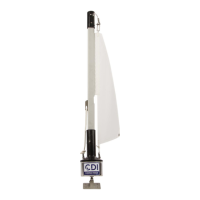
The CDI Flexible Furler is a sailing device designed to simplify the handling of a boat's jib sail. It allows the sail to be furled (rolled up) and unfurled from the cockpit, enhancing safety and ease of operation. The system is available in two main models, FF4 and FF6, which cater to different boat sizes and headstay lengths.

Function Description:

The primary function of the CDI Flexible Furler is to provide a reliable and easy-to-use method for reefing and furling a boat's headsail. It consists of a luff extrusion (foil) that encases the boat's headstay, a furling drum/spool at the bottom, and a halyard top fitting at the masthead. The jib sail is attached to the luff extrusion, and a furling line, wrapped around the drum, allows the user to rotate the extrusion and roll up the sail. This system eliminates the need to go to the bow to handle the sail, making sailing safer, especially in adverse conditions. The flexible nature of the luff extrusion allows for some tolerance in headstay alignment and can accommodate slight bends, which will eventually straighten under headstay tension.

Important Technical Specifications:

  • Models: FF4 and FF6.
  • Max Headstay Length: FF4: 33 feet; FF6: 39 feet.
  • Max Wire Size: 1/4 inch.
  • Max Turnbuckle Pin Size: 7/16 inch.
  • Headstay Compatibility: Requires a threaded swaged stud turnbuckle with a toggle at the bottom. A toggle at the top is recommended, but any secure fitting like a T-bolt will work. All fittings must be secured by cotter pins. Navtec turnbuckles are explicitly stated as not compatible.
  • Furling Line: Requires 1/4 inch double braided line or any low-stretch line, twice the boat's length. (Not included).
  • Mounting: Must not be mounted above the turnbuckle. Link plates can be used for clearance if needed.
  • Sail Compatibility: Sails require #6 luff tape to be compatible with all CDI furlers. Webbing at the head and tack of the sail is recommended over metal grommets for smoother furling, though not required.
  • Turnbuckle Compatibility: FF4 and FF6 systems are compatible with 1/4", 5/16", 3/8", and 7/16" turnbuckles with a threaded swage-end and a T-bolt toggle. Most Navtec turnbuckles are not recommended due to their size. T-bolt fittings are preferred over "i-bolt" fittings. Cotter pins should be used to lock the turnbuckle.
  • Warranty: Comes with a 10-year limited warranty for the original owner with proof of purchase. The warranty does not cover damage from weather, trailering, collisions, improper storage, or improper uncoiling/straightening of the luff (e.g., using weights or heat guns).

Usage Features:

  • Installation: Assembly can be done with the mast up but is easiest with the mast down. Requires measuring the headstay length to cut the luff extrusion to the correct size (deduct 17 inches from pin-to-pin measurement).
  • Uncoiling the Luff: The luff extrusion comes coiled and has stored energy. It's crucial to wear face and eye protection during uncoiling. The process involves one person holding the luff firmly while another cuts the restraining bands one at a time, gently letting the luff uncoil. The luff should not remain coiled for more than 2 weeks.
  • Straightening the Luff: If the luff is bent, it should be recoiled in the opposite direction with assistance (one person every 8 feet), taped, and laid on the ground for at least 3 hours. Warmer temperatures can aid straightening. Laying the luff on the ground with weights is explicitly warned against as it can cause kinks and void the warranty. A slight bend is acceptable as headstay tension will eventually straighten it.
  • Halyard Setup: The halyard is threaded through the top fitting and down the luff extrusion. For FF4 (line halyard), the end is cut and melted. For FF6 (wire halyard), a Nicopress double oval sleeve is used to form a loop with a thimble, crimped with a crimping tool. The halyard length is trimmed so it sits just below the sail feed slot when fully hoisted.
  • Sail Hoisting and Tensioning: The sail's luff tape is fed into the sail-feed slot while hoisting with a messenger line. Once hoisted, the messenger line is removed, and the halyard is tied off on the anchor shackle on the spool. Sail tension is achieved by tightening the tack tension line to the second shackle on the spool and pulling the halyard tight (winch usually not required). The sail should be tensioned enough to remove creases, not excessively tight.
  • Reefing and Furling: To furl the sail, tension is maintained on the jib sheet while pulling the furling line. When sailing reefed, jib leads should be moved forward to maintain proper sail shape and prevent the furler from rising off the bearing.
  • Anti-Rotation Strap: An anti-rotation strap is used with the T-bolt to prevent unwanted rotation of the cup and drum assembly.
  • Furling Line Management: The furling line goes through an opening in the cup and up through a hole on the spool's top flange, secured with a knot. The spool is manually rotated 20 times to wrap the line. The first fairlead or block should be positioned to avoid friction as the line exits the cup. A cleat should be placed near the cockpit for tying off the furling line.

Maintenance Features:

  • Routine Cleaning: The only required maintenance is to rinse the furler system, including the ball-bearing assembly (if applicable), with fresh water 1-2 times per year. This helps clear out any accumulated salt or dirt.
  • Lubrication: Lubricants are not required, but Teflon sprays or dry lubricants are acceptable if needed.
  • Storage: When storing, the furler should be strapped to the mast in a horizontal position, with the end supported by a 2x4 or PVC tube to keep the extrusion as straight as possible. Avoid making sharp bends in the extrusion, as this can become permanent and is not covered under warranty. It is not necessary to remove or recoil the extrusion for storage, and doing so over long periods is not recommended as the furler ages.
  • Temperature Avoidance: Avoid exposing the furler to temperatures above 140°F (60°C).

CDI FF4 Specifications

General IconGeneral
BrandCDI
ModelFF4
CategoryMarine Equipment
LanguageEnglish

Related product manuals