26
• Separate the lance from the gun.
• Rotate the nozzle to the narrow stream setting. This activates the fan blades.
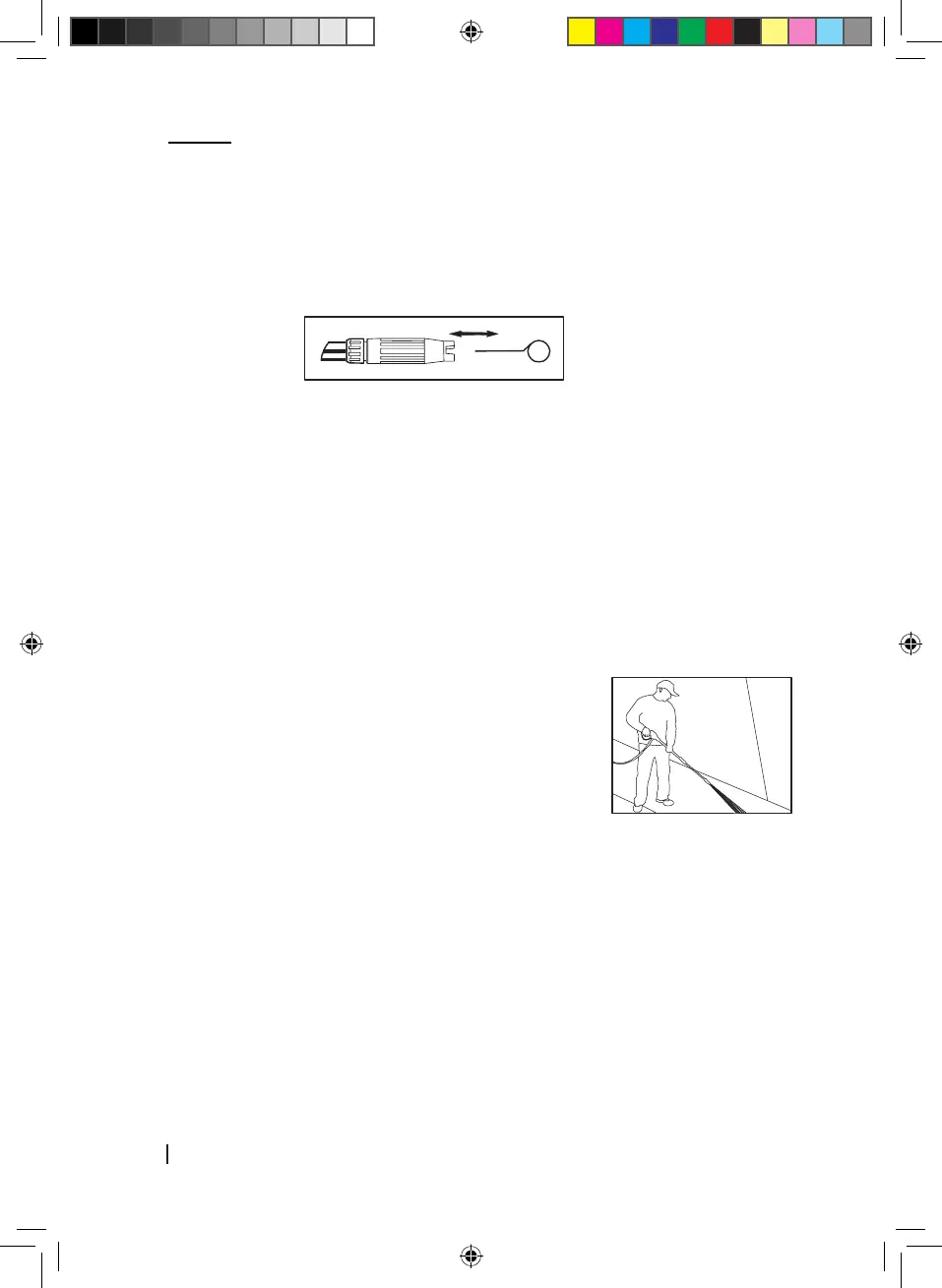
• Use the cleaning kit provided, or any other type of pointed element such as an unfolded
paper clip to clean the nozzle. Insert the wire into the nozzle hole and move back and
forth until debris is dislodged. (See Figure 2).
Fig. 2
• Remove debris by back-ushing water through the nozzle. To do this, point the end of a
garden hose (with water running) to the nozzle’s end for 30-60 seconds.
ANGLE FROM THE HIGH-PRESSURE HOSE TO THE CLEANING SURFACE
When spraying water against a surface, maximum impact is reached when the water strikes
the surface head on. However, this type of impact tends to cause dirt particles to imbed in the
surface, thereby preventing the desired cleaning action.
The optimum angle for spraying water against a cleaning surface if 45 degrees.
Spraying water against a surface at this angle provides for the most benecial impact force
combined with efcient removal of debris from the surface.
DISTANCE FROM CLEANLING SURFACE
The impact force of the water is increased as the pulverizing
nozzle is moved closer to the surface.
HOW TO AVOID DAMAGING SURFACES
Damage to cleaning surfaces occurs because the impact force
of the water exceeds the hardness of the surface. The impact
force can be varied by controlling the three previously noted
items. Never use a narrow high impact stream on a surface
that is susceptible to damage. Avoid spraying windows with a narrow high impact stream as
this may cause breakage.
The surest way to avoid damaging surfaces is to follow these steps:
• Before triggering the gun, adjust the pulverizing nozzle to a wide stream.
• First, follow the distance and angle instructions above.
• Vary the spray angle, stream type and the distance to the cleaning surface until optimum
cleaning efciency is achieved without damaging the surface.






 To Next Page