Page 11For technical questions, please call 1-888-866-5797.Item 42202
(14) so that it is resting in the Hopper
(13).
Work Piece and Work Area Set Up
1. Designate a work area that is clean
and well-lit. The work area must not
allow access by children or pets to
prevent distraction and injury.
2. Route the air hose along a safe
route to reach the work area without
creating a tripping hazard or exposing
the air hose to possible damage.
The air hose must be long enough
to reach the work area with enough
extra length to allow free movement
while working.
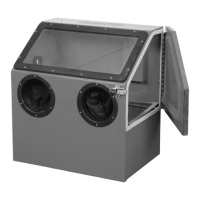
3. Place the Blast Cabinet on a sturdy
level work surface, positioning
the Cabinet at a level so that you
can comfortably access the Glove
openings and easily see into the
Blast Cabinet through the Tempered
Glass Window (23). The work surface
needs to be able to support the
weight of the Blast Cabinet and the
abrasive which will fill the Hopper,
the work piece and any additional
material required to be close at hand.
4. If needed, position a light (sold
separately) so the interior of the Blast
Cabinet is well lit (use only utility light
bulbs).
5. It is recommended that you set
up a vacuum dust collector (sold
separately) to remove media dust
while blasting. Attach the vacuum
hose through the Dust Collection
Outlet.
When using a vacuum dust collector,
clean the filter periodically to maintain
good suction and effectiveness of the
vacuum. Use the appropriate vacuum
for the job.
6. Fill the Hopper (13) with
approximately 10 pounds of an
appropriate abrasive, such as glass
beads or walnut shells, checking to
ensure that the abrasives are dry and
clean. Do not use harsh abrasives
such as steel shot or aluminum oxide.
7. Set the compressor’s pressure
regulator to 100 PSI. Do not set it
over 100 PSI.
8. Route the compressor hose from the
outside of the Cabinet to the inside
through the Air Hose Inlet in the back
of the Cabinet, then connect it to the
Air Hose Connector (30) on the Blast
Gun inside the Cabinet.
9. Holding the Blast Gun so that it is
pointing away from you, open the
shut-off valve. If leaking is detected,
disconnect the air hose and repair
before use.
General Operating Instructions
WARNING: Wear ANSI-approved safety
goggles, full face shield and a
NIOSH-approved protective dust
mask or respirator when using the
Blast Cabinet.
1. Place the material to be sandblasted
on the Metal Floor (14) inside the
Blast Cabinet.
2. Close the Side Door (3) and hook the
Door Latch (5) over the door flange
and lock in place. Check to make
sure the Latch is secured.
3. Place your hands into the Blast
Gloves, making sure your fingers are
in the proper positions and that you


 To Next Page