Design
Criteria
The Model ROC Residential Optima Concealed Pendent
Sprinklers are UL, C-UL Listed and NYC Approved (MEA 7-
95-E) for use in accordance with current NFPA standards on
wet pipe sprinkler systems. These sprinklers with a maximum
ceiling to top of sprinkler deflector distance of 4 inches, have
been investigated for use under smooth flat horizontal ceilings
with slopes up to 2 inches per foot using the hydraulic design
requirements found in Table 1. When unique conditions exist
such as sloping ceilings, and when acceptable to the local
authority, guidance on the placement of residential sprinklers
on sloped ceilings has been provided in Figures 5 -14. This
information will provide the minimum spacing requirements
necessary for preventing the wetting (i.e., cold soldering) of the
heat responsive element (link) of a non-operated Central
Model ROC, which is adjacent to one, which has operated. In
these situations the minimum required sprinkler flow rates
given in Table 1 should be used. Your local authority should
be consulted to determine the number of sprinklers required in
the hydraulic design area.
The Model ROC Residential Optima Concealed Pendent
Sprinklers are only listed with the Series GB4/ROC Concealed
Cover Plate Assembly.
The minimum required flow rates for systems designed to
NFPA 13D or NFPA 13R occupancies are given in Table 1 as
a function of temperature rating, ceiling to top of deflector
distance, and the maximum allowable coverage areas. The
single sprinkler flow rate is the minimum required discharge
Technical
Data
Sprinkler Identification Number
SIN C2596
Approvals
UL & C-UL Listed. NYC Approved
(Refer to the Design Criteria Section)
Maximum Working Pressure
175 psi (12,1 bar)
Pipe Thread Connection
1/2 inch NPT
Discharge Coefficient
K = 4.2 GPM/psi
1/2
(60,5 LPM/bar
1/2
)
Temperature Ratings
160°F/71°C Sprinkler/135°F/57°C Plate
Finishes
Sprinkler: Natural Brass
Cover Plate: Chrome or Brass Plated; *Flat White, Bright
White, or Custom Painted
* Standard Finish supplied when White is specified
Physical Characteristics
The Model ROC Residential Optima Concealed Pendent
Sprinklers utilize a dezincification resistant (DZR) bronze frame
and a monel thermal sensitive link. The sprinkler frame orifice is
sealed with a gasketed spring plate (Belleville Seal) consisting of
a beryllium nickel disc spring that is sealed on both its inside and
outside edges with a Teflon
TM
gasket. The arms and deflector are
bronze, and the support cup is steel. The cover plate and retainer
assembly are brass.
from the most hydraulically demanding single sprinkler and,
the multiple sprinkler flow rate is the minimum required
discharge from each of the total number of "design sprinklers"
as specified in NFPA 13D or NFPA 13R.
TIA 99-1 (Tentative Interim Ammendment) with an effective
date of May 22, 2000 states that the minimum required
discharge from each of the "design sprinklers" for systems
designed to NFPA 13 must be calculated based on delivering
a minimum design density of 0.1 gpm/sq. ft. for each of the
listed coverage areas shown in Table 1. If the flow rates listed
in Table 1 exceed a minimum design density of 0.1 gpm/sq. ft.,
then the flow rates in the Table shall be used. Consult the
authority having jurisdiction regarding the application of this
TIA to the currently adopted NFPA 13.
Model ROC Residential Pendent and Recessed Pendent
Sprinklers must be installed using the obstruction criteria for
extended coverage sprinklers found in the current edition of
NFPA 13.
NOTES
Residential Fire Sprinkler Systems should only be
designed and installed by those competent and
completely familiar with automatic sprinkler system
design, installation procedures, and techniques.
The sprinkler must be secured in position by firmly
fastening the sprinkler system piping to the structure. If
the sprinkler is not properly secured in position, reaction
forces resulting from sprinkler operation could alter its
orientation and its water distribution pattern. The
sprinkler escutcheon cannot be used to hold the sprinkler
in position.
Several criteria may apply to the installation and usage of
each sprinkler. Consequently, it is recommended that the
sprinkler system designer review and develop a working
understanding of the complete list of criteria prior to
initiating the design of the sprinkler system.
Questions concerning sprinkler installation and usage
criteria, which are not covered by the following
instructions, should be submitted to Central Sprinkler.
Include sketches and technical details as appropriate.
In some instances, the requirements of this document
may concern specifications which are more stringent and
which take precedence over those specified in NFPA 13,
NFPA 13D, NFPA 13R, or by the authority having
jurisdiction.
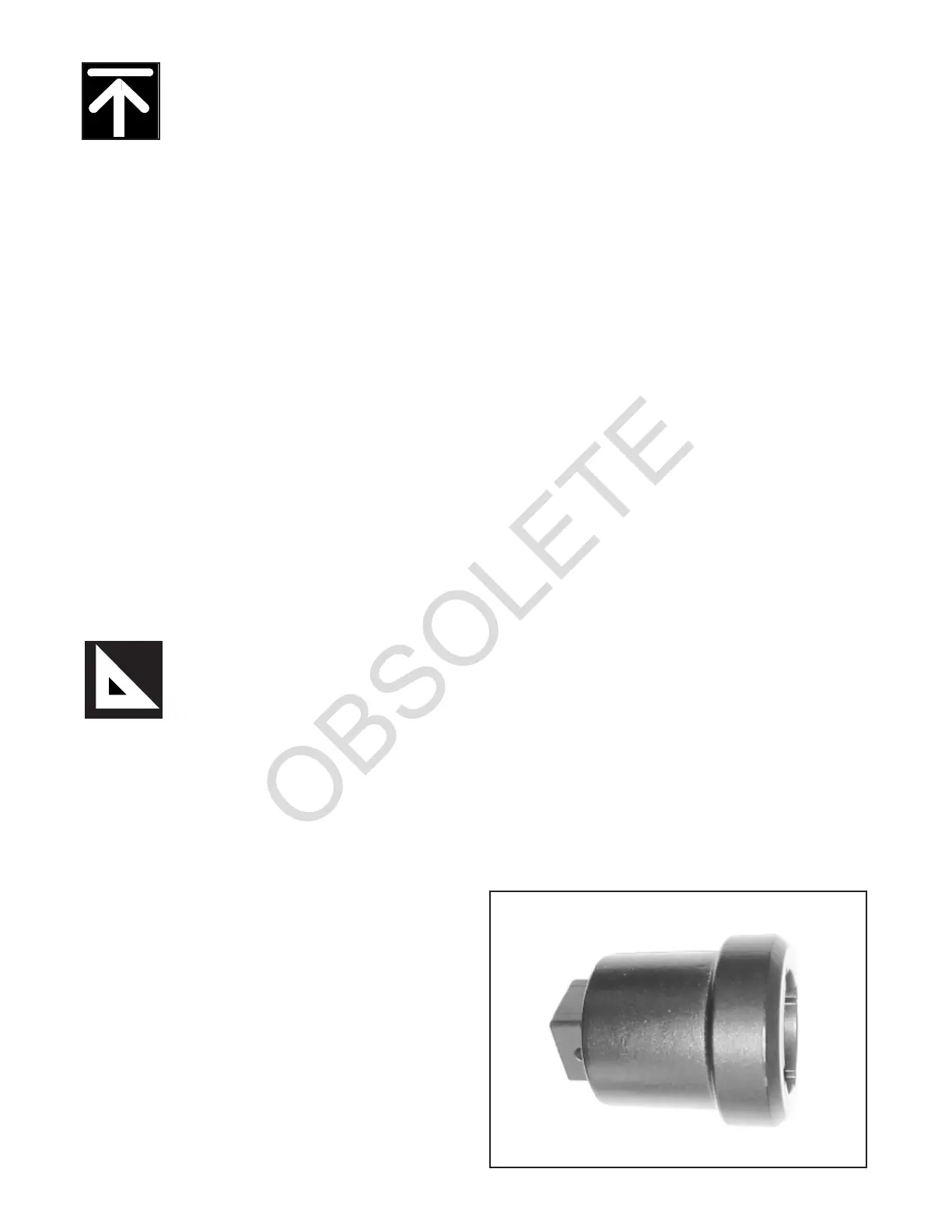
Figure 1 - ROC Sprinkler Wrench (1265)



 To Next Page
 Loading...