EasyManua.ls Logo

Chicago Pneumatic CP870 - User Manual

Chicago Pneumatic CP870
2 pages
Print Icon
To Next Page IconTo Next Page
Loading...
To reduce risk of injury, everyone using, installing,
repairing, maintaining, changing accessories on, or
working near this tool must read and understand
these instructions before performing any such task.
The goal of Chicago Pneumatic is to produce tools that help you work safely and
efficiently. The most important safety device for this or any tool is YOU. Your
care and good judgment are the best protection against injury. All possible
hazards cannot be covered here, but we have tried to highlight some of the
important ones.
Air Supply Requirements
1. Supply tool with 90 psig (6.2 bar) of clean, dry air. Higher pressure drastically
reduces tool life.
2. Connect tool to air line using pipe, hose and fitting sizes shown in the diagram
on page 12.
3. Do not install a quick coupler directly into the sander throttle handle.
Lubrication
Use an air line lubricator with SAE #10 oil, adjusted to two drops per minute. If
an air line lubricator cannot be used, add air motor oil to the inlet once a day.
Noise & Vibration Declaration*
2
Vibration value 5.7 m/s , re. ISO 8662-1.
Maintenance
1. Disassemble and inspect air motor and orbital assembly every three months if
the tool is used every day. Replace damaged or worn parts.
2. High wear parts are underlined in the parts list.
3. To keep downtime to a minimum, the following service kit, detailed on page 12,
is recommended: CA144954 Tune-Up Kit
*These declared values were obtained by laboratory type testing in compliance with the stated standards and are
not adequate for use in risk assessments. Values measured in individual work places may be higher than the
declared values. The actual exposure values and risk of harm experienced by an individual user are unique and
depend upon the way the user works, the workpiece and the workstation design, as well as upon the exposure time
and the physical condition of the user. We, Chicago Pneumatic, cannot be held liable for the consequences of
using the declared values, instead of values reflecting the actual exposure, in an individual risk assessment in a
work place situation over which we have no control.
Sound pressure level 92.5 dB(A) in accordance with Pneurop 8N-1. For sound
power, add 10 dB(A).
We, Chicago Pneumatic Tool Company, 1800 Overview Drive, Rock Hill, SC 29730 USA, declare under
our sole responsibility that the product to which this declaration relates, is in conformity with the
requirements of the Council Directive of June 1989 on the approximation of the laws of the Member
States relating to machinery (89/392/EEC).
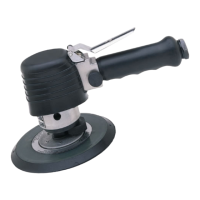
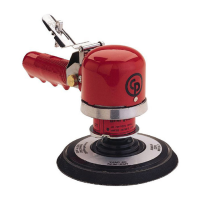
Machine Name CP870 Dual-Action Sander
Machine Type Power tool equipped with flexible disc fitted with abrasive paper for sanding - No
other use is permitted.
Serial No. Tools with No. 94001A or higher
Technical Data
Pad diameter 6 in.
Free speed 10,000 RPM
Air pressure 90 psi (6.2 bar)
Air consumption 4 cfm
Spindle size 5/16 in.- 24
Harmonized Standards Applied EN292
National Standards Applied ISO 8662-1, Pneurop 8N-1
Name and Position of Issuer W. A. LeNeveu, President, Chicago Pneumatic Tool Company
CP870
Dual-Action Sander
Model "A"
Signature of Issuer
adapters absorb impact power and could break. Use deep sockets wherever
possible.
! Never operate the tool off of the work. It may run too fast and cause the accessory
to be thrown off the tool.
! Serious injury can result from over-torqued or under-torqued fasteners, which
can break, or loosen and separate. Released assemblies can become
projectiles. Assemblies requiring a specific torque must be checked using a
torque meter.
Note: So-called "click" torque wrenches do not check for potentially dangerous
over-torque conditions.
Workplace Hazards
! Slip/Trip/Fall is a major cause of serious injury or death. Beware of excess hose
left on the walking or work surface.
! High sound levels can cause permanent hearing loss. Use hearing protection as
recommended by your employer or OSHA regulation (see 29 CFR part 1910).
! Maintain a balanced body position and secure footing.
! Be in control of the throttle at all times. Do not get caught between the tool and the
work.
! Repetitive work motions, awkward positions and exposure to vibration can be
harmful to hands and arms. If numbness, tingling, pain or whitening of the skin
occurs, stop using the tool and consult a physician.
! Avoid inhaling dust or handling debris from the work process which can be
harmful to your health. Use dust extraction and wear respiratory protective
equipment when working with materials which produce airborne particles.
! Proceed with care in unfamiliar surroundings. Be aware of potential hazards
created by your work activity. This tool is not insulated for coming into contact with
electric power sources.
! Some dust created by power sanding, sawing, grinding, drilling and other
construction activities contains chemicals known to the State of California to
cause cancer and birth defects or other reproductive harm. Some examples of
these chemicals are:
! - Lead from lead based paints
! - Crystalline silica bricks and cement and other masonry products
! - And Arsenic and chromium from chemically-treated rubber
! Your risk from these exposures varies, depending on how often you do this type
of work. To reduce your exposure to these chemicals: work in a well ventilated
area, and work with approved safety equipment, such as dust masks that are
specially designed to filter out microscopic particles.
Additional Safety Topics
! This tool and its accessories must not be modified.
! This tool is not recommended for use in explosive atmospheres.
! Operators and maintenance personnel must be physically able to handle the bulk,
weight and power of the tool.
! For professional use only.
For Additional Safety Information Consult:
! Your employer union and/or trade association.
! US Department of Labor (OSHA); Council of the European Communities
europe.osha.eu.int.
! “Safety Code For Portable Air Tools” (B186.1).
! “Safety Requirement For Hand-Held Non-Electric Power Tools” available from:
European Committee for Standardization.
Air Supply And Connection Hazards
! Air under pressure can cause severe injury.
! Always shut off air supply, drain hose of air pressure and disconnect tool from air
supply when not in use, before changing accessories or when making repairs.
! Never direct air at yourself or anyone else.
! Whipping hoses can cause serious injury. Always check for damaged or loose
hoses and fittings.
! Do not use quick disconnect couplings at tool. See instructions for correct set-up.
! Whenever universal twist couplings are used, lock pins must be installed.
! Do not exceed maximum air pressure of 90 psi (6.2 bar) or as stated on tool
nameplate.
Entanglement Hazards
! Keep away from rotating drive.
! Do not wear jewelry or loose clothing.
! Choking can occur if neckwear is not kept away from tool and accessories.
! Scalping can occur if hair is not kept away from tool and accessories.
! Avoid direct contact with accessories during and after use. Gloves will reduce the
risk of cuts or burns.
! Use only proper accessory retainers (see parts list). Use deep sockets wherever
possible.
Projectile Hazards
! Always wear impact-resistant eye and face protection when involved with or near
the operation, repair or maintenance of the tool or changing accessories on the
tool.
! Be sure all others in the area are wearing impact-resistant eye and face
protection.
! Even small projectiles can injure eyes and cause blindness.
! Use only impact wrench sockets and accessories in good condition. Sockets in
poor condition or hand sockets used with impact wrenches can shatter.
! Always use the simplest hook-up possible. Long, springy extension bars and
Question and Answer IconNeed help?

Do you have a question about the Chicago Pneumatic CP870 and is the answer not in the manual?

Summary

Safety Instructions

General Safety Precautions

General warnings and advice for safe operation of the equipment.

Workplace Hazards

Specific hazards related to the work environment and tool usage.

Safety Tips

Additional recommendations for safe tool operation and maintenance.

Personal Protective Equipment

Essential PPE required for operating the sander safely.

Entanglement Hazards

Precautions to prevent entanglement with moving parts.

Protective Guards (Safety Parts)

Information on guards and their role in safety.

Air Supply Requirements

Maintenance

Parts List and Diagram

Air Supply Diagram

Diagram illustrating the correct air supply connections.

Tune-Up Kit

Details of the tune-up kit and its included parts.

Summary

Safety Instructions

General Safety Precautions

General warnings and advice for safe operation of the equipment.

Workplace Hazards

Specific hazards related to the work environment and tool usage.

Safety Tips

Additional recommendations for safe tool operation and maintenance.

Personal Protective Equipment

Essential PPE required for operating the sander safely.

Entanglement Hazards

Precautions to prevent entanglement with moving parts.

Protective Guards (Safety Parts)

Information on guards and their role in safety.

Air Supply Requirements

Maintenance

Parts List and Diagram

Air Supply Diagram

Diagram illustrating the correct air supply connections.

Tune-Up Kit

Details of the tune-up kit and its included parts.

Overview

The Chicago Pneumatic CP870 Dual-Action Sander is a robust pneumatic tool designed for sanding applications, primarily utilizing a flexible disc fitted with abrasive paper. Its dual-action mechanism ensures efficient material removal and a smooth finish, making it suitable for various professional sanding tasks. The tool is powered by compressed air, emphasizing the importance of a clean and dry air supply for optimal performance and longevity.

For proper operation, the sander requires a consistent air supply of 90 psig (6.2 bar). Maintaining this pressure is crucial, as higher pressures can significantly reduce the tool's lifespan. The air line connection should adhere to specified pipe, hose, and fitting sizes, and it's explicitly advised against installing a quick coupler directly into the sander's throttle handle to prevent potential issues. Lubrication is also a key aspect of its usage; an air line lubricator with SAE #10 oil, adjusted to two drops per minute, is recommended. If a lubricator isn't available, air motor oil should be added to the inlet once a day to ensure smooth operation and prevent premature wear.

The design of the CP870 focuses on user safety and operational efficiency. It incorporates features that address common workplace hazards associated with pneumatic tools. For instance, the tool's sound pressure level is declared at 92.5 dB(A), and its vibration value is 5.7 m/s², indicating the need for appropriate personal protective equipment, such as hearing protection, to mitigate potential long-term health effects. The emphasis on maintaining a balanced body position and secure footing during operation highlights the importance of user stability to prevent slips, trips, and falls, which are major causes of serious injury.

The sander's usage features also include warnings about entanglement hazards. Users are advised to keep away from rotating drives and to avoid wearing jewelry or loose clothing that could get caught in the tool or its accessories. Specific warnings about neckwear and hair are provided to prevent choking and scalping, respectively. Direct contact with accessories during and after use should be avoided, and gloves are recommended to reduce the risk of cuts or burns. The manual also stresses the importance of using only proper accessory retainers and deep sockets to ensure secure attachment and prevent breakage.

Projectile hazards are another significant concern addressed in the manual. Users and anyone in the vicinity are required to wear impact-resistant eye and face protection during operation, repair, or maintenance. Even small projectiles can cause severe eye injuries, including blindness. The use of impact wrench sockets and accessories in good condition is critical, as worn or hand sockets used with impact wrenches can shatter. The manual also advises using the simplest hook-up possible, as long, springy extension bars and adapters can absorb impact power and potentially break, leading to projectiles. Operating the tool off the work surface is discouraged, as it can cause the accessory to run too fast and be thrown off, posing a serious injury risk. Furthermore, the manual warns about the dangers of over-torqued or under-torqued fasteners, which can break or loosen and become projectiles, emphasizing the need to check assemblies requiring specific torque with a torque meter.

Maintenance is a critical aspect of ensuring the CP870's longevity and safe operation. The manual recommends disassembling and inspecting the air motor and orbital assembly every three months if the tool is used daily. Damaged or worn parts should be replaced promptly. High-wear parts are specifically underlined in the parts list to draw attention to components that require more frequent inspection and potential replacement. To minimize downtime, a specific Tune-Up Kit (CA144954) is recommended, which includes essential parts for routine maintenance. This proactive approach to maintenance helps prevent unexpected breakdowns and ensures the tool remains in optimal working condition.

The manual also addresses various workplace hazards beyond direct tool operation. It warns about the dangers of inhaling dust or handling debris from the work process, which can be harmful to health. Consequently, the use of dust extraction systems and respiratory protective equipment is strongly advised when working with materials that produce airborne particles. The manual explicitly states that some dust created by power sanding, sawing, grinding, drilling, and other construction activities contains chemicals known to cause cancer and birth defects or other reproductive harm, citing examples like lead from lead-based paints, crystalline silica from masonry products, and arsenic and chromium from chemically-treated rubber. Users are advised to work in well-ventilated areas and use approved safety equipment, such as dust masks designed to filter microscopic particles, to reduce exposure to these chemicals.

Additional safety topics covered include the warning that the tool is not recommended for use in explosive atmospheres and that it, along with its accessories, must not be modified. Operators and maintenance personnel must be physically capable of handling the tool's bulk, weight, and power. The CP870 is intended for professional use only, underscoring its design for demanding industrial environments where adherence to safety protocols is paramount. The manual serves as a comprehensive guide, emphasizing that the user's care and good judgment are the best protection against injury, and that while not all possible hazards can be covered, the document highlights the most important ones to ensure safe and efficient operation.

Chicago Pneumatic CP870 Specifications

General IconGeneral
TypeRandom Orbital Sander
Weight0.8 kg
Free Speed12, 000 RPM
Power0.3 HP
Sanding Strokes per Minute12, 000
Orbit Diameter5 mm
Pad Size125 mm
Air Inlet1/4"

Related product manuals