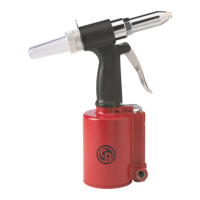
The Chicago Pneumatic CP9883 and CP9884 Air Riveters are pneumatic tools designed for setting rivets, specifically 3/16" and 1/4" sizes, respectively. These tools are intended for professional use in various industrial and maintenance applications where reliable and efficient riveting is required.
Function Description:
The primary function of these air riveters is to install rivets by pulling the mandrel until the rivet is set, then breaking off the mandrel. The tool operates on compressed air, converting pneumatic energy into mechanical force to set the rivets. The design incorporates a mechanism that allows for continuous operation, with a stem collector to gather the broken mandrels, ensuring a cleaner and safer work environment. The tool's components work in conjunction to provide a powerful and consistent pull, crucial for proper rivet setting. The air riveter is designed to be held by hand, with a trigger mechanism to actuate the riveting process. The internal components include a cylinder, piston, jaws, and various seals and springs, all working in a coordinated fashion to execute the riveting cycle. The air supply is connected to the tool, and the compressed air drives the piston, which in turn actuates the jaws to grip and pull the rivet mandrel.
Usage Features:
The CP9883 and CP9884 Air Riveters are built with user convenience and efficiency in mind.
- Air Supply Connection: The tool connects to a compressed air supply, with specific instructions for proper connection and pressure regulation. It is crucial to use clean, dry air and to ensure the air supply is shut off and pressure relieved before any adjustments or maintenance.
- Lubrication: Regular lubrication is essential for the tool's longevity and performance. The manual specifies the use of SAE #10 oil, with a recommended frequency of adding 2 drops of oil into the air inlet daily or every 5,000 cycles. Additionally, oiling the jaws is a specific maintenance step highlighted to ensure smooth operation.
- Nosepiece Adjustment: The tool features adjustable nosepieces to accommodate different rivet sizes and types. The nosepiece can be changed or adjusted by unscrewing and replacing components, ensuring versatility for various riveting tasks. The manual provides detailed instructions on how to change and adjust the nosepieces, including the use of a lock nut for secure positioning.
- Mandrel Collection: A stem collector is integrated into the design to catch broken mandrels, preventing them from scattering and creating a hazard. This feature contributes to a cleaner and safer workspace, reducing the need for frequent cleanup.
- Trigger Operation: The tool is activated by a trigger, which initiates the air flow and the riveting cycle. The trigger mechanism is designed for ease of use, allowing the operator to control the riveting process effectively.
- Safety Features: The manual emphasizes several safety precautions during use, such as wearing impact-resistant eye and face protection, ensuring the workpiece is securely fixed, and operating the tool with both hands to counteract sudden movements. It also warns against directing air at oneself or others and using damaged hoses or fittings.
- Ergonomics: The tool is designed to be held comfortably, with instructions on adopting a comfortable posture to minimize the risk of repetitive motion injuries. The importance of maintaining secure footing and avoiding awkward postures is highlighted to prevent discomfort and fatigue during extended use.
- Versatility: While specifically designed for 3/16" and 1/4" rivets, the ability to change nosepieces allows for some adaptability to different rivet types within these size ranges. The tool is suitable for a wide range of applications, from manufacturing to repair and maintenance.
Maintenance Features:
Maintaining the CP9883 and CP9884 Air Riveters according to the manual's guidelines is crucial for ensuring optimal performance, extending tool life, and maintaining safety.
- Daily Lubrication: As mentioned, adding 2 drops of SAE #10 oil into the air inlet daily or every 5,000 cycles is a fundamental maintenance task. This ensures that internal moving parts are adequately lubricated, reducing wear and friction.
- Jaw Maintenance: The jaws are critical components that grip the rivet mandrel. The manual instructs on how to remove, clean, and lubricate the jaws, as well as how to replace them if they become worn or damaged. Oiling the jaws is specifically mentioned as a step to ensure smooth operation.
- Nosepiece Cleaning and Replacement: The nosepiece components, including the jaw pusher spring and jaw housing, should be regularly inspected for wear and cleanliness. The manual provides steps for disassembling, cleaning, and reassembling these parts, and for replacing them when necessary.
- Air Cylinder and Piston Maintenance: For more extensive maintenance, the manual provides instructions for disassembling the air cylinder and piston assembly. This allows for cleaning, inspection, and replacement of seals and other internal components that may wear over time.
- Stem Collector Maintenance: The stem collector should be regularly emptied and cleaned to prevent buildup of broken mandrels, which could impede tool function.
- General Inspection: Operators are advised to regularly inspect the tool for any signs of damage, loose parts, or illegible warning signs. Any damaged components should be repaired or replaced immediately.
- Hydraulic Oil Maintenance (for CP9884): The CP9884 model specifically requires hydraulic oil maintenance. The manual details how to fill the tool with hydraulic oil, drain excess oil, and maintain the oil level. This is a critical step for the proper functioning of the hydraulic components within the tool.
- Preventive Maintenance: The manual emphasizes the importance of preventive maintenance to avoid unnecessary increases in noise and vibration levels. This includes operating and maintaining the tool, and selecting, maintaining, and replacing accessories and consumables in accordance with the instructions.
- Professional Repair: For complex repairs or if the tool is damaged, the manual implies that only qualified and trained operators should perform maintenance, and in some cases, professional repair services may be necessary.
By adhering to these usage and maintenance guidelines, users can ensure the safe, efficient, and long-lasting operation of their Chicago Pneumatic CP9883 and CP9884 Air Riveters.

 Need help?
 General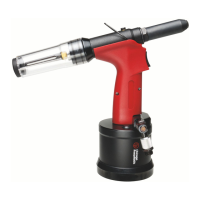

 To Next Page