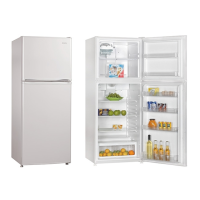
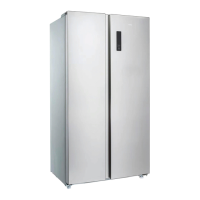
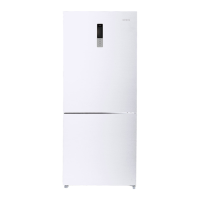
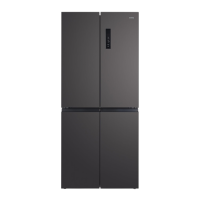
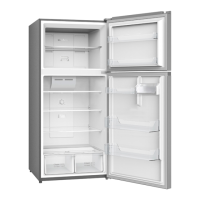
This document is a user manual for the CHiQ CTM216W and CTM215S Frost Free Bottom Mounted Refrigerators. It provides essential information for safe operation, installation, usage, and maintenance of the appliance.
Function Description:
The CHiQ CTM216W and CTM215S are frost-free, bottom-mounted refrigerators designed for domestic household use or similar applications such as staff areas in shops and offices, hotels, motels, and other residential environments. They are also suitable for catering and similar non-retail applications. The bottom-mounted design typically places the freezer compartment below the refrigerator compartment, which can be more convenient for accessing frequently used fresh food items. The "frost-free" feature means the appliance is designed to prevent the build-up of ice and frost inside the freezer, eliminating the need for manual defrosting. The refrigerator utilizes R600a flammable refrigerant in a sealed system, which is environmentally friendly and does not damage the ozone layer or increase the greenhouse effect.
Important Technical Specifications:
- Refrigerant: R600a (flammable refrigerant).
- Refrigerant Quantity: 0.039kg (specific quantity is also noted on the Rating Plate).
- Installation Space: The room for installing the appliance must be at least 1 cubic meter per 8 grams of refrigerant.
- Ventilation: Requires at least 5cm of space between the back and sides for proper air ventilation. Ventilation openings in the appliance enclosure or built-in structure must be clear of obstruction.
- Electrical Connection: Must be plugged into a dedicated, properly installed-grounded wall outlet, fitted by a qualified electrician, and meet Australian Electrical Standards.
- Temperature Control: Features a potentiometer for refrigerator temperature adjustment (MIN, MED, MAX settings) and a freezer volume slider for freezer temperature adjustment (MIN, MAX settings).
- Restart Delay: After power loss or unplugging, a 3 to 5 minute delay is required before restarting the unit to prevent operational issues.
Usage Features:
- Temperature Adjustment:
- Refrigerator: The temperature knob adjusts the refrigeration room temperature. Turning towards "MAX" increases cooling, while turning towards "MIN" decreases cooling (increases temperature). "MED" is recommended for normal conditions, food preservation, and energy saving in spring and summer.
- Freezer: The freezer volume slider adjusts the freezing cold. Setting to "MAX" provides the greatest amount of freezing cold (lowest temperature), while "MIN" provides the minimum amount of cold (highest temperature).
- Stabilization: Allow 24 hours for temperature to stabilize between adjustments. Avoid frequent door openings during this period.
- Food Storage:
- Allow hot foods to cool to room temperature before placing them in the refrigerator to prevent the compressor from working harder and to maintain food quality.
- Wrap foods properly and wipe containers dry to reduce frost build-up.
- Organize and label food to minimize door openings and search times.
- Avoid placing raw vegetables too close to the coolest areas (typically the back wall and bottom lowest shelf) to prevent frostbite. The top door rack is generally the warmest area.
- Door Usage: Refrain from leaving doors open for extended periods to conserve energy. Close doors completely to maintain proper sealing.
- Leveling: The appliance should be placed on a leveled/even floor. Adjustable front feet allow for proper leveling. Leveling feet should only be used for forward and backward adjustments.
- Placement:
- Avoid direct sunlight and sources of direct heat (stove, heater, radiator) to prevent increased electrical consumption and damage to the acrylic coating.
- Ambient temperatures below 50°F or above 85°F can hinder performance.
- Not designed for outside installation.
- Avoid moist or pest-infested areas.
- Do not place items on top of the appliance.
Maintenance Features:
- Cleaning:
- Interior: Unplug the unit and remove all food. Wash the interior with a damp cloth soaked in a lukewarm water and baking soda solution (approximately 2 tablespoons of baking soda to a liter of water).
- Exterior: Clean with mild detergent and warm water (for door and side units only). Dry both interior and exterior with a soft cloth.
- Door Gasket (Seal): Keep the door gasket clean to ensure efficient operation and prevent dislodging or tearing.
- Condenser Coils: Vacuum condenser coils when dusty or dirty. Note that the condenser is an internal, non-serviceable tube.
- Water Tray: The water tray above the compressor does not need to be emptied as water evaporates due to compressor heat.
- Vacation Time:
- Short Vacations (less than three weeks): Leave the refrigerator operating.
- Long Vacations (several months): Unplug the power cord, remove all food, clean and dry the interior thoroughly. To prevent odors and mold, leave the door slightly open (block it open if necessary or remove the door).
- Repositioning and Relocating:
- Unplug the unit and remove all food and drinks.
- Securely tape down all loose items inside and tape the doors shut.
- Ensure the refrigerator remains in an upright position during transportation.
- Troubleshooting: The manual provides a troubleshooting guide for common issues like the refrigerator not operating, light not working, compressor running continuously, and temperature problems (too warm or too cold). It also addresses common sounds (popping, cracking, bubbling, gurgling) and moisture formation.
- Service: Only an Authorised Service Person should carry out servicing or repairs. In Queensland, an authorized person must hold a Gas Work Authorisation for hydrocarbon refrigerants for tasks involving cover removal.
- Disposal: Dispose of the appliance at an authorized recycle center. Do not dispose of it in a landfill due to flammable insulation and refrigerant gas.

 Need help?
 General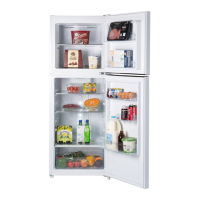

 To Next Page