This document describes the CL-99WB Wifi dual-band and Bluetooth audio receiver module, manufactured by Shenzhen Cloudecho Audio Co., Ltd.
The CL-99WB is a versatile audio receiver module designed for integration into active speakers or power amplifiers, upgrading traditional audio systems to smart audio systems. It supports a wide range of audio sources and features, making it suitable for various applications.
Function Description:
The CL-99WB module integrates multiple audio receiving and input decoding modules, including:
- WiFi: Supports IEEE 802.11 a/b/g/n/ac 1x1 dual-band WiFi (2.4 GHz and 5GHz). It enables APP interconnection control and supports various streaming media protocols such as HTTP/HTTPS/RTSP/MMS/TS, Airplay2/DLNA/Qplay, Spotify, TuneIn, iHeartRadio, Amazon Music, and Tidal. It also supports multi-room simultaneous playback and common lossless audio format decoding up to 192kHz/24bit.
- Bluetooth: Features BT5.0 with EDR and BLE, compatible with Bluetooth V4.2 and V2.1+EDR.
- Optical Fiber Input: Allows connection to optical fiber audio sources.
- HDMI (ARC) Input: Supports HDMI Audio Return Channel for seamless integration with TVs and other HDMI-enabled devices.
- USB Input: Enables playback from U disk and supports USB ETH extension.
- AUX Input: Provides an analog audio input.
The module offers the following outputs:
- Analog Output (DAC): One analog output that can be connected to a power amplifier input, with a Mute control pin.
- Digital Output (I2S out): One digital output supporting lossless output up to 192kHz 24Bit.
- SPDIF Output: One SPDIF output with a sampling rate of 48KHz, 16-bit.
Important Technical Specifications:
- Audio Decoding: Utilizes Texas Instruments' HIFI DAC chip PCM5121.
- SNR: As high as 106dB (OUT).
- THD: Can achieve -92dB (AUX OUT: 0.05%, I2S OUT: 0.02%, SPDIF OUT: 0.02%).
- Operating Voltage: DC 5V-1A.
- Input Sensitivity:
- AUX: 1000mV
- Optical fiber: 0dB
- BT: 0dB
- WIFI: 0dB
- USB: 0dB
- HDMI: 0dB
- Output Amplitude:
- AUX OUT: 1000mV (1kHz 0dB)
- I2S OUT: 0dB (1kHz 0dB)
- SPDIF OUT: 0dB (1kHz 0dB)
- Output Frequency Response: 20Hz-20KHz.
- AUX_IN Input Resistance: 3.3K.
- I2S_OUT: 48Khz 16Bit (default value).
- SPDIF OUT: 48Khz 16Bit.
Usage Features:
- Easy Integration: Designed for easy integration into existing active speakers or power amplifiers to create smart audio systems.
- Rich Content: Supports a wide array of audio sources and streaming services.
- Simple Operation: User-friendly interface and control.
- Device Name Modification:
- Temporary Modification: The device name can be temporarily modified through the Audio system APP, affecting both WiFi SSID and Bluetooth name. This modification is reset by a "Restore Factory Settings" operation.
- Permanent Modification: The device name can be permanently modified using a Debug Tool. This involves connecting the PC and device to the same LAN, using the Debug Tool to connect to the device's IP address, and sending a specific command (AXX+SET+SID device name&). This modification persists even after factory resets or power cycles.
- Firmware Update (OTA): The MCU and WiFi firmware of the CL-99WB can be updated using DebugTool or Update Tools.
- ADC Key Extension: Supports external ADC keys for various functions like mode switching, play/pause, volume control, mute/unmute, WiFi mode, Bluetooth mode, Aux in, Optical fiber mode, HDMI mode, and U Disk play. A long press of KEY0 for 10 seconds restores factory settings.
- Infrared Remote Control: The module supports infrared remote control with buttons for standby/wake up, mute/unmute, volume control, play/pause, previous/next song, bass enhancement/weaken, treble enhancement/weaken, and mode switching (BT->WIFI->USB->OPTICAL->HDMI->AUX).
Maintenance Features:
- Wiring Extension Notes:
- Power Input: Ensure the power input voltage is between 4.8V and 5.5V, and the input current is at least 1000mA.
- Audio Output: Shielded wire is recommended for AUX OUT. A wire harness is recommended for I2S OUT, avoiding scattered single wires, with shorter wiring being preferable. SPDIF OUT can connect to optical fiber or coaxial interfaces, with attention to terminal properties.
- ADC Button Extension: Avoid external pull-up for ADC extension. Keep ADC extension leads short to prevent excessive error in ADC values. Design resistance values strictly according to the reference circuit diagram.
- LED Extension: LED extension ports can only drive LEDs within 5mA. For larger current LEDs, an external MOS tube is required.
- HDMI Input: The HDMI CEC line is a high-frequency communication port that can cause radiated interference to ARC and analog audio channels. When connecting externally, separate the CEC line with a ground wire.

 Need help?
 General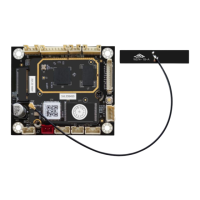

 To Next Page