This document is an operation and maintenance manual for the COCHET DUO lowering motorbike trailer. It provides comprehensive information on the trailer's function, technical specifications, usage, and maintenance requirements.
Function Description:
The COCHET DUO is a lowering motorbike trailer designed to transport motorbikes. Its primary function is to provide a safe and convenient means of transporting motorbikes by allowing the trailer bed to be lowered for easy loading and unloading. This lowering mechanism simplifies the process of getting motorbikes onto and off the trailer, reducing the effort and potential for damage. The trailer is designed to form a combination of vehicles when towed by a car, and its operation requires adherence to specific legal and safety guidelines.
Important Technical Specifications:
The manual details several key technical specifications crucial for safe and compliant operation:
- PTAC (Gross Laden Weight): This is the maximum authorized mass of the trailer when fully loaded.
- PV (Unladen Weight): This refers to the weight of the trailer itself, without any load.
- CU (Load Capacity): Calculated as PTAC - PV, this indicates the maximum weight the trailer can carry.
- PTRA (Maximum Authorized Mass of the Combination): This is the maximum authorized mass of the towing vehicle plus the PTAC of the trailer.
- Tyre Specifications: The manual specifies tyre dimensions and corresponding pressure requirements:
- 155/80R13: 2.5 Bar
- 165/R14: 4.5 Bar
- Wheel Bolt Tightening Torque: The manual provides a table for tightening torque values (daN) based on thread size and bolt head marking (8.8 or 10.9). For example:
- M5: 0.6 daN (8.8), 0.9 daN (10.9)
- M6: 1 daN (8.8), 1.5 daN (10.9)
- M8: 2.5 daN (8.8), 3.5 daN (10.9)
- M10: 5 daN (8.8), 7.5 daN (10.9)
- M12: 8.5 daN (8.8), 13 daN (10.9)
- M16: 21.5 daN (8.8), 31.5 daN (10.9)
- Hitch Height: The trailers are designed to have a hitch height between 395mm and 465mm.
- Electrical Connections: The trailer is fitted with a 7/13 plug adapter (13 pins on the trailer / 7 pins on the vehicle) for lighting connections. The manual includes a wiring diagram and pin assignments for both 7-pin and 13-pin plugs.
Usage Features:
The manual outlines various features and procedures for using the COCHET DUO trailer:
- Licensing and Registration: Driving a trailer requires understanding and complying with relevant legislation, including specific driving license categories (B, B code 96, BE) depending on the PTAC of the trailer and the combination. Trailers exceeding 500Kg PTAC require their own number plate and registration document, while those below 500Kg PTAC can use the towing vehicle's number plate.
- Insurance: Trailers above 500Kg PTAC must have individual insurance, while those below 500Kg PTAC are generally covered by the towing vehicle's insurance (though checking with the insurer is advised).
- General Information: Before using the trailer, it is essential to check its general condition, including tyre pressure, tightness of safety equipment, wear on the draw bar ball hitch, and proper functioning of all lights. After the first 100 km, the tightness of the wheels must be checked.
- Load Positioning: Correct load positioning is critical for safety. The load should be spread between the axle and the front of the trailer (COMPLIANT). Loading too much at the back can cause uncontrollable yaw, and too much at the front can break the draw bar.
- Strapping Down the Load: The load must be tightly strapped down using the provided rings or the trailer's side bars to prevent movement during transport, especially during emergency stops.
- Front Wheel Stand Adjustment: The front wheel stands are not factory-adjusted and must be adjusted before use to ensure proper support for the motorbike. There must be space between the ground and the support, and between the wheel and the ground.
- Hitching and Unhitching: Detailed steps are provided for hitching the trailer, including checking the ball hitch handle and red guide, positioning the ball hitch, looping the safety chain, lowering the ball hitch until it clicks, inserting the light plug, and raising the jockey wheel. Unhitching involves ensuring the trailer cannot run away, disconnecting the light plug, lowering the jockey wheel, pressing the safety catch, raising the ball hitch handle, and lifting the safety chain.
- Lowering and Raising the Trailer Bed:
- Lowering: This is only possible with the back of the trailer in the unfolded position. The winch is operated to free the locking pin, which is then removed along with the safety lynchpin. The winch is then operated in the opposite direction to fully lower the bed.
- Raising: The locking pin and safety lynchpin are inserted. The winch is operated in the direction for raising until the locking pin is under pressure, then the winch handle is turned to release tension.
- Road Use: When using the trailer on the road, it is imperative that the ball hitch is correctly locked. The draw bar locking pin and shackle must be checked. The back of the trailer must be unfolded to serve as an underrun protection bar, and the two wing nuts at the rear must be tightened to prevent vibration.
- Storing the Trailer: For storage, the trailer is raised to its folded position, with the rear part of the bed folded forwards and straps used to hold it in place against the front part. The axle locks on the right and left sides are activated. The drawbar is released by removing the locking pin and shackle, the clevis is tilted and locked, and the wheel under the coupling head is tilted.
Maintenance Features:
Regular maintenance is crucial for the longevity and safe operation of the COCHET DUO trailer:
- Servicing: The trailer should be serviced regularly, with an official dealer recommending servicing every 5000Km or once per year.
- Running Gear:
- Tyres: Check the condition of the tyre treads and sidewalls for deformation or abnormal wear. Maintain correct tyre pressures as specified.
- Wheel Bolts: Check the tightness of wheel bolts before and after the first journey, and then after the first 50 kilometres, tightening them according to the provided torque table if necessary. Inspect wheel rims for cracks or damage.
- Wheel Bearings: Check wheel bearings regularly. If a rumbling noise is heard, the bearing needs to be replaced by a dealer.
- Bodywork:
- Galvanized Parts: Galvanized parts develop a protective film against rust after oxidization, which gives them a matt appearance. Galvanization can be attacked by acids and salt.
- Rinsing: It is imperative to rinse the trailer with cold water if it has been used on snowy roads (due to road salt) or by the sea.
- White Rust: Traces of white rust are normal and do not affect the protective coating or invalidate warranty claims.
- Water Drainage: Avoid letting stagnant water collect on the trailer.
- Jockey Wheel and Hitch:
- Jockey Wheel: Check that the jockey wheel functions correctly by turning it regularly. Apply grease to the shaft if necessary. Avoid maneuvering a fully laden trailer with the jockey wheel to prevent premature deterioration.
- Hitch: The hitch should be cleaned and greased at regular intervals.
- Electricity (Standard Connections):
- Road Lights: It is a legal requirement for road lights to be in good working order. Always check the lighting system before using the trailer.
- Electrical Work: All work on the electrical circuit must be carried out by qualified personnel.
- Plug Connection: Ensure the trailer light plug is correctly inserted into the towing vehicle's socket, with grooves aligned.
The manual also includes a warranty section, detailing the conditions under which COCHET S.A. guarantees its products, including replacement of defective materials, loss of turnover, and carrying out work. It advises contacting the local dealer for any warranty claims.

 Need help?
 General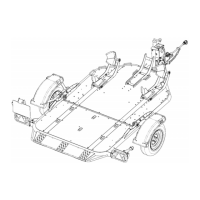

 To Next Page