EasyManua.ls Logo

Coleman 6P - User Manual

Coleman 6P
2 pages
Print Icon
To Next Page IconTo Next Page
Loading...
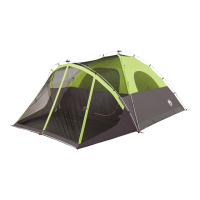
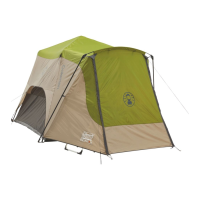
Instant Tent 6P with 3/4 Fly
(The product may look different from yours. It is for illustration purpose only.)
Rear view of complete tent
Front view of complete tent
Tent without rainfly
Pole List
A. Roof Pole .................................. x 1
B. Leg Pole .................................... x 2
C. Canopy Pole .............................. x 2
C
C
B
A
STITCH LINE
TENT SETUP INSTRUCTIONS
Before you begin
Read all instructions before set up.
Select a level site clear of rocks, branches, and
other hard or sharp objects, to install your tent.
WARNING: Keep clear of overhead power lines.
Do not set up your tent under trees because of
potential lightning strikes or falling tree limbs in
inclement weather.
NOTICE: Secure product with all ground stakes,
guylines and straps for optimal performance and
to prevent property damage or personal injury.
For best results in windy conditions, position
narrow end of tent into the wind.
Do not drop tent.
Do not bounce tent bag on its end to remove tent,
as these actions may damage the frame.
THIS RECREATIONAL PRODUCT REQUIRES A
MINIMUM OF TWO PEOPLE TO ASSEMBLE.
CAUTION: Avoid pinch points when opening and
closing the tent frame.
This tent meets the flammability requirements of CPAI-84. The fabric may burn if
left in continuous contact with any flame source. The application of any foreign
substance to the tent fabric may render the flame-resistant properties ineffective.
WARNING: KEEP ALL FLAME AND HEAT SOURCES
AWAY FROM THIS TENT FABRIC.
Things You Should Know
Under certain conditions (cold weather, high humidity, etc.) condensation will
form on the inside of your tent. Condensation is caused by water vapor from your
breath, perspiration, or any wet clothing inside the tent. It is NOT LEAKAGE through
the tent fabric. It can be minimized by removing wet clothing from your tent and by
providing good ventilation through the tent.
Tree limbs, tree sap, bird droppings, or moisture steadily dripping off tree limbs
can cause damage to the tent fabric and its coating resulting in leaks or loss of
flame-resistant properties.
Never store tent, even for a short period of time, without drying it thoroughly
and brushing off caked dirt. Do not pack stakes or poles inside your tent. Use a
separate storage bag.
Stakes should be removed by pulling on the stake itself. NEVER PULL ON THE TENT TO
REMOVE STAKES AS THIS COULD RESULT IN PROPERTY DAMAGE OR PERSONAL INJURY.
Do not leave your tent set-up for weeks at a time. Be aware that exposure to
ultraviolet rays from the sun can seriously damage material and/or cause it to
become discolored.
This product is not intended to be used during heavy rain, wind, hail, snow or other
inclement weather. Excess water build-up can cause the frame system to become
unstable, and possibly collapse, causing injury.
The tent top, screen, and sun wall (if included) should be carefully removed during
windy conditions to avoid damage to product or personal injury.
DO NOT use gas or flame sources under or near this product.
How to Store
1. All poles and stakes must be placed in the
storage bag to prevent damage to the fabric
items placed in the carry case.
2. Make sure all components are clean and dry
before placing in carry case.
3. Store in a clean, dry area.

Question and Answer IconNeed help?

Do you have a question about the Coleman 6P and is the answer not in the manual?

Summary

Before You Begin Setup

Essential Setup Precautions

Read all instructions, select a level site, and avoid hazards like overhead power lines and trees during setup.

Tent Storage Instructions

Proper Storage Procedure

Clean, dry, and store all tent components in the carry case in a clean, dry area to prevent damage.

Important Usage Information

Condensation and Fabric Care

Understand condensation is normal; ventilate. Protect fabric from tree sap, UV rays, and moisture.

Safe Usage and Weather Limitations

Avoid heavy rain, wind, hail, snow. Keep flame sources away from tent fabric for safety.

How to Set Up and Disassemble

Step-by-Step Assembly Guide

Detailed instructions for extending the frame, raising the tent, attaching the rainfly, and guying it out.

Disassembly Procedure

Follow the setup steps in reverse order to safely take down and store the tent.

Summary

Before You Begin Setup

Essential Setup Precautions

Read all instructions, select a level site, and avoid hazards like overhead power lines and trees during setup.

Tent Storage Instructions

Proper Storage Procedure

Clean, dry, and store all tent components in the carry case in a clean, dry area to prevent damage.

Important Usage Information

Condensation and Fabric Care

Understand condensation is normal; ventilate. Protect fabric from tree sap, UV rays, and moisture.

Safe Usage and Weather Limitations

Avoid heavy rain, wind, hail, snow. Keep flame sources away from tent fabric for safety.

How to Set Up and Disassemble

Step-by-Step Assembly Guide

Detailed instructions for extending the frame, raising the tent, attaching the rainfly, and guying it out.

Disassembly Procedure

Follow the setup steps in reverse order to safely take down and store the tent.

Overview

This document provides instructions for setting up and disassembling the Coleman Instant Tent 6P with a 3/4 Fly. It also includes important information regarding tent usage, care, and safety.

Function Description

The Coleman Instant Tent 6P is a recreational product designed for temporary outdoor shelter. It features an instant setup frame, making assembly quicker and easier, and includes a 3/4 fly for added weather protection. The tent is intended for use by a minimum of two people for assembly.

Usage Features

Setup and Assembly:

The tent features an "Instant Tent" design, implying a simplified and quicker setup process compared to traditional tents.

  1. Extend the Frame: The initial step involves extending the tent's frame. This likely means unfolding the pre-attached pole structure until it is fully open.
  2. Raise the Tent: Once the frame is extended, the tent needs to be raised. This step involves locking the frame components into place, likely using "Lock Buttons" to secure the poles at their extended positions.
  3. Verify Connections and Peg the Tent: After raising the tent, it's crucial to verify all connections between the tent fabric and the frame poles. This involves attaching clips to the poles and securing the tent to the ground using "Tent Pegs" through "Webbing Loops." An "Electrical Cord" pass-through is also indicated, suggesting a feature for running power into the tent.
  4. Attach Rainfly: The 3/4 fly is attached after the main tent body is set up. This involves connecting the rainfly to the tent using "Pins" and "S" Hooks, and securing it with "Straps" to "Pole Connectors" on the underside of the rainfly. The rainfly provides additional protection from the elements.
  5. Guy Out the Tent: For enhanced stability, especially in windy conditions, the tent should be "guyed out." This involves attaching "Guylines" to the tent, likely through "Grommets," and securing them to the ground with additional tent pegs. The canopy section of the tent also appears to be part of the guying process.

General Usage Guidelines:

  • Site Selection: Always select a level site that is clear of rocks, branches, and other hard or sharp objects to prevent damage to the tent floor.
  • Overhead Hazards: Avoid setting up the tent under overhead power lines due to potential hazards. Do not set up the tent under trees during inclement weather to prevent potential lightning strikes or damage from falling tree limbs.
  • Security: For optimal performance and to prevent property damage or personal injury, the product must be secured with all ground stakes, guylines, and straps.
  • Windy Conditions: In windy conditions, position the narrow end of the tent into the wind for better stability.
  • Condensation Management: Condensation can form inside the tent due to water vapor from breath, perspiration, or wet clothing. This is not leakage. To minimize condensation, remove wet clothing from the tent and ensure good ventilation.
  • Weather Limitations: This product is not designed for use during heavy rain, strong wind, hail, snow, or other severe weather. Excessive water build-up can destabilize the frame and potentially cause collapse and injury.
  • UV Exposure: Prolonged exposure to ultraviolet (UV) rays from the sun can damage the tent material and cause discoloration. Avoid leaving the tent set up for weeks at a time.
  • Flame and Heat Sources: A critical safety feature is the warning to keep all flame and heat sources away from the tent fabric. The tent meets CPAI-84 flammability requirements, meaning the fabric may burn if in continuous contact with a flame source. Applying foreign substances to the fabric can compromise its flame-resistant properties.
  • Pinch Points: Exercise caution to avoid pinch points when opening and closing the tent frame during setup and disassembly.

Disassembly:

To take down the tent, follow the setup steps and illustrations in the reverse order. This ensures a systematic and safe dismantling process.

Maintenance Features

Cleaning and Drying:

  • Thorough Drying: Never store the tent, even for a short period, without thoroughly drying it. This prevents mold, mildew, and degradation of the fabric.
  • Dirt Removal: Brush off any caked dirt from the tent before storage.
  • Component Separation: Do not pack stakes or poles inside the tent fabric. Use a separate storage bag for these components.
  • Clean and Dry Components: Before placing components in the carry case, ensure they are clean and dry.

Storage:

  • Pole and Stake Storage: All poles and stakes must be placed in their designated storage bag to prevent damage to the fabric items stored in the main carry case.
  • Storage Area: Store the tent in a clean, dry area to maintain its condition and longevity.

Damage Prevention:

  • Handling: Do not drop the tent. Avoid bouncing the tent bag on its end to remove the tent, as these actions can damage the frame.
  • Stake Removal: When removing stakes, pull on the stake itself, not on the tent fabric. Pulling on the tent to remove stakes can cause property damage or personal injury.
  • Tree Sap/Bird Droppings: Tree limbs, tree sap, bird droppings, or moisture consistently dripping from tree limbs can damage the tent fabric and its coating, leading to leaks or loss of flame-resistant properties.
  • Wind Damage: The tent top, screen, and sun wall (if included) should be carefully removed during windy conditions to prevent damage to the product or personal injury.

Coleman 6P Specifications

General IconGeneral
Weather ResistanceWeatherTec System
Doors1
PolesFiberglass
Floor MaterialPolyethylene
Capacity6 people
TypeDome
Dimensions10 x 9 ft.
RainflyIncluded

Related product manuals