EasyManua.ls Logo

Coleman Fyreknight Hyperflame 9966 Series - User Manual

Coleman Fyreknight Hyperflame 9966 Series
12 pages
Print Icon
To Next Page IconTo Next Page
Loading...
LPG Stoves
Instructions for use
9966 Series
* The griddles are only included for certain models.
IMPORTANT
Read these instructions for use carefully. Familiarise yourself with
the appliance before connecting it to a gas cylinder. Keep these
instructions for future reference.
This instruction manual contains important information necessary for
the proper assembly and safe use of the appliance. Follow all warnings
and instructions when using the appliance. If you have questions about
assembly, operation, servicing or repair of this product, please call
Coleman on 1800 224 350. Newell Australia Pty Ltd.
Gas cylinders shall be changed in a well-ventilated location, preferably
outside away from people and any sources of ignition, such as naked
ames, pilot ames, electric heaters / equipment. If there is a leak
on your appliance (smell of gas) and you cannot stop the gas ow,
immediately turn off the cylinder valve and remove the appliance to
a well-ventilated location away from any ignition source. Check for
leaks using soapy water. Do not try to detect leaks using a ame.
This appliance must only be serviced by an authorised person. Gas
cylinders must be stored outdoors in a well ventilated area out of the
reach of children, any indoor storage shall comply with AS/NZS 1596.
This appliance shall only be used with propane LPG Coleman
disposable gas cylinders certied to DOT-39 NRC 232/290 M1110.
OR rellable Universal LPG cylinder certied to AS2030/AS2469 &
Coleman hose assembly. IT MAY BE HAZARDOUS TO ATTEMPT TO
FIT OTHER TYPES OF GAS CONTAINERS. DO NOT USE ADAPTORS.
Not suitable for installation or connection to a reticulated gas supply.
CAUTION: accessible parts may be very hot. Keep young children
away, USE OUTDOORS ONLY. Must only be operated on a horizontal
surface. Not suitable for marine environments. Do not modify this
appliance.
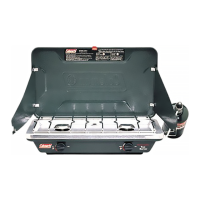
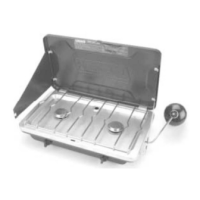
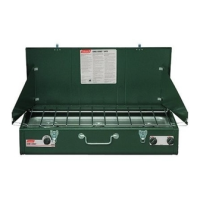
INSTASTART™ Electronic Ignition
Standard Ignition
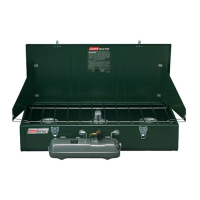
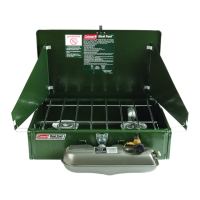
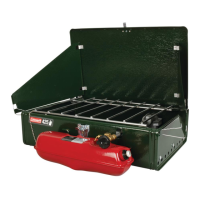
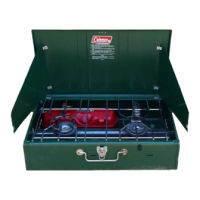
Camp Stove
Question and Answer IconNeed help?

Do you have a question about the Coleman Fyreknight Hyperflame 9966 Series and is the answer not in the manual?

Summary

Important Safety and Usage Guidelines

Gas Cylinder Handling

Safe practices for changing gas cylinders, ventilation, and leak detection.

Appliance Operation Precautions

Warnings for hot parts, outdoor use, horizontal surface operation, and modifications.

Critical Safety Warnings

Fire and Explosion Hazard Response

Procedures to follow if a gas smell is detected to prevent fire or explosion.

Carbon Monoxide Poisoning Risk

Risks of CO poisoning and essential requirements for outdoor, ventilated use only.

Installation and Service Safety

Warnings regarding improper installation, use, adjustment, service, or maintenance.

Detailed Hazard Explanations

Carbon Monoxide Dangers Explained

In-depth details on CO production, symptoms, and strict outdoor usage rules.

Explosion and Fire Hazard Prevention

Precautions for heat, storage, ignition sources, and maintaining safe clearances.

Technical Specifications and Setup Safety

Product Technical Characteristics

Key specifications including input, category, regulator, and injector details.

LPG Gas Properties and Handling

Information on LPG gas properties, safe storage, and handling procedures.

Setup Carbon Monoxide Awareness

Reinforces outdoor use and ventilation needs during appliance setup.

Appliance Setup and Warranty Considerations

Step-by-Step Appliance Setup

Instructions for unpacking, opening lid, installing components, and closing valves.

Warranty Damage Prevention Tips

Warnings to avoid damaging the griddle and voiding the product warranty.

Critical Service Safety Checks

Procedures for cleaning and inspecting connections and fittings for leaks.

Connecting, Leak Testing, and Lighting

Connecting the LPG Cylinder

Instructions for securely attaching the regulator and LPG cylinder.

Performing a Leak Check

Methods for checking gas connections for leaks using soapy water.

Using Electronic Ignition

Instructions for lighting the stove using the INSTASTART™ electronic ignition.

Alternative Lighting, Cleaning, and Maintenance

Lighting with a Match

Alternative method for igniting the burners using a match.

Griddle and Stove Cleaning

Instructions for cleaning the griddle and stove with mild detergent.

General Maintenance and Turn Off

Keeping area clear, checking flame, and procedures for turning off the appliance.

Outdoor Usage Environment

Outdoor Enclosure Requirements

Detailed guidelines for using the appliance in various outdoor enclosure configurations.

Storage and General Information

Safe Stove Storage Procedures

Guidelines for storing the stove, including cylinder disconnection and temperature limits.

Key Usage and Storage Tips

Important information on LPG cylinder limits, storage areas, and repair services.

Replacement Parts and Warranty Policy

Available Replacement Parts

A list of replacement parts with corresponding part numbers and descriptions.

Express Warranty Coverage

Details of the three-year warranty, including coverage and exclusions.

Warranty Limitations and Claims Process

Warranty Exclusions and Legal Rights

Clarification of warranty exclusions and consumer rights under Australian Law.

How to Make a Warranty Claim

Instructions on how to return the product for warranty service and claim processing.

Overview

The Coleman 9966 Series LPG Stoves are outdoor cooking appliances designed for portability and ease of use, featuring either INSTASTART™ Electronic Ignition or Standard Ignition. These camp stoves are intended for use in well-ventilated outdoor areas, providing a reliable cooking solution for various outdoor activities.

Function Description

The primary function of the Coleman 9966 Series LPG Stoves is to provide a portable and efficient means of cooking outdoors using propane LPG gas. The stove operates by connecting to a gas cylinder, which fuels one or two burners, allowing for the heating of pots and pans. Some models include griddles, expanding the cooking options to include flat-top cooking. The stove is designed for vapor withdrawal from the LPG cylinder.

Usage Features

The stove's design emphasizes user safety and convenience. Before use, users must carefully read the instructions to familiarize themselves with the appliance and its connection procedures. The stove should always be set up on a sturdy, flat surface in an above-ground open-air situation with natural ventilation, free from stagnant areas where gas leakage and combustion products could accumulate. It is crucial to ensure that all seals between the appliance and the gas cylinder are in place and in good condition before connecting the gas cartridge.

To set up the stove, components are removed from the carton, and the lid is opened by moving the handle slightly to the "✓" location and pulling the latch hook panel. The lid stopper is then assembled to the stove. If included, the Wind Shield Pan Support is installed, and cooking pots or pans are placed directly on it. Griddles, if part of the model, can be optionally installed on the Wind Shield Pan Support.

The regulator is screwed into the stove hand tight, and then the LPG bottle is screwed into the regulator hand tight. It is critical to ensure the LPG cylinder is correctly installed and never operated in an inverted position.

For lighting, models with INSTASTART™ Electronic Ignition require setting the stove on a sturdy, flat surface, opening the burner valve, and repeatedly pushing the igniter button until the burner ignites. This process is repeated for both burners. If the igniter fails, a match can be used. For Standard Ignition models, a lighted match is held near the burner while the burner valve is opened. Flame adjustment is done via the burner valves, aiming for a blue flame with a minimal yellow tip.

The stove is designed for cooking purposes only and should not be used as a space heater. The maximum recommended vessel size is 190 mm in diameter to prevent overheating and boil-over. It is important to avoid using multiple or excessively sized cooking devices that could lead to overheating the gas cartridge and controls.

When finished cooking, the burner valves are firmly closed to turn off the flame. The appliance should not be moved during operation. After use, the gas cylinder valve should be turned off, and after the flame extinguishes, the appliance control valve(s) should also be turned off.

Safety Precautions:

  • Gas Leak Detection: If a gas smell is detected, users must not attempt to light the appliance, ensure it is in the off position, extinguish any nearby flames, shut off the cylinder fuel supply valve (or disconnect a disposable cylinder), leave the area immediately, and allow gas to dissipate for 5 minutes. If the smell persists, the appliance should be serviced. Leak testing should be performed outdoors using soapy water, never a flame. Bubbles, a hissing sound, extreme cold, or a rotten egg odor indicate a leak.
  • Carbon Monoxide Hazard: The stove produces carbon monoxide (CO), which is poisonous and odorless. It must never be used in enclosed spaces like campers, tents, cars, or homes, as this can be fatal. It is strictly for outdoor use in well-ventilated areas.
  • Fire/Explosion Hazard: LPG is heavier than air and can accumulate in low places, igniting from various sources. The stove must not be stored or used near high heat, open flames, pilot lights, direct sunlight, or where temperatures exceed 120°F (49°C). LPG cylinders should be attached or detached outdoors, never while the stove is lit or hot. Flammable materials, gasoline, and other vapors must be kept at least 12 inches from the sides and 48 inches from the top of the stove.
  • Burn Hazard: Accessible parts become very hot during operation. Children and pets must be kept away from the appliance at all times, and the stove should never be left unattended while in operation.
  • Cylinder Use: Only Coleman 16.4 oz. disposable propane cylinders certified to DOT-39 NRC 232/290 M1110, or refillable Universal LPG cylinders certified to AS2030/AS2469 with a Coleman hose assembly, should be used. Adapters are not to be used, and it is hazardous to attempt to fit other types of gas containers. Disposable cylinders must never be refilled. The preset regulator supplied with the stove should not be adjusted.
  • Storage: LPG cylinders must be stored outdoors in a well-ventilated area, out of reach of children. Any indoor storage must comply with AS/NZS 1596. The cylinder must be disconnected when the stove is in storage. The appliance should be stored and operated where the environmental temperature will not fall below -0.4°F (-18°C).

Maintenance Features

Regular maintenance is essential for safe and proper operation.

  • Cleaning: The stove area should be kept clear of combustible materials, gasoline, and other flammable vapors and liquids. The flow of combustion and ventilation air must not be obstructed. The stove and griddle (if equipped) should be cleaned frequently to prevent grease accumulation and potential grease fires. After ensuring the stove and griddle are cool, they can be wiped clean with a soft cloth and mild dish detergent. Abrasives should not be used, especially on non-stick griddle surfaces.
  • Connections: All connections and fittings should be kept clean. Before attaching, inspect LPG cylinder and stove LPG connections for damage. During setup, all connections and fittings should be leak-tested using soapy water. If a leak is detected, the connection should be checked for cross-threading and tightness. If a leak persists, the cylinder should be removed, and Coleman contacted for service.
  • Flame Quality: A good flame should be blue with a minimal yellow tip. Some yellow tips are acceptable as long as no carbon or soot deposits appear.
  • Cylinder Check: To check if a gas cylinder is empty, disconnect it from the appliance and shake it. If there is no sound or movement of liquid, the cylinder is empty.
  • Servicing: The appliance must only be serviced by an authorized person. Annual service by an authorized person is recommended, especially if conditions like incomplete ignition, appreciable yellow tipping, carbon deposition, lifting, floating, lighting back, or objectionable odor are noticed. The appliance should not be used if it has damaged or worn seals, is leaking, or does not operate properly.
  • Storage: For storage or transport, the regulator may be located between the Wind Shield Pan Support. The griddle (if included) can be placed on the Wind Shield Pan Support. The lid latch should be secured, and the stove carried by its handle. To prevent dust and cobwebs, the stove can be placed in a plastic bag and sealed with a rubber band in typical storage areas like basements, attics, or garages.

Coleman Fyreknight Hyperflame 9966 Series Specifications

General IconGeneral
Fuel TypePropane
Burners2
Wind Block SystemYes
MaterialSteel
Burn TimeUp to 1 hour on high on one 16.4 oz propane cylinder
Ignition TypeInstastart™ push-button ignition
Burner TypeHyperFlame™
Series9966

Related product manuals