EasyManua.ls Logo

Columbia EX-21 EXPEDITER - User Manual

Columbia EX-21 EXPEDITER
32 pages
Print Icon
To Next Page IconTo Next Page
Loading...
Owner
and
Operator
Manual
EX-21 EXPEDITER
Electric Vehicles
P/N 709447-04

Table of Contents

Questions and Answers

Summary

1.0 INTRODUCTION

1.1 SAFETY MESSAGES

Key safety messages and warnings precede critical information in the manual.

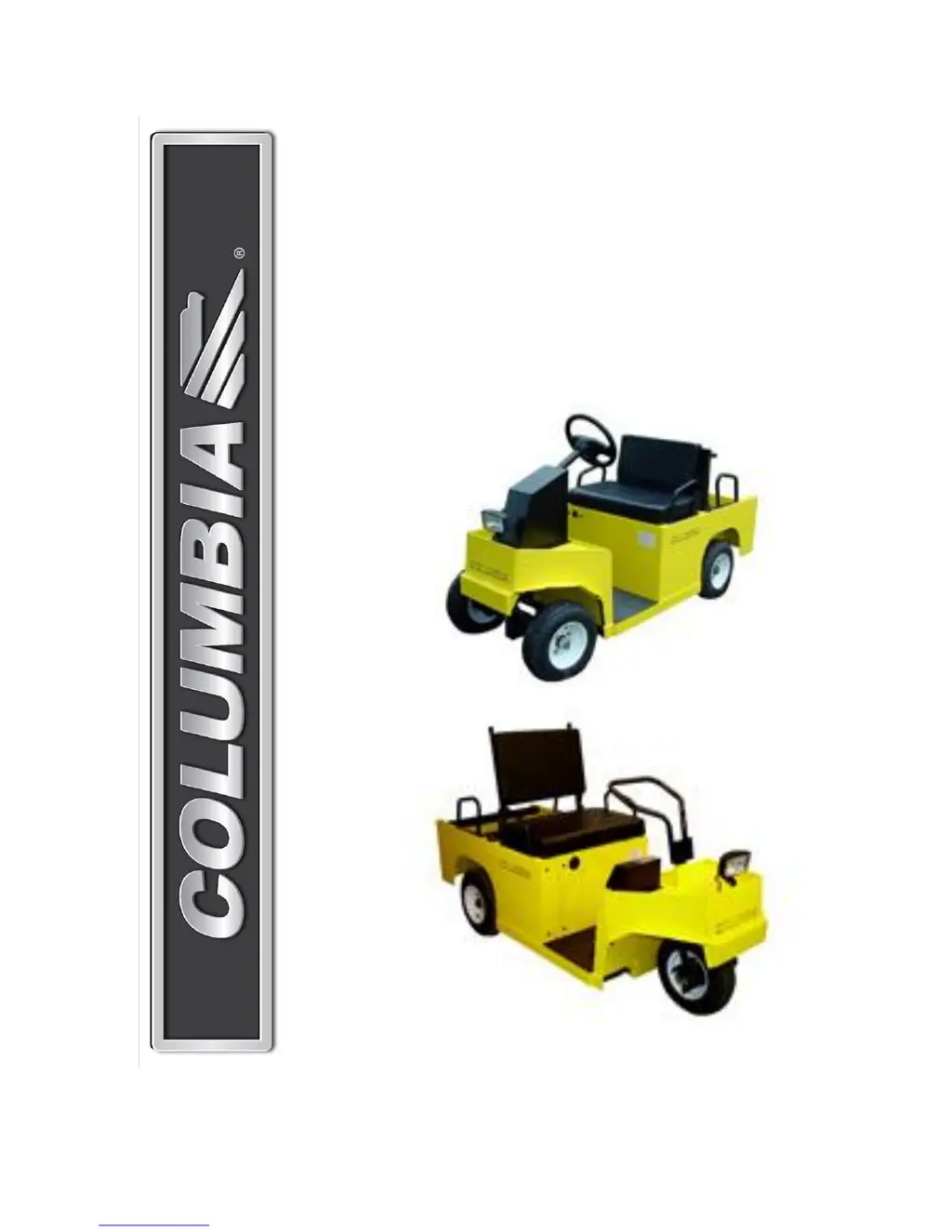
1.2 VEHICLE DESCRIPTION

Details the EX-21 Expediter's design and intended operating environment.

1.3 VEHICLE IDENTIFICATION NUMBER (VIN)

Explains the VIN's location, purpose, and importance for service.

1.4 13 DIGIT VIN MATRIX

Provides a breakdown of each digit's meaning in the vehicle identification number.

1.5 VEHICLE SPECIFICATIONS

Lists key technical specifications for different EX-21 Expediter models.

2.0 SAFETY

2.1 GETTING STARTED

Emphasizes the operator's responsibility to read and understand safety rules before operation.

2.2 SAFETY VEHICLE STATEMENTS

Highlights crucial warnings regarding vehicle modifications, repairs, and operation hazards.

2.3 OPERATOR SAFETY INSTRUCTIONS

Provides essential guidelines for safe operation, including seating, controls, and speed.

2.4 SAFETY CONCERNS

Outlines OSHA and ANSI requirements for operators and owners concerning vehicle safety.

3.0 OPERATIONS AND CONTROLS

3.1 IMPORTANT FIRST STEP

Crucial initial step for vehicle readiness: ensuring the battery pack is properly charged.

3.2 INSPECTING THE VEHICLE

Procedure for performing a pre-delivery and pre-operation inspection of the vehicle.

3.3.1 POWER KEYSWITCH

Explains the function of the power keyswitch for activating and conserving battery power.

3.3.2 DIRECTION SELECTOR

Details how to operate the direction selector for forward, reverse, and neutral positions.

3.3.3 SYSTEM STATUS LIGHT

Describes the green System Status LED and its indication of controller power status.

3.3.4 HORN BUTTON

Instructions on how to use the horn button to sound the horn.

3.3.5 LIGHT SWITCH

Operation of the two-position switch for headlights and taillights.

3.3.6 BATTERY STATE OF CHARGE METER

Explains the analog gauge for monitoring battery charge level and its interpretation.

3.3.7 HOUR METER INDICATOR

Indicates the total operating hours of the vehicle.

3.3.8 OPERATING INSTRUCTION

Advises reading operating instructions carefully and replacing if missing or damaged.

3.3.9 ACCELERATOR PEDAL

Describes the accelerator pedal's function in controlling vehicle speed and direction changes.

3.3.10 BRAKE PEDAL;PARKING BRAKE

Explains the operation of the brake pedal for slowing, stopping, and engaging the parking brake.

3.3.11 WARNING LABEL

Instructs to read and maintain warning labels on the vehicle.

3.3.12 CHARGER RECEPTACLE & REMOTE LED

Locates the charger receptacle and explains the function of the remote LED indicator.

3.3.13 BACKREST;REAR PASSENGER SEAT

Details how to deploy the backrest as a seat for a rear passenger and safety precautions.

3.3.14 STEERING WHEEL;HANDLE BAR;TILLER

Notes the different steering types used and their common function.

3.3.15 SEAT SWITCH;TRACTION INTERLOCK

Explains the seat switch's role in traction drive operation and potential reset procedures.

3.4.1 DRIVING THE VEHICLE

Step-by-step instructions for operating the vehicle, including starting and moving.

3.4.2 PRE-OPERATION CHECKLIST

A comprehensive checklist of items to verify before operating the vehicle for safety and functionality.

4.0 ELECTRIC SYSTEM

4.1 IMPORTANT INFORMATION

Provides essential details about deep cycle batteries and critical safety warnings for electrical systems.

4.2 BATTERY INSPECTION & MAINTENANCE

Outlines procedures for checking electrolyte levels, inspecting components, and maintaining batteries.

4.3 BATTERY CLEANING

Details the process for cleaning battery terminals to prevent leakage and maintain efficiency.

4.4 CONDITIONS WHICH AFFECT CHARGING

Explains factors like battery age, temperature, and discharge state that influence charging.

4.5 DELTA-Q BATTERY CHARGING

Covers the operation and status indicators of the on-board Delta-Q battery charger.

4.5.1 CHARGER OPERATING INSTRUCTIONS

Step-by-step guide for connecting and operating the Delta-Q charger correctly.

4.5.2 RED LIGHT CHARGER ERROR CODES

Lists and explains error codes indicated by the charger's red fault light.

4.5.3 CHECK; CHANGE CHARGING ALGORITHM

Instructions on how to check and select the appropriate charging algorithm for battery types.

4.6 EXCESSIVELY DISCHARGED BATTERIES

Procedures for handling batteries that are excessively discharged and may not charge.

4.6.1 DELTA-Q WILL NOT CHARGE

Addresses issues when the Delta-Q charger cannot charge batteries, including internal faults.

4.7 SPECIFIC GRAVITY TEST

Explains how to use a hydrometer to test battery specific gravity for charge and condition.

4.8 TIPS FOR PROLONGING BATTERY LIFE

Provides advice on charging habits, maintenance, and storage to maximize battery lifespan.

4.9 BATTERY DISCONNECT METHODS

Illustrates how to disconnect battery pack leads safely before performing maintenance.

4.10 BATTERY REMOVAL AND INSTALLATION

Details the procedures for removing and installing batteries in 24-volt and 48-volt systems.

4.10.1 24 VOLT SYSTEM

Specific steps for removing and installing batteries in the 24-volt system.

4.10.2 48 VOLT SYSTEM

Instructions for accessing and servicing batteries in the 48-volt system by rotating the charger.

4.11 SINGLE POINT BATTERY WATERING SYSTEM

Explains the operation and maintenance of the single point battery watering system.

5.0 SERVICING YOUR VEHICLE

5.1 MAINTENANCE GUIDELINES

General guidelines for ensuring the vehicle remains in safe and correct operating condition.

5.2 MECHANICAL BRAKE SYSTEM

Details the self-adjusting drum brakes, pedal free travel, and parking brake operation.

5.3 TIRE CARE

Importance of proper tire inflation and its effect on tire life and vehicle performance.

5.4 WHEEL & TIRE REMOVAL;INSTALLATION

Step-by-step instructions for safely removing and installing wheels and tires.

5.5 CLEANING

Guidelines for washing the vehicle body, seat, and underside, avoiding high-pressure water.

5.6 LUBRICATION

Instructions for semi-annual greasing of front hub assembly and steering arm spindles.

5.7 MAINTENANCE SCHEDULE - OWNER;OPERATOR

Recommended weekly, monthly, and semi-annual maintenance tasks for the owner/operator.

5.8 MAINTENANCE SCHEDULE - QUALIFIED TECHNICIAN

Maintenance tasks recommended for qualified technicians on a quarterly, semi-annual, and annual basis.

5.9 VEHICLE TROUBLESHOOTING

A guide to common vehicle problems and their potential checks and solutions.

5.10 CONTROLLER TROUBLESHOOTING

Explains how to interpret controller LED flash codes for diagnosing electrical system faults.

6.0 TOWING & TRANSPORTING

6.1 TOWING

States that Columbia ParCar does not recommend towing the vehicle.

6.2 TRANSPORTING YOUR VEHICLE

Provides instructions for safely trailering the vehicle over long distances or highways.

7.0 VEHICLE STORAGE (over 6 weeks)

7.1 BATTERY PREPARATION

Steps for preparing batteries for storage, including charging and checking electrolyte levels.

7.2 VEHICLE PREPARATION

Guidelines for preparing the vehicle itself for storage, including tire pressure and cleaning.

7.3 RETURNING VEHICLE TO SERVICE

Procedure for bringing the vehicle back into service after a period of storage.

Summary

1.0 INTRODUCTION

1.1 SAFETY MESSAGES

Key safety messages and warnings precede critical information in the manual.

1.2 VEHICLE DESCRIPTION

Details the EX-21 Expediter's design and intended operating environment.

1.3 VEHICLE IDENTIFICATION NUMBER (VIN)

Explains the VIN's location, purpose, and importance for service.

1.4 13 DIGIT VIN MATRIX

Provides a breakdown of each digit's meaning in the vehicle identification number.

1.5 VEHICLE SPECIFICATIONS

Lists key technical specifications for different EX-21 Expediter models.

2.0 SAFETY

2.1 GETTING STARTED

Emphasizes the operator's responsibility to read and understand safety rules before operation.

2.2 SAFETY VEHICLE STATEMENTS

Highlights crucial warnings regarding vehicle modifications, repairs, and operation hazards.

2.3 OPERATOR SAFETY INSTRUCTIONS

Provides essential guidelines for safe operation, including seating, controls, and speed.

2.4 SAFETY CONCERNS

Outlines OSHA and ANSI requirements for operators and owners concerning vehicle safety.

3.0 OPERATIONS AND CONTROLS

3.1 IMPORTANT FIRST STEP

Crucial initial step for vehicle readiness: ensuring the battery pack is properly charged.

3.2 INSPECTING THE VEHICLE

Procedure for performing a pre-delivery and pre-operation inspection of the vehicle.

3.3.1 POWER KEYSWITCH

Explains the function of the power keyswitch for activating and conserving battery power.

3.3.2 DIRECTION SELECTOR

Details how to operate the direction selector for forward, reverse, and neutral positions.

3.3.3 SYSTEM STATUS LIGHT

Describes the green System Status LED and its indication of controller power status.

3.3.4 HORN BUTTON

Instructions on how to use the horn button to sound the horn.

3.3.5 LIGHT SWITCH

Operation of the two-position switch for headlights and taillights.

3.3.6 BATTERY STATE OF CHARGE METER

Explains the analog gauge for monitoring battery charge level and its interpretation.

3.3.7 HOUR METER INDICATOR

Indicates the total operating hours of the vehicle.

3.3.8 OPERATING INSTRUCTION

Advises reading operating instructions carefully and replacing if missing or damaged.

3.3.9 ACCELERATOR PEDAL

Describes the accelerator pedal's function in controlling vehicle speed and direction changes.

3.3.10 BRAKE PEDAL;PARKING BRAKE

Explains the operation of the brake pedal for slowing, stopping, and engaging the parking brake.

3.3.11 WARNING LABEL

Instructs to read and maintain warning labels on the vehicle.

3.3.12 CHARGER RECEPTACLE & REMOTE LED

Locates the charger receptacle and explains the function of the remote LED indicator.

3.3.13 BACKREST;REAR PASSENGER SEAT

Details how to deploy the backrest as a seat for a rear passenger and safety precautions.

3.3.14 STEERING WHEEL;HANDLE BAR;TILLER

Notes the different steering types used and their common function.

3.3.15 SEAT SWITCH;TRACTION INTERLOCK

Explains the seat switch's role in traction drive operation and potential reset procedures.

3.4.1 DRIVING THE VEHICLE

Step-by-step instructions for operating the vehicle, including starting and moving.

3.4.2 PRE-OPERATION CHECKLIST

A comprehensive checklist of items to verify before operating the vehicle for safety and functionality.

4.0 ELECTRIC SYSTEM

4.1 IMPORTANT INFORMATION

Provides essential details about deep cycle batteries and critical safety warnings for electrical systems.

4.2 BATTERY INSPECTION & MAINTENANCE

Outlines procedures for checking electrolyte levels, inspecting components, and maintaining batteries.

4.3 BATTERY CLEANING

Details the process for cleaning battery terminals to prevent leakage and maintain efficiency.

4.4 CONDITIONS WHICH AFFECT CHARGING

Explains factors like battery age, temperature, and discharge state that influence charging.

4.5 DELTA-Q BATTERY CHARGING

Covers the operation and status indicators of the on-board Delta-Q battery charger.

4.5.1 CHARGER OPERATING INSTRUCTIONS

Step-by-step guide for connecting and operating the Delta-Q charger correctly.

4.5.2 RED LIGHT CHARGER ERROR CODES

Lists and explains error codes indicated by the charger's red fault light.

4.5.3 CHECK; CHANGE CHARGING ALGORITHM

Instructions on how to check and select the appropriate charging algorithm for battery types.

4.6 EXCESSIVELY DISCHARGED BATTERIES

Procedures for handling batteries that are excessively discharged and may not charge.

4.6.1 DELTA-Q WILL NOT CHARGE

Addresses issues when the Delta-Q charger cannot charge batteries, including internal faults.

4.7 SPECIFIC GRAVITY TEST

Explains how to use a hydrometer to test battery specific gravity for charge and condition.

4.8 TIPS FOR PROLONGING BATTERY LIFE

Provides advice on charging habits, maintenance, and storage to maximize battery lifespan.

4.9 BATTERY DISCONNECT METHODS

Illustrates how to disconnect battery pack leads safely before performing maintenance.

4.10 BATTERY REMOVAL AND INSTALLATION

Details the procedures for removing and installing batteries in 24-volt and 48-volt systems.

4.10.1 24 VOLT SYSTEM

Specific steps for removing and installing batteries in the 24-volt system.

4.10.2 48 VOLT SYSTEM

Instructions for accessing and servicing batteries in the 48-volt system by rotating the charger.

4.11 SINGLE POINT BATTERY WATERING SYSTEM

Explains the operation and maintenance of the single point battery watering system.

5.0 SERVICING YOUR VEHICLE

5.1 MAINTENANCE GUIDELINES

General guidelines for ensuring the vehicle remains in safe and correct operating condition.

5.2 MECHANICAL BRAKE SYSTEM

Details the self-adjusting drum brakes, pedal free travel, and parking brake operation.

5.3 TIRE CARE

Importance of proper tire inflation and its effect on tire life and vehicle performance.

5.4 WHEEL & TIRE REMOVAL;INSTALLATION

Step-by-step instructions for safely removing and installing wheels and tires.

5.5 CLEANING

Guidelines for washing the vehicle body, seat, and underside, avoiding high-pressure water.

5.6 LUBRICATION

Instructions for semi-annual greasing of front hub assembly and steering arm spindles.

5.7 MAINTENANCE SCHEDULE - OWNER;OPERATOR

Recommended weekly, monthly, and semi-annual maintenance tasks for the owner/operator.

5.8 MAINTENANCE SCHEDULE - QUALIFIED TECHNICIAN

Maintenance tasks recommended for qualified technicians on a quarterly, semi-annual, and annual basis.

5.9 VEHICLE TROUBLESHOOTING

A guide to common vehicle problems and their potential checks and solutions.

5.10 CONTROLLER TROUBLESHOOTING

Explains how to interpret controller LED flash codes for diagnosing electrical system faults.

6.0 TOWING & TRANSPORTING

6.1 TOWING

States that Columbia ParCar does not recommend towing the vehicle.

6.2 TRANSPORTING YOUR VEHICLE

Provides instructions for safely trailering the vehicle over long distances or highways.

7.0 VEHICLE STORAGE (over 6 weeks)

7.1 BATTERY PREPARATION

Steps for preparing batteries for storage, including charging and checking electrolyte levels.

7.2 VEHICLE PREPARATION

Guidelines for preparing the vehicle itself for storage, including tire pressure and cleaning.

7.3 RETURNING VEHICLE TO SERVICE

Procedure for bringing the vehicle back into service after a period of storage.

Columbia EX-21 EXPEDITER Specifications

General IconGeneral
BrandColumbia
ModelEX-21 EXPEDITER
CategoryElectric Vehicles
LanguageEnglish

Related product manuals