EasyManua.ls Logo

Columbia Payloader - User Manual

Columbia Payloader
29 pages
Print Icon
To Next Page IconTo Next Page
Loading...
BC 2012
Owner
and
Operator
Manual
Payloader
Electric Vehicles
P/N 712037-05
Question and Answer IconNeed help?

Do you have a question about the Columbia Payloader and is the answer not in the manual?

Summary

Introduction

Safety Messages

Key safety messages including danger, warning, and caution definitions.

Vehicle Description

Overview of the Payloader vehicle's purpose and design standards.

Vehicle Identification Number (VIN)

Locating and understanding the vehicle's unique identification number.

VIN Matrix

Vehicle Specifications

Safety

Getting Started Safely

Operator's responsibility to read and follow safety rules before operation.

Safety Vehicle Statements

Critical warnings regarding modifications, repairs, and general safety.

Operator Safety Instructions

Essential guidelines for safe vehicle operation and stability.

Safety Concerns

Operator and owner responsibilities regarding OSHA and ANSI standards.

Battery Disconnect Methods

Illustrates battery pack configurations and disconnect procedures.

Operations and Controls

Important First Step

Ensuring the battery pack is properly charged upon initial delivery or use.

Inspecting the Vehicle

Pre-operation checks for safe working order, including controls and accessories.

Vehicle Controls: Keyswitch and Selector

Details on power keyswitch, direction selector, and lighting switches.

Vehicle Controls: Pedals and Indicators

Information on brake, accelerator pedals, parking brake, and battery state meter.

Vehicle Controls: Displays and Switches

Description of MDI, turn signals, steering wheel, and nameplate.

Driving the Vehicle

Procedure for starting and operating the vehicle, including pre-operation checklist.

Pre-Operation Checklist

Detailed list of items to check before operating the vehicle.

Electric System

Important Electric System Information

Key information about deep cycle batteries and safety precautions.

Battery Inspection & Maintenance

Procedures for checking electrolyte levels and battery condition.

Battery Cleaning

Methods for cleaning battery terminals to prevent leakage and improve efficiency.

Conditions Affecting Charging

Factors influencing charging time and battery efficiency.

Charging Procedure

Steps for connecting and starting the battery charging process.

Charging Batteries Outside Vehicle

Procedure for charging batteries when removed from the vehicle.

Delta-Q Battery Charger Operation

Overview of the on-board Delta-Q charger and its operation indicators.

Charger Operating Instructions

Step-by-step guide for operating the Delta-Q charger.

Red Light Charger Error Codes

Explanation of error codes indicated by the charger's red light.

Check;Change Charging Algorithm

Procedure for selecting or changing the charger's battery algorithm.

Excessively Discharged Batteries

Handling and recharging batteries that have been excessively discharged.

Specific Gravity Test

Using a hydrometer to test battery cell specific gravity for condition assessment.

Tips for Prolonging Battery Life

Recommendations for extending the service life of the vehicle's batteries.

Battery Removal and Installation

Steps for safely removing and installing vehicle batteries.

Single Point Watering System

Procedure for using the single point system to water batteries.

Roll Out Batteries (If Equipped)

Instructions for handling and servicing roll-out battery packs.

Servicing Your Vehicle

Maintenance Guidelines

General principles for keeping the Payloader in safe and correct operating condition.

Maintenance Schedule

Scheduled maintenance tasks for owner/operators and qualified technicians.

Brake System

Procedures for maintaining the vehicle's braking system.

Brake System: Adjustments and Checks

Details on parking brake adjustment and general brake wear checks.

Wheel and Tire Service

Procedures for wheel and tire removal, replacement, and maintenance.

Lubrication

Lubrication points and schedule for differential, steering gear, and pivot points.

Cleaning

Guidelines for washing the vehicle's exterior and underside.

Troubleshooting

Vehicle Troubleshooting

Common vehicle problems and their diagnostic checks.

Controller Troubleshooting

Diagnosing faults using the controller's LED system light.

Towing & Transporting

Towing Procedures

Safe methods and speed limits for towing the vehicle.

Transporting Your Vehicle

Guidelines for safely trailering the vehicle over long distances.

Vehicle Storage (over 6 weeks)

Battery Preparation for Storage

Steps to prepare batteries for long-term vehicle storage.

Vehicle Preparation for Storage

Actions to take to prepare the vehicle itself for storage.

Returning Vehicle to Service

Procedure for bringing a stored vehicle back into regular operation.

Summary

Introduction

Safety Messages

Key safety messages including danger, warning, and caution definitions.

Vehicle Description

Overview of the Payloader vehicle's purpose and design standards.

Vehicle Identification Number (VIN)

Locating and understanding the vehicle's unique identification number.

VIN Matrix

Vehicle Specifications

Safety

Getting Started Safely

Operator's responsibility to read and follow safety rules before operation.

Safety Vehicle Statements

Critical warnings regarding modifications, repairs, and general safety.

Operator Safety Instructions

Essential guidelines for safe vehicle operation and stability.

Safety Concerns

Operator and owner responsibilities regarding OSHA and ANSI standards.

Battery Disconnect Methods

Illustrates battery pack configurations and disconnect procedures.

Operations and Controls

Important First Step

Ensuring the battery pack is properly charged upon initial delivery or use.

Inspecting the Vehicle

Pre-operation checks for safe working order, including controls and accessories.

Vehicle Controls: Keyswitch and Selector

Details on power keyswitch, direction selector, and lighting switches.

Vehicle Controls: Pedals and Indicators

Information on brake, accelerator pedals, parking brake, and battery state meter.

Vehicle Controls: Displays and Switches

Description of MDI, turn signals, steering wheel, and nameplate.

Driving the Vehicle

Procedure for starting and operating the vehicle, including pre-operation checklist.

Pre-Operation Checklist

Detailed list of items to check before operating the vehicle.

Electric System

Important Electric System Information

Key information about deep cycle batteries and safety precautions.

Battery Inspection & Maintenance

Procedures for checking electrolyte levels and battery condition.

Battery Cleaning

Methods for cleaning battery terminals to prevent leakage and improve efficiency.

Conditions Affecting Charging

Factors influencing charging time and battery efficiency.

Charging Procedure

Steps for connecting and starting the battery charging process.

Charging Batteries Outside Vehicle

Procedure for charging batteries when removed from the vehicle.

Delta-Q Battery Charger Operation

Overview of the on-board Delta-Q charger and its operation indicators.

Charger Operating Instructions

Step-by-step guide for operating the Delta-Q charger.

Red Light Charger Error Codes

Explanation of error codes indicated by the charger's red light.

Check;Change Charging Algorithm

Procedure for selecting or changing the charger's battery algorithm.

Excessively Discharged Batteries

Handling and recharging batteries that have been excessively discharged.

Specific Gravity Test

Using a hydrometer to test battery cell specific gravity for condition assessment.

Tips for Prolonging Battery Life

Recommendations for extending the service life of the vehicle's batteries.

Battery Removal and Installation

Steps for safely removing and installing vehicle batteries.

Single Point Watering System

Procedure for using the single point system to water batteries.

Roll Out Batteries (If Equipped)

Instructions for handling and servicing roll-out battery packs.

Servicing Your Vehicle

Maintenance Guidelines

General principles for keeping the Payloader in safe and correct operating condition.

Maintenance Schedule

Scheduled maintenance tasks for owner/operators and qualified technicians.

Brake System

Procedures for maintaining the vehicle's braking system.

Brake System: Adjustments and Checks

Details on parking brake adjustment and general brake wear checks.

Wheel and Tire Service

Procedures for wheel and tire removal, replacement, and maintenance.

Lubrication

Lubrication points and schedule for differential, steering gear, and pivot points.

Cleaning

Guidelines for washing the vehicle's exterior and underside.

Troubleshooting

Vehicle Troubleshooting

Common vehicle problems and their diagnostic checks.

Controller Troubleshooting

Diagnosing faults using the controller's LED system light.

Towing & Transporting

Towing Procedures

Safe methods and speed limits for towing the vehicle.

Transporting Your Vehicle

Guidelines for safely trailering the vehicle over long distances.

Vehicle Storage (over 6 weeks)

Battery Preparation for Storage

Steps to prepare batteries for long-term vehicle storage.

Vehicle Preparation for Storage

Actions to take to prepare the vehicle itself for storage.

Returning Vehicle to Service

Procedure for bringing a stored vehicle back into regular operation.

Overview

This document is the Owner and Operator Manual for Columbia Payloader Electric Vehicles, P/N 712037-05, published in 2012. It provides comprehensive information for the safe and effective operation and maintenance of these industrial vehicles.

Function Description:

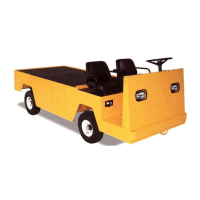
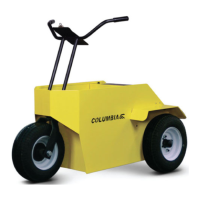
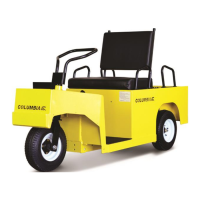
The Columbia Payloader is an electric vehicle designed to transport two or more people and cargo. It is specifically built for industrial use and is not intended for operation on public highways. The vehicle conforms to OSHA Standard Section 1910.178 (Powered Industrial Trucks) and ANSI B56.8 (Personnel and Burden Carriers). Its primary function is to provide a reliable and efficient solution for material handling and personnel transport within controlled environments.

Important Technical Specifications:

The manual details various models: BC2-S, BC2-L, BC3-S, BC3-L, and BC4, with a passenger capacity of 2 for all models. Key dimensions include:

  • Turning Curb to Curb: 354 inches
  • Turning Intersecting Aisle: 92 inches
  • Ground Clearance: 4.3 inches
  • Overall Width: 47 inches
  • Overall Height: 47.5 inches
  • Bed Height: 30 inches

Wheelbase varies by model:

  • BC2-S and BC3-S: 51 inches
  • BC2-L, BC3-L, and BC4: 65 inches

Overall Length also varies:

  • BC2-S and BC3-S: 106 inches
  • BC2-L and BC3-L: 120 inches

Maximum Speed (mph) depends on voltage:

  • 36 Volt: 14 mph (BC2-S, BC2-L), 10 mph (BC3-S, BC3-L), N/A (BC4)
  • 48 Volt: 17 mph (BC2-S, BC2-L), 13 mph (BC3-S, BC3-L), 12 mph (BC4)

Bed Size (L x W) is consistent across models:

  • 62 x 45 inches (BC2-S, BC3-S)
  • 76 x 45 inches (BC2-L, BC3-L, BC4)

Tire specifications are provided:

  • BC2 & BC3 Tires: 5.70" x 8" pneumatic (8 ply, load range D), 5.70" x 8" foam filled (8 ply, load range D), 18.0" x 8" pneumatic (load range C), 145 R 12 (5.7x21.3x12) 10 ply rating (load range D).
  • BC4 Tires: 5.70" x 8" pneumatic (10 ply, Super Duty), 0.70" x 8" Solid Cushion.

The VIN matrix provides a detailed breakdown of the 13-digit Vehicle Identification Number, including model abbreviation, power system (DC Drive or AC Drive/Induction Motor), system voltage (36V or 48V), controller amperage (300, 400, or 500 Amp), axle/brake system (Rear Hydraulic, Front & Rear Hydraulic, HD Rear Hydraulic, HD F&R Hydraulic, M18 Rear Hydraulic, M18 F&R Hydraulic), build year, and sequence number.

Usage Features:

  • Controls: The vehicle features a power keyswitch, direction selector (forward, neutral, reverse with warning buzzer), light switch (headlight and taillights), auxiliary equipment switch, horn button, brake pedal (activates brake lights), accelerator pedal, and parking brake lever.
  • Battery State of Charge Meter: DC Drive vehicles are equipped with an analog gauge meter displaying battery charge, with a colored background indicating charge levels (white for fully charged, green for normal, red for low). AC Drive vehicles feature a Multi-Functional Display Indicator (MDI) with green and red LEDs for charge status and an alpha-numeric LCD for hours worked and error codes.
  • Charger Receptacle & Remote LED: The charger receptacle is located near the driver's left leg. A remote multicolored LED indicates Delta-Q charge status. The charger is inter-locked with the traction control system, powering down the vehicle during charging.
  • Safety Interlocks: A seat switch/traction interlock ensures the operator is present in the driver's seat for vehicle operation. If the operator leaves the seat with the accelerator depressed, a power system reset is required.
  • Driving Recommendations: Operators are advised to drive slowly in turns and on grades, avoid changing direction while moving, and operate at maximum speed only on smooth, flat surfaces.
  • Pre-Operation Checklist: A detailed checklist is provided for daily inspections, covering batteries, tire pressure, lights, horn, reverse buzzer, brakes, steering, cargo, obstacles, labels, and accelerator.

Maintenance Features:

  • Battery Inspection & Maintenance:
    • Regularly check electrolyte levels (weekly, or after 4-5 charge cycles for single-point watering systems).
    • Use only distilled water; never overfill.
    • Ensure battery hold-downs are properly tightened.
    • Weekly inspect battery posts, clamps, and cables for damage or corrosion.
    • Perform an equalization charge weekly to balance electrical charge and extend battery life.
    • The Delta-Q Charger can remain connected to an AC source during storage to test and recharge the battery pack.
  • Battery Cleaning: Clean battery terminals with baking soda and water solution, rinse with clean water, and dry with a clean cloth. Avoid high-pressure water on electrical components.
  • Charging Procedure: Connect the supplied power cord to the vehicle charger receptacle and a grounded wall outlet. Charging is automatic. The Delta-Q charger displays charge status via LEDs (Yellow for AC power, Green for 100% charge, flashing Green for 80% charge, Red for fault).
  • Charging Algorithms: The Delta-Q Charger has ten pre-programmed algorithms for different battery types. Instructions are provided to check and change the charging algorithm if necessary.
  • Excessively Discharged Batteries: Procedures are outlined for charging deeply discharged batteries using an automotive-style trickle charger if the Delta-Q charger cannot initiate charging.
  • Specific Gravity Test: Recommended for determining battery condition after a full charge, with temperature adjustments for accurate readings.
  • Battery Life Tips: Recharge batteries when 20% or more discharged, plug in the charger when not in use, and check/water batteries after charging.
  • Battery Removal & Installation: Step-by-step instructions for removing and installing batteries, including roll-out battery racks if equipped.
  • Brake System:
    • Brakes are self-aligning and require wear checks every 6 months.
    • Parking brake adjustment instructions are provided to maintain proper holding capacity.
    • Brake fluid in the master cylinder should be checked every 3 months, using DOT 3 Motor Vehicle Brake Fluid.
  • Wheel and Tire Service: Instructions for wheel and tire removal/replacement, lug nut torque specifications (65 ft. lbs.), and tire care (proper inflation). Replacement tires must match original equipment size.
  • Lubrication:
    • Differential fluid level should be checked monthly for leakage.
    • Steering gear should be greased yearly (Molub-Alloy #0 or equivalent), requiring cover gasket replacement.
    • Six pivot points on the front end (tie rod ends and kingpin pivots) should be greased every 6 months with chassis lube.
  • Cleaning: Wash the underside to remove dirt and debris, avoiding high-pressure water on electrical components. Wash the cab, body, and seats with mild detergent; avoid abrasives.
  • Troubleshooting: A table provides common problems (e.g., "Will not move," "Runs slow") and corresponding checks. Detailed controller troubleshooting for DC Drive vehicles explains LED flash codes for diagnostic purposes.
  • Vehicle Storage (over 6 weeks): Instructions for battery preparation (fully charged, clean, connected to Delta-Q charger or recharged periodically if not connected) and vehicle preparation (keyswitch off, tires inflated, clean, wheels blocked).
  • Returning Vehicle to Service: Steps include recharging batteries, checking tire pressure, and completing pre-operation checks.

Columbia Payloader Specifications

General IconGeneral
BrandColumbia
ModelPayloader
CategoryElectric Vehicles
LanguageEnglish

Related product manuals