EasyManua.ls Logo

Comfort Glow SBN20 - User Manual

Comfort Glow SBN20
26 pages
Print Icon
To Next Page IconTo Next Page
Loading...
UNVENTED (VENT-FREE)
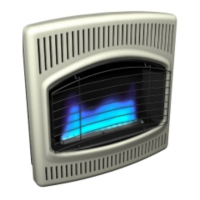
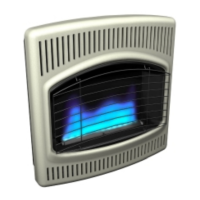
BLUE FLAME GAS HEATER
SAFETY INFORMATION AND
INSTALLATION MANUAL
For more information, visit www.desatech.com
WARNING: If the information in this manual is not
followed exactly, a fire or explosion may result caus-
ing property damage, personal injury, or loss of life.
Do not store or use gasoline or other flammable
vapors and liquids in the vicinity of this or any
other appliance.
WHAT TO DO IF YOU SMELL GAS
Do not try to light any appliance.
Do not touch any electrical switch; do not use any
phone in your building.
Immediately call your gas supplier from a
neighbor’s phone. Follow the gas supplier’s in-
structions.
If you cannot reach your gas supplier, call the fire
department.
Installation and service must be performed by a
qualified installer, service agency, or the gas
supplier.
WARNING: Improper installation,
adjustment, alteration, service, or
maintenance can cause injury or
property damage. Refer to this
manual for correct installation and
operational procedures. For as-
sistance or additional information
consult a qualified installer, ser-
vice agency, or the gas supplier.
WARNING: This is an unvented
gas-fired heater. It uses air (oxy-
gen) from the room in which it
is installed. Provisions for ad-
equate combustion and venti-
lation air must be provided.
Refer to Air for Combustion and
Ventilation section on page 4 of
this manual.
This appliance may be installed in an aftermarket*, permanently located, manufactured
(mobile) home, where not prohibited by local codes.
This appliance is only for use with the type of gas indicated on the rating plate. This
appliance is not convertible for use with other gases.
*Aftermarket: Completion of sale, not for purpose of resale, from the manufacturer
Save this manual for future reference.
CBN20, CBP20
SBN20, SBP20
CBN20T, CBP20T
CBN30T, CBP30T
CBT20NT, CBT20PT
CBT30NT, CBT30PT
CBN20TK, CBP20TK

Questions and Answers

Overview

This document describes the Comfort Glow Blue Flame Gas Heater, an unvented (vent-free) gas-fired heater designed for residential use. It is suitable for installation in aftermarket, permanently located, manufactured (mobile) homes, provided local codes do not prohibit such installations. The heater operates on either natural gas or propane/LP gas, as indicated on its rating plate, and is not convertible for use with other gas types.

Function Description:

The Comfort Glow Blue Flame Gas Heater provides supplemental heating by burning gas to produce a blue flame, which radiates heat into the room. As an unvented heater, it draws air (oxygen) from the room for combustion and releases combustion products directly into the living space. Therefore, adequate combustion and ventilation air must be provided in the installation area.

A key safety feature of this heater is the Oxygen Depletion Sensing (ODS) safety shutoff system. This system monitors the oxygen level in the room and will automatically shut off the heater if there is not enough fresh air available for proper combustion. This is a required feature for vent-free room heaters.

The heater incorporates an ignition system, which can be either a piezo ignitor or an electronic ignitor, to light the fuel supply. Thermostat models are equipped with a thermostatic heat control that includes a sensing bulb and a control valve. This system adjusts the gas flow to the burner, increasing or decreasing the flame height to maintain the desired room temperature, thereby enhancing comfort and potentially reducing gas consumption. If the room temperature exceeds the set point, the burner will shut off and cycle back on when the temperature drops.

Usage Features:

Before operating the heater, it is crucial to read the owner's manual carefully and completely to ensure safe assembly, operation, and service. Improper use can lead to serious injury or death from burns, fire, explosion, electrical shock, and carbon monoxide poisoning.

Safety Precautions:

  • Gas Leaks: If you smell gas, immediately shut off the gas supply, do not attempt to light any appliance, avoid touching electrical switches or using any phone in the building, and call your gas supplier from a neighbor's phone. If the gas supplier cannot be reached, call the fire department.
  • Carbon Monoxide Poisoning: Early signs resemble the flu (headaches, dizziness, nausea). If these signs appear, get fresh air immediately and have the heater serviced.
  • High Temperatures: Due to high surface temperatures, the appliance should be located out of traffic and away from furniture and draperies. Do not place clothing or other flammable material on or near the appliance. Keep children and adults away from the hot surface to prevent burns or clothing ignition. The heater remains hot for a time after shutdown; allow it to cool before touching.
  • Ventilation: The heater requires fresh, outside air ventilation to run properly. It should not be installed in a bedroom or bathroom. Provisions for adequate combustion and ventilation air must be provided, especially in confined spaces or unusually tight construction.
  • Clearances: Keep all air openings in the front and bottom of the heater clear and free of debris to ensure proper combustion. Adequate clearances around air openings must be maintained.
  • Flammable Materials: Keep the appliance area clear and free from combustible materials, gasoline, and other flammable vapors and liquids.
  • Water Damage: Do not use the heater if any part has been under water. A qualified service technician must inspect and replace any affected control system or gas control.
  • Gas Type: The heater is designed for a specific gas type (natural or propane/LP) as indicated on the rating plate and is not convertible.
  • Propane/LP Gas Supply: For propane/LP models, do not use a fuel tank less than 100 lbs. capacity, and supply tanks must be located outdoors. An external regulator (not supplied) is required between the heater and the propane/LP supply to reduce incoming gas pressure to between 11 and 14 inches of water.

Lighting Instructions:

  1. Ensure the equipment shutoff valve is fully open.
  2. Turn the control knob clockwise to the OFF position.
  3. Wait five minutes to clear any gas before smelling for gas near the floor.
  4. Turn the control knob counterclockwise to the PILOT position and press it in for five seconds.
  5. While pressing the control knob, push down and release the ignitor button to light the pilot. Keep pressing the ignitor button until the pilot lights.
  6. Once the pilot is lit, continue holding the control knob in for 30 seconds, then release. If the pilot goes out, wait one minute before attempting to relight.
  7. Turn the control knob counterclockwise to the desired heating level (between HI and LO) to light the main burner.

Shutting Off Heater:

  • Completely Off: Turn the control knob clockwise to the OFF position and turn off all electric power if service is to be performed.
  • Burner Off (Pilot Stays Lit): Turn the control knob clockwise to the PILOT position.

Thermostat Control Operation:

The thermostat senses room temperature and adjusts gas flow to the burner, modulating flame height. The burner may shut off if the room exceeds the set temperature and will cycle back on when the temperature drops. The control knob can be set to any heat level between HI and LO.

Installation:

The heater can be mounted to a wall or optionally to the floor.

  • Wall Mounting: A mounting bracket is used to secure the heater to the wall. This can be done by attaching the bracket to wall studs or using wall anchors for hollow or solid walls. Bottom mounting screws are also used to firmly secure the heater to the wall.
  • Floor Mounting (Optional): Base feet can be attached to the heater cabinet and then secured to the floor using wood screws (for wood floors) or concrete drill bits and anchors (for concrete floors).

Connecting to Gas Supply:

  • A qualified service person must connect the heater to the gas supply, following all local codes.
  • For natural gas, ensure the gas line pressure is between 5 and 10.5 inches of water.
  • For propane/LP gas, an external regulator is required to reduce incoming gas pressure to between 11 and 14 inches of water. The external regulator's vent should point down to protect it from freezing rain or sleet.
  • Use only new, black iron or steel pipe, or internally-tinned copper tubing where permitted by local codes.
  • Install an equipment shutoff valve in an accessible location.
  • Apply pipe joint sealant lightly to male NPT threads, ensuring it is resistant to liquid petroleum (LP) gas.
  • Install a sediment trap in the supply line to prevent moisture and contaminants from reaching the heater controls.

Maintenance Features:

Regular inspection and cleaning are essential for safe and efficient operation.

Inspecting Heater:

  • Pilot Flame Pattern: Check the pilot flame pattern regularly. A correct pilot flame should be blue and touch the thermocouple. An incorrect pattern (yellow flame or not touching the thermocouple) indicates a problem that needs to be addressed.
  • Burner Flame Pattern: A correct burner flame pattern shows a blue flame. Yellow tipping or flames higher than half the glass panel height indicate an incorrect pattern, potentially leading to increased carbon monoxide levels. Orange flames due to dirt or fine particles are normal and brief.

Cleaning and Maintenance:

  • General: Turn off the heater and allow it to cool before cleaning. Keep control areas, burner, and circulating air passageways clean. Inspect these areas before each use. A qualified service person should inspect the heater yearly, and more frequent cleaning may be needed if there is excessive lint from carpeting, bedding material, or pet hair.
  • ODS/Pilot and Burner: Clean with a vacuum cleaner, pressurized air (no more than 30 PSI), or a small, soft-bristled brush. Blocked air inlet holes can cause soot. Clean these holes prior to each heating season and every three months during operation. Never insert objects into the pilot tube. A yellow tip on the pilot flame indicates dirt in the pilot assembly; clean by lightly blowing air through the pilot air inlet.
  • Cabinet (Air Passageways): Use a vacuum cleaner or pressurized air to clean the air passageways.
  • Cabinet (Exterior): Wipe the cabinet with a soft cloth dampened with a mild soap and water mixture to remove dust.

Troubleshooting:

The manual provides a comprehensive troubleshooting guide for common issues such as no spark at the ODS/pilot, spark but no ignition, pilot lighting but flame going out, burner not lighting, delayed ignition, burner backfiring, yellow flame, smoke/odor, whistling noise, white powder residue, clicking/ticking noise, unwanted odors, heater shutting off (ODS operates), gas odor when control knob is OFF, gas odor during combustion, and moisture/condensation on windows. Each problem is linked to possible causes and recommended remedies, emphasizing the importance of professional service for complex issues.

Comfort Glow SBN20 Specifications

General IconGeneral
ModelSBN20
CategoryGas Heater
BrandComfort Glow
BTU Input20, 000 BTU
Heating CoverageUp to 700 sq. ft.
Ignition TypePiezo Ignition
ThermostatYes
Safety FeaturesOxygen Depletion Sensor (ODS)
VentingVent-Free
TypeVent-Free Gas Heater
Fuel TypeNatural Gas

Related product manuals